Tutorial Series: K2tog vs K2tog tbl

Knit 2 together (K2tog) and Knit 2 together through the back loop (K2tog tbl) are knitting techniques used for decreasing one stitch. Decreasing stitches are used for garment shaping and in lace knitting patterns. How to K2tog is shown below for right handed knitting.

K2tog (Tutorial Series: K2tog and P2tog):

Advertisements


K2tog tbl:

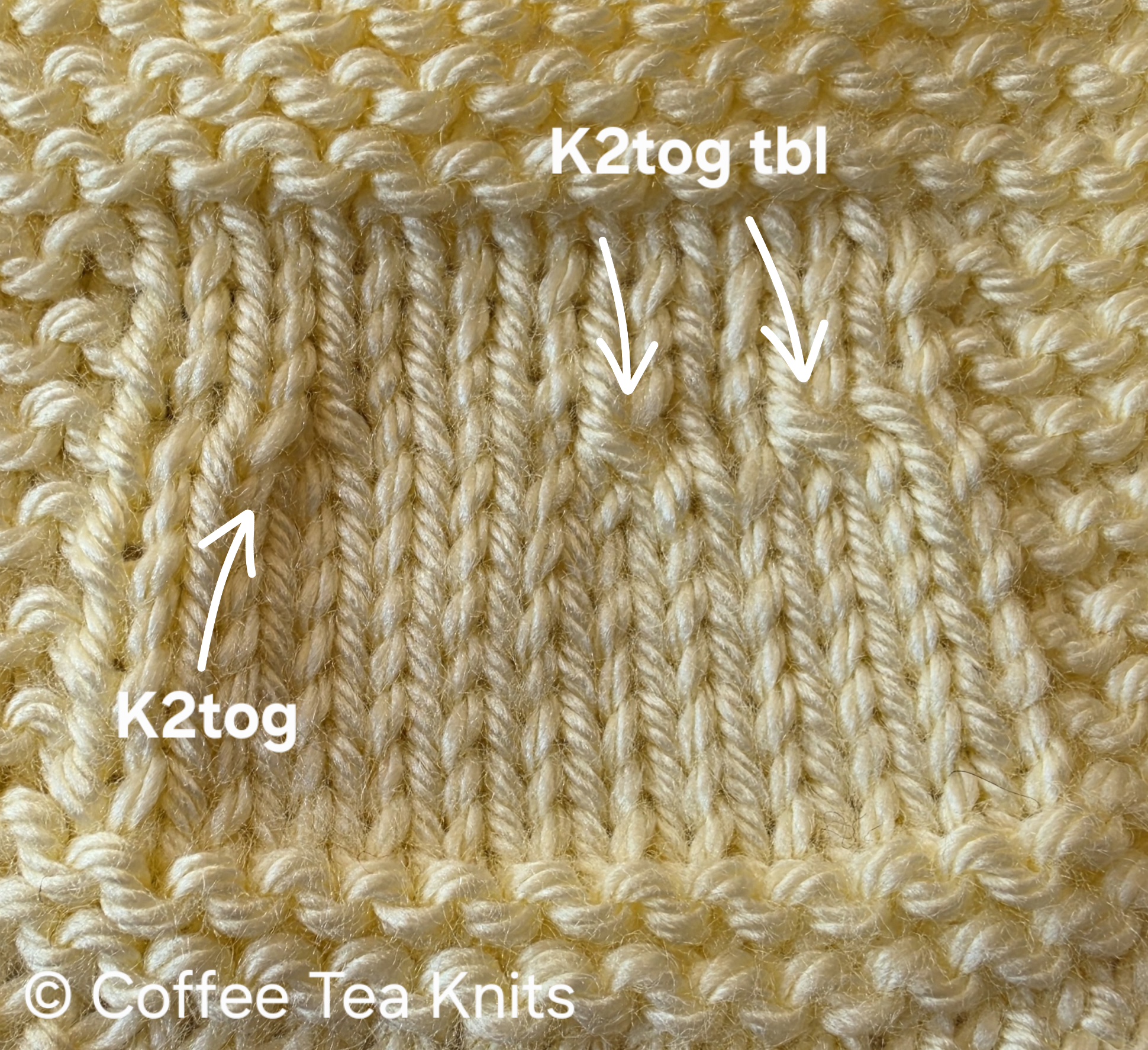
Knit 2 together in the back loop (K2tog tbl) is also used for stitch decrease and but differs from K2tog. It is also used for garment shaping and in lace patterns. There is, however, a visual and directional difference between the two techniques. K2tog is a right leaning decrease while K2tog tbl is a left leaning decrease. K2tog tbl adds more texture to the knitted piece and is commonly used in twisted stockinette or twisted rib stitch patterns. Sometimes it may be used as an alternative to the SSK technique (Tutorial Series: Slip Slip Knit SSK) Shown below in stockinette stitch pattern K2tog vs K2tog tbl

Advertisements

K2tog vs K2tog tbl:

Advertisements


Knit 2 together in the back loop (K2tog tbl) for right handed knitting:

Advertisements


Written Steps for K2togt tbl:

  • Turn the left knitting needle to the back of the work
  • Insert right needle into the back loops of the first stitch and then the second stitch on the left knitting needle
  • Wrap the working yarn around the inserted right needle
  • Pull the right knitting needle and working yarn loop into and through the 2 stitches on the left needle
  • Keep the working yarn loop (the new stitch) on the right needle and slide the 2 stitches off the left needle

Advertisements

~coffeeteaknits.com

Tutorial Series: Knit One Below (K1b)

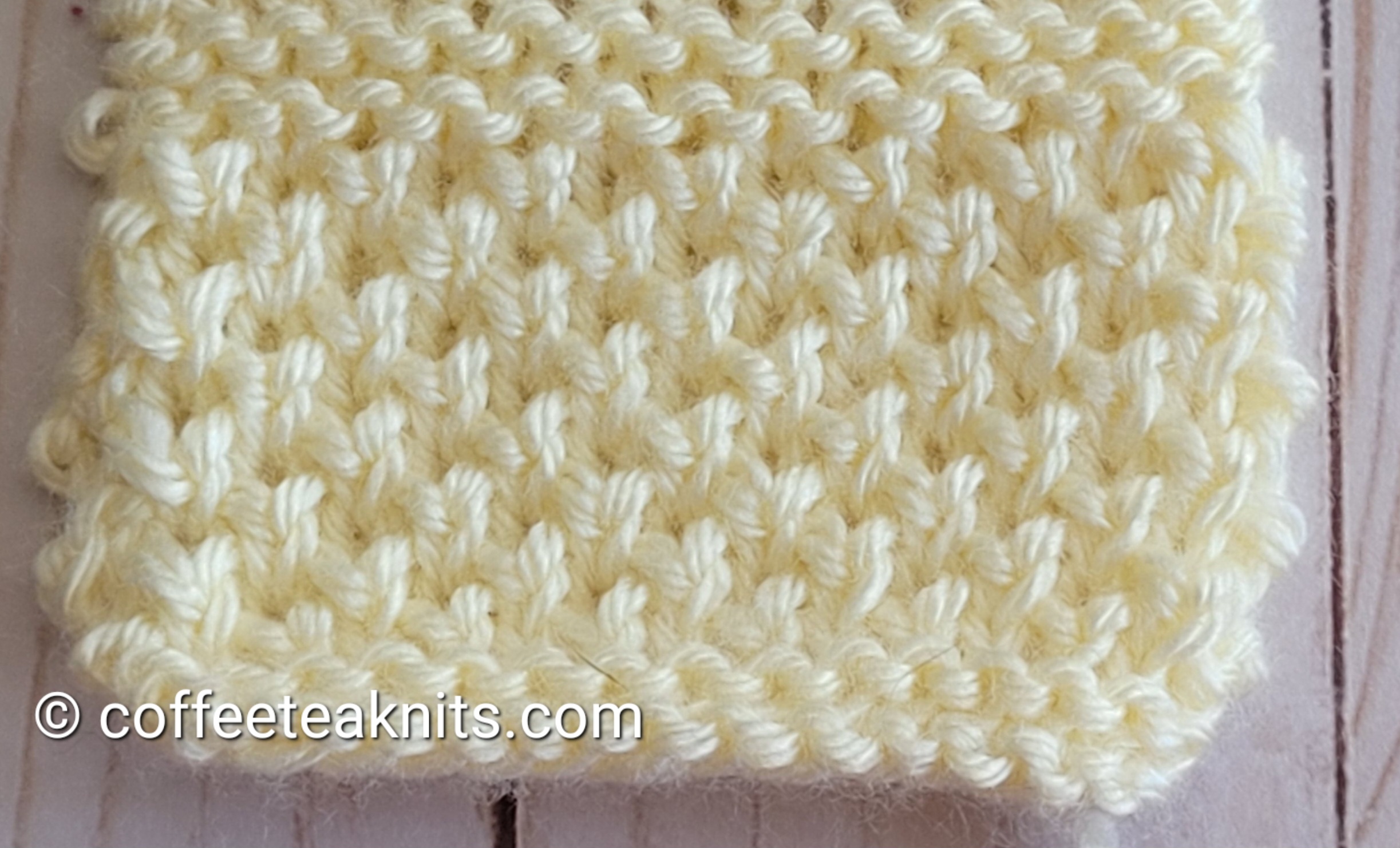
Knit one below (K1b) is a technique where the stitch on the knitting needle is not worked or knit. Instead the knit stitch right below is worked or knit. Examples of stitch patterns where K1b is used include the twisted seed stitch pattern, fisherman’s rib stitch pattern, some half brioche stitch patterns, honeycomb and textured rib patterns. Knit one below forms a fluffy and textured fabric. I have used K1b technique in the twisted seed stitch pattern for the Summertime Dishcloths and The Comfy Hat 1 patterns.

The twisted seed stitch pattern looks similar to the half brioche stitch pattern but differs in the techniques used to create the textured fabric (see image below)


The video and written instructions below show how to use the K1b technique for right-hand knitting

Knit One Below (K1b):

Written instructions for Knit one Below (K1b):

  • Insert the right knitting needle from front to back into the center of the stitch below the first stitch on the left knitting needle
  • Wrap the working yarn around the top of the right knitting needle to form a new loop (Tutorial Series: Knit and Tink)
  • Pull the loop through the center of the stitch below the stitch on the left knitting needle
  • The new knitted stitch is now on the right knitting needle
  • Slip the un-worked first stitch off the left knitting needle

~coffeeteaknits.com

Tutorial Series: Make One (M1R and M1L)

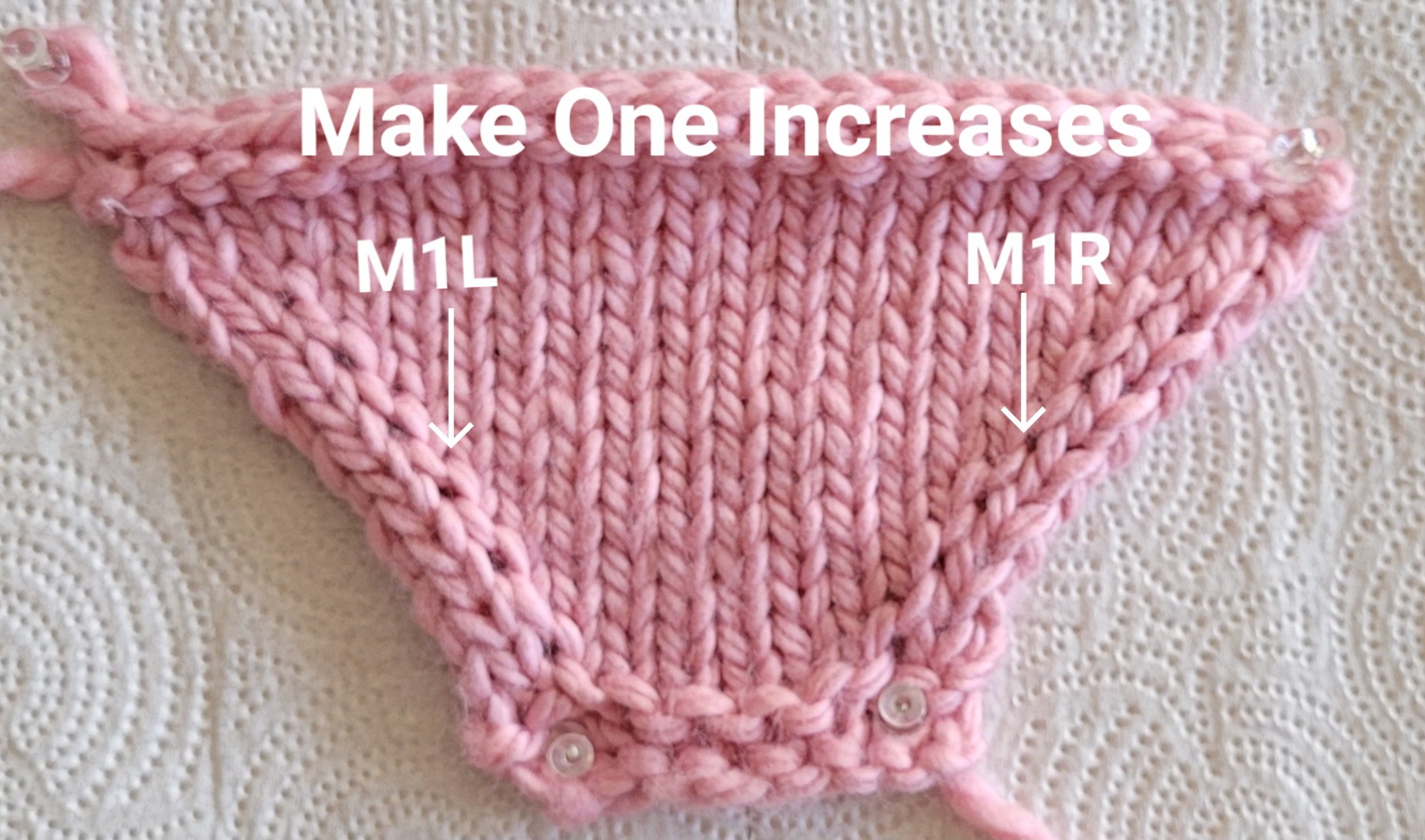
Another way to increase one stitch in knitting is to make one right (M1R) or make one left (M1L). M1L is a left-leaning increase while M1R is a right-leaning increase.


Advertisements


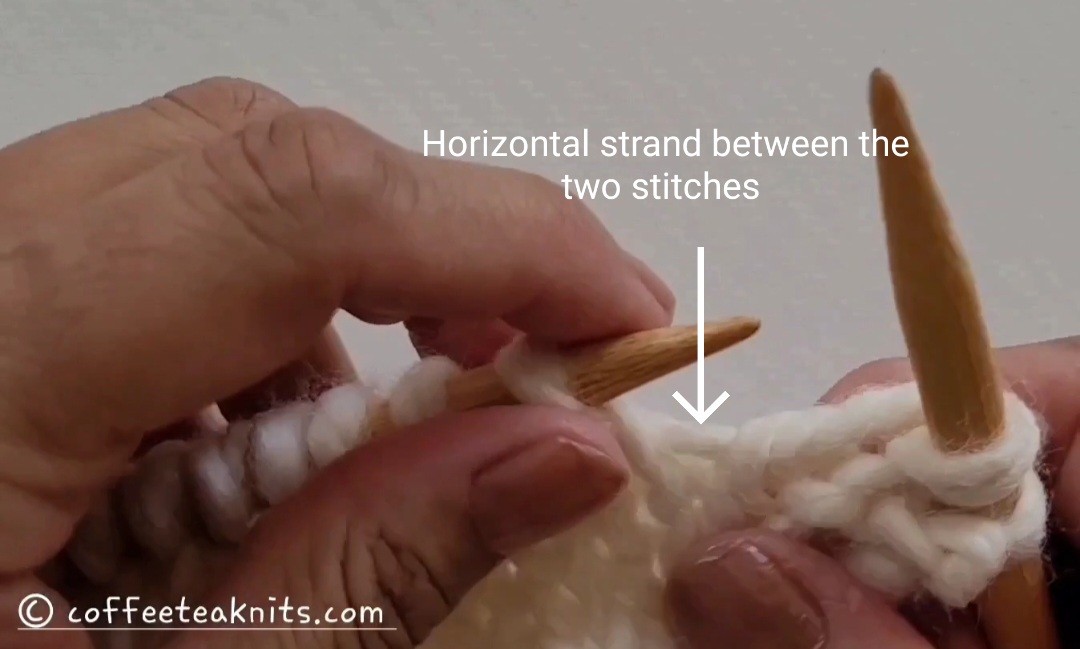
The horizontal strand between the stitch just worked on the right knitting needle and the stitch on the left knitting needle is lifted and placed on the left knitting needle. The loop made by the horizontal strand on the left knitting needle is then knit to create an extra stitch.


Advertisements

The make one (M1R or M1L) increase technique is used in the shaping of knitted items such as shawls, sweaters etc.


The video clip and the written instructions below show how to make one right (M1R) and then how to make one left (M1L) for right hand knitting.

Make One (M1R and M1L):

Advertisements


Written Instructions for M1R and M1L:

Make One Right (M1R):

  • To M1R increase, insert left knitting needle from back to front under the horizontal strand between the stitch on the right and the left knitting needle
  • Slip the horizontal strand loop on the left knitting needle
  • Insert the right knitting needle in the front leg of the loop on the left knitting needle (Tip: Loosen the front leg of the loop by tugging and pulling it with the right knitting needle as shown in the video clip above)
  • Knit (Tutorial Series: Knit and Tink) the front leg of the horizontal strand loop to increase one stitch

Make One Left (M1L):

  • To M1L increase, insert left knitting needle front to back under the horizontal strand between the stitch on the right and the left knitting needle
  • Slip the horizontal strand loop on the left knitting needle
  • Insert the right knitting needle in the back leg of the loop on the left knitting needle
  • Knit (Tutorial Series: Knit and Tink) the back leg of the horizontal strand loop to increase one stitch
Advertisements

~coffeeteaknits.com

Tutorial Series: Slip, Knit, Pass (Skp)

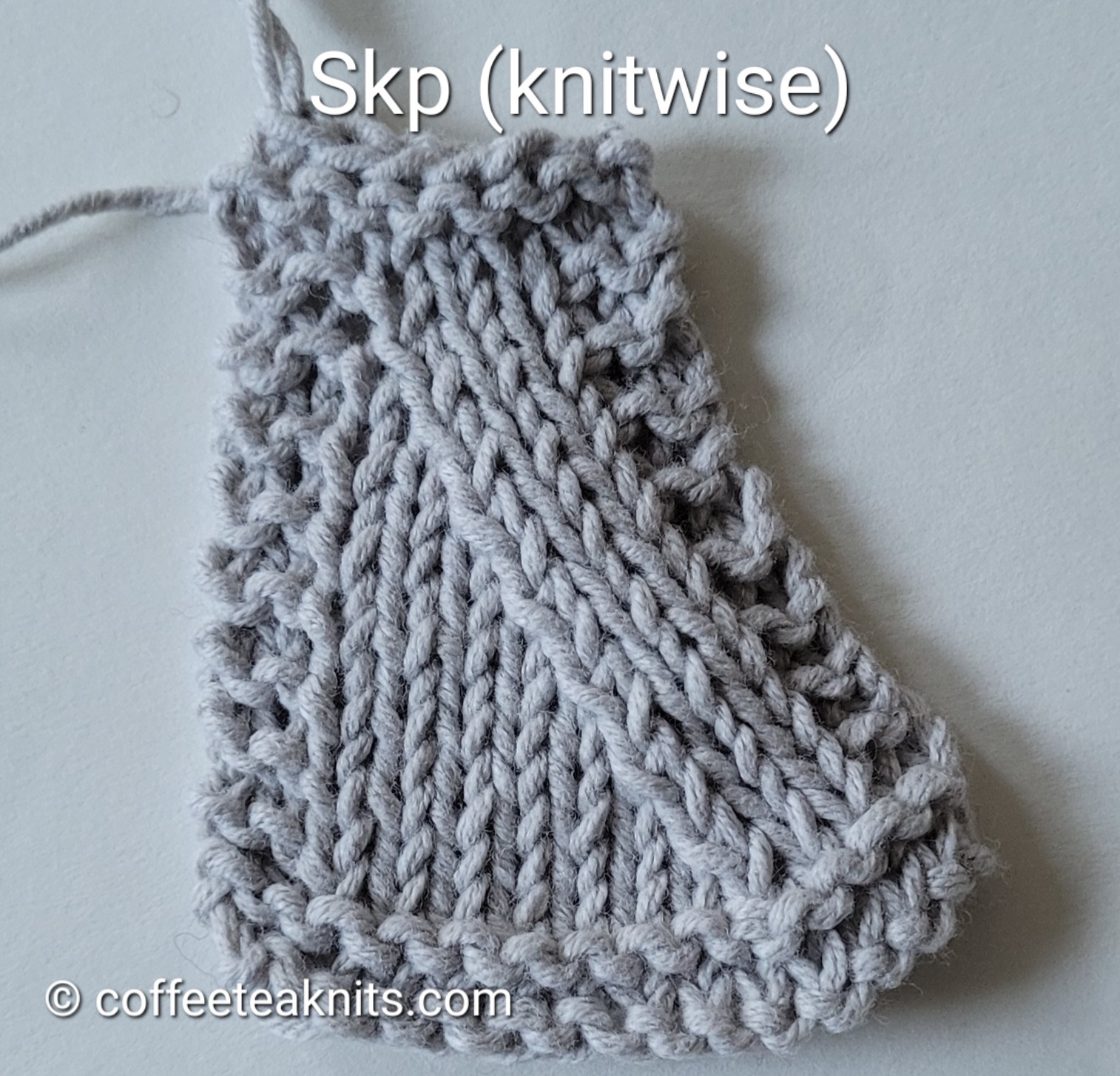
The Skp is a method used to decrease one stitch in knitting. Skp means to slip 1 stitch, either knitwise or purlwise. Then, knit 1 stitch. Finally, pass the slipped stitch over the knit stitch. Unlike K2tog (Tutorial Series: K2tog and P2tog) which is a right slanting decrease, Skp is a left slanting decrease. When you slip the stitch knitwise or purlwise, the knitting looks different. This topic is covered in the Tutorial Series: Slipping Stitches (knitwise and purlwise). A knitting pattern usually will specify how to slip a stitch. Below are samples of Skp knitwise and Skp purlwise.

Advertisements


The video and written instructions below show how to slip stitches knitwise and purlwise for right-hand knitting.

Slip, Knit, Pass (Skp): Video below shows how to Skp knitwise and then purlwise

Advertisements


Written Instructions for Skp (knitwise and then purlwise):

  • Slip the next stitch (knitwise or purlwise) on the left knitting needle onto the right knitting needle
  • Knit (Tutorial Series: Knit and Tink) the next stitch on the left knitting needle
  • Insert the left knitting needle into the front loop of the slipped stitch on the right knitting needle
  • Pull and lift the slipped stitch with the left knitting needle and pass it over the knitted stitch on the right knitting needle
  • Slide the slipped stitch off the right knitting needle
  • Repeat as specified in a knitting pattern to make one stitch decrease

~coffeeteaknits.com

Tutorial Series: Slipping Stitches (Knitwise versus Purlwise)

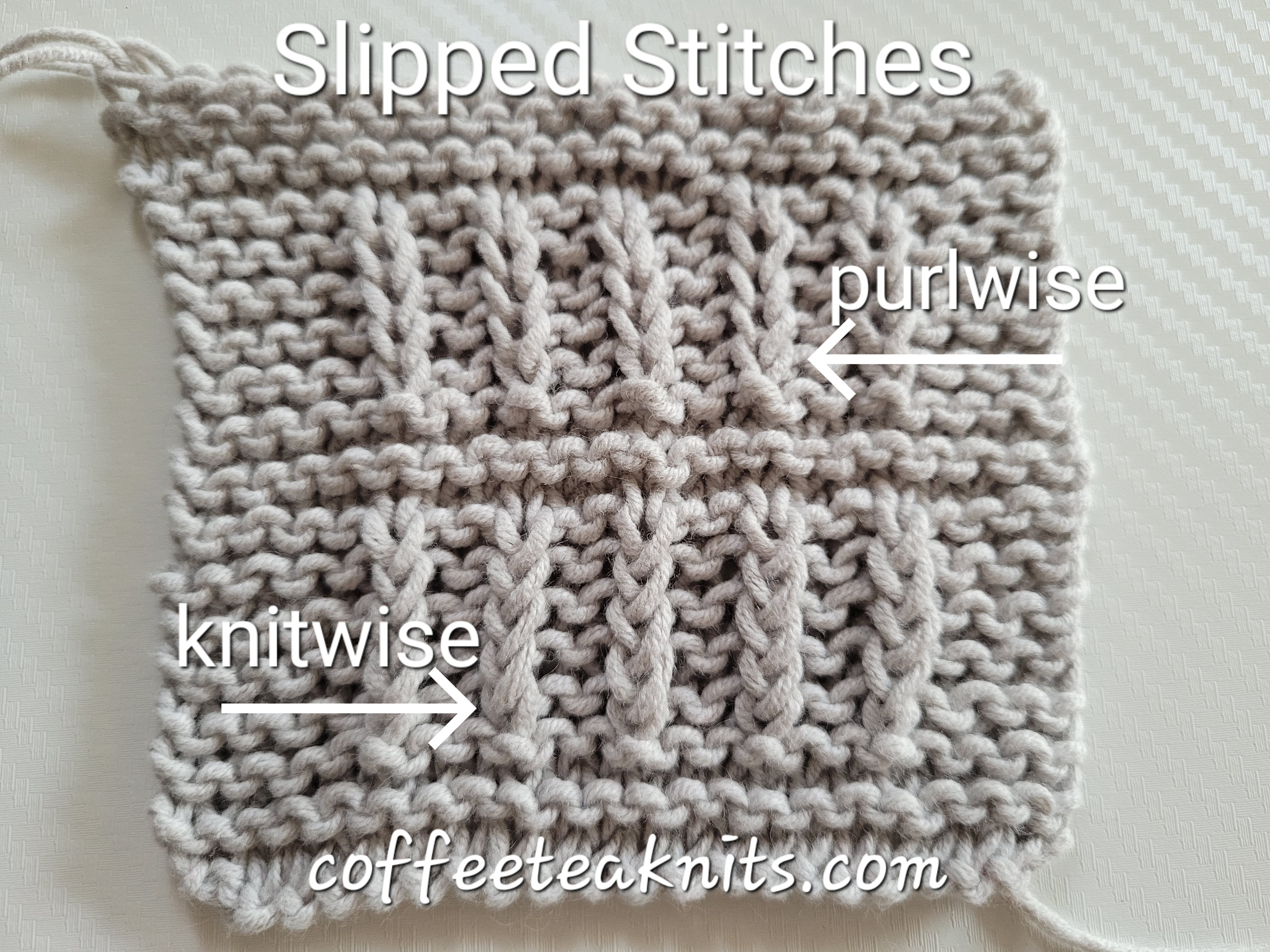
Slipped Stitches are stitches that have not been worked (knitted or purled) with the working yarn. These stitches are just transferred from the left knitting needle to the right knitting needle. The stitches can be slipped to the right knitting needle either knitwise or purlwise. A knit pattern will usually specify how the stitches are to be slipped. Otherwise the default is to slip stitches purlwise. Below is a garter stitch sample with stitches slipped either knitwise or purlwise on the right side. These slipped stitches are then purled on the wrong side of the work. There is some difference in how the stitches look when slipped knitwise versus when they are slipped purlwise.


Advertisements


Slipped stitches can be used at the end of the row to create a neat border edge. The Hydrangea Dishcloth is one example where I’ve used slipped stitches at the end of the rows. The Knotted Dishcloth also uses slipped stitches for a neat border edge. Slipped stitches are used to create textured patterns in knitting. The Dotted Dishcloth is an example where slipped stitches create a textured knit stitch pattern. The Light Unexpected Find Wrap as well as The Unexpected Find Wrap also uses the same technique. Slipped stitches are also used in colorwork knitting such as mosaic knitting. An example of slipped stitches in colorwork knitting is The Brick and Mortar Dishcloth.


Advertisements

The video and written instructions below show how to slip stitches knitwise and purlwise for right-hand knitting.

Slipping Stitches (Knitwise):


Slipping Stitches (Knitwise) written instructions:

  • Insert the right knitting needle from back to front in the front loop of the first stitch on the left knitting needle
  • Holding the stitch with the right needle, slip the first stitch off the left knitting needle and onto the right knitting needle

Advertisements

Slipping Stitches (Purlwise):


Slipping Stitches (Purlwise) written instructions:

  • Insert the right knitting needle from front to back in the front loop of the first stitch on the left knitting needle
  • Holding the stitch with the right knitting needle, slip the stitch off the left knitting needle and onto the right knitting needle
Advertisements

Leave a comment below on how you use slipped stitches in your knitting


~coffeeteaknits.com

Tutorial Series: Double Vertical Decrease (S2kp)

In the double vertical decrease (S2kp), two stitches are decreased by slipping 2 stitches knitwise. Then, the next stitch is knit. Finally, the 2 slipped stitches are passed over the knitted stitch. This double vertical decrease is used for shaping in knitting. I used this technique in the Hydrangea Dishcloth and in the With a Twist Dishcloth. I like this method for the mitered square shaped dishcloths. The double decrease creates a straight vertical knit stitch when used in the center of the work. The video and written instructions below show how to do a double vertical decrease (s2kp) for right-hand knitting.


Advertisements


The Double Vertical Decrease (S2kp):

Advertisements


Steps to make a Double Vertical Decrease (S2kp):

1. Insert the right knitting needle into the front of second and then the first stitch as if to knit 2 together
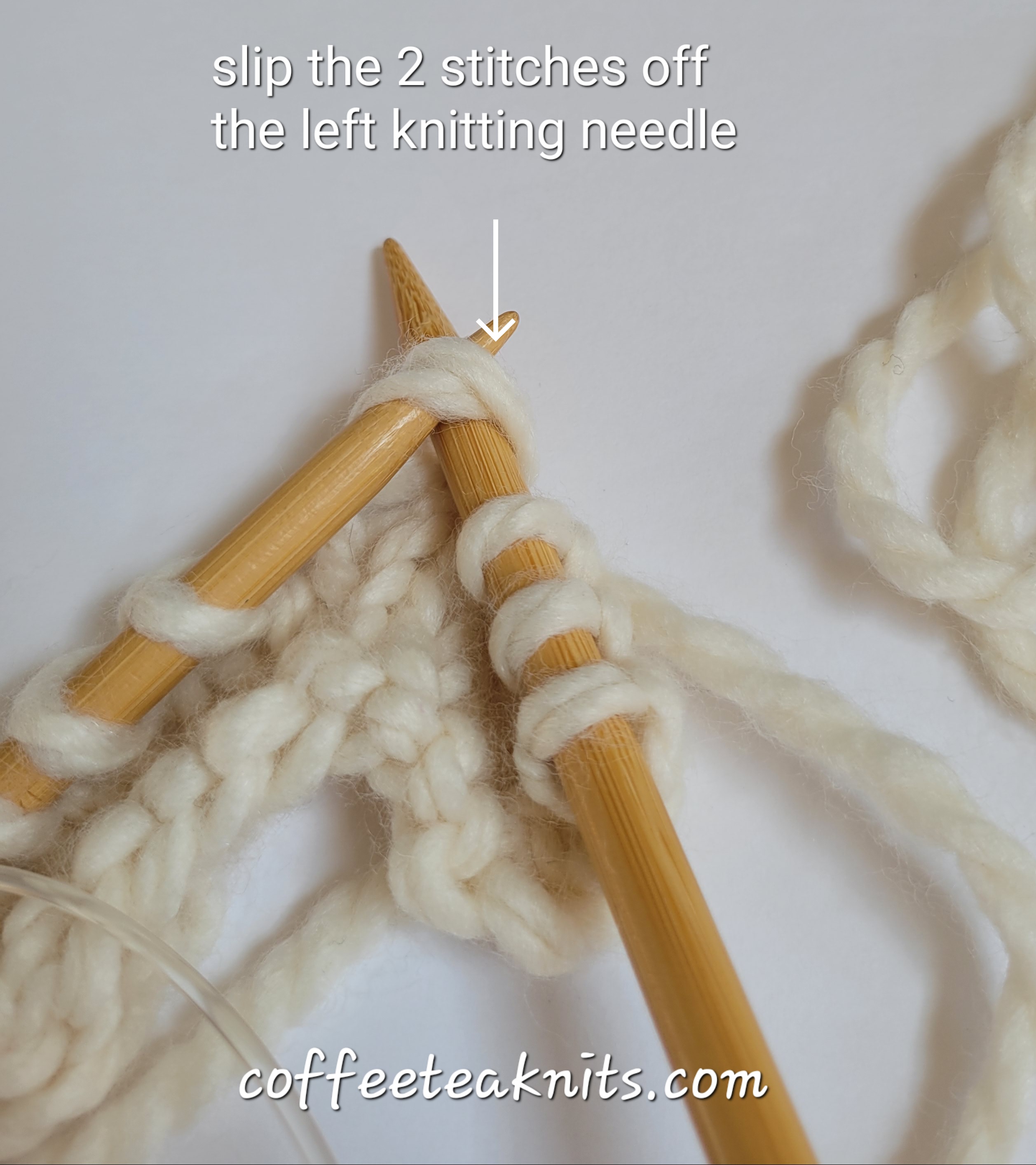
2. Slip the 2 stitches off the left knitting needle and onto the right knitting needle

3. The 2 slipped stitches are now on the right knitting needle
4. Knit the next stitch from the left knitting needle onto the right knitting needle
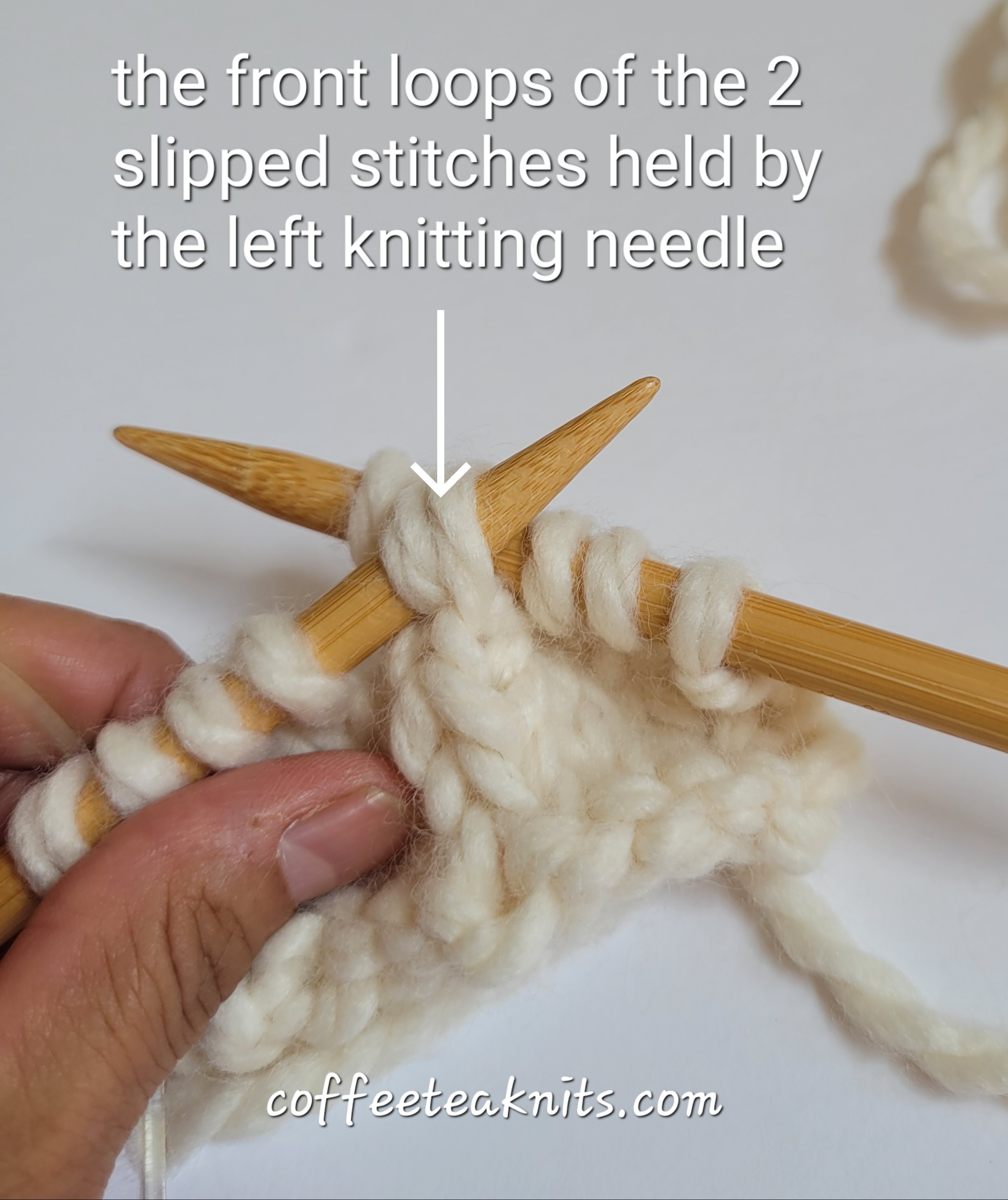
5. Insert the the left knitting needle into the front loop on the 2 slipped stitches
6. Catch and hold the 2 slipped stitches onto the left knitting needle
7. Pass the 2 held slipped stitches on the left knitting needle over the knitted stitch on the right knitting needle
8. The double vertical decrease (slip 2 stitches, knit 2, pass the slipped stitch over the knitted stitch) is now on the right knitting needle
9. Tug the working yarn to tighten the double vertical decrease stitch


Repeat Steps 1 through 9 for the double vertical decrease (s2kp)


Advertisements

~coffeeteaknits.com

Tutorial Series: The Basic Knit Bind Off

The live stitches on a knitting needle of a knitted piece are secured with a bind off row. This is also the last row. There are many bind off techniques. Some examples include the basic knit bind off, the stretchy bind off and the crochet bind off. Other examples include the picot bind off, the Icelandic bind off and so on. The basic knit method is the most common bind off method. In this technique, the first knitted stitch on the right knitting needle is passed over the second knitted stitch. This basic knit bind off is my favorite for blankets, dishcloths etc. since I can easily pick up the stitches to make a more decorative crochet or knitted border edge. I use knitting needles a size or two larger for the basic knit bind off. This makes the stitches easier to pick up for a border edge. The video and written instructions below for the basic knit bind off method are for right-hand knitting.

The Basic Knit Bind Off:


Written instructions for Basic Knit Bind Off Method:

  1. Knit (Tutorial Series: Knit and Tink) the first 2 stitches at beginning of the row
  2. Pass the first stitch knitted over the second stitch on the right hand knitting needle
  3. Slip the passed stitch off the right knitting needle (one stitch remains on the needle)
  4. Knit the next stitch on the left knitting needle
  5. Pass and slip the remaining stitch over the newly knitted stitch on the right knitting needle (one stitch remains on the right knitting needle)
  6. Repeat Steps 5 and 6 till the end of the row
  7. Break yarn and pull the working yarn through the last remaining stitch

~coffeeteaknits.com

Tutorial Series: K1tbl and P1tbl

A knit (Tutorial Series: Knit or Tink) or a purl (Tutorial Series: Purl or Un-Purl) stitch is created through the front loop of the stitch. A variation of the the knit or purl stitch is created through the back loop of the stitch. Knitting or purling through the back loop (K1tbl/Ktbl or P1tbl/Ptbl) twists the stitches. It looks quite different from the knit and purl stitch. K1tbl and P1tbl makes the knitted fabric more dense and is sometimes used in ribbing or as a design element.


The video and written instructions below show how to K1tbl and P1tbl for right-hand knitting.

Knit 1 through the Back Loop (K1tbl):


Written Instructions for Knit 1 through the Back Loop (K1tbl):

  • Insert the right knitting needle front to back through the back loop of the stitch on the left knitting needle.
  • Take the working yarn around the top of the right needle and wrap it between the two needles on top of the first stitch
  • Catch and pick up the working yarn loop (the new stitch) with and onto the right needle
  • Slip the remaining stitch off the left needle

Purl 1 through the Back Loop (P1tbl):


Written Instructions for Purl 1 through the Back Loop (P1tbl):

  • Insert the right needle from back to front through the back loop of the stitch on the left knitting needle
  • Wrap the working yarn around the inserted right needle
  • Catch the loop made made by the working yarn (the new stitch) with the right needle
  • Slip the loop (the new stitch) onto the right needle and the old stitch off the left needle

~coffeeteaknits.com

Tutorial Series: Slip Slip Knit (SSK)

Another way to decrease a stitch in knitting is to do a “Slip Slip Knit (SSK)”. In SSK, a stitch is decreased when two stitches are slipped and then knit together through the back loop. Decreasing stitches like increasing stitches are techniques in knitting used to give shape to knitted items. Unlike K2tog (Tutorial Series: K2tog and P2tog) technique which forms a right-leaning decrease, SSK technique forms a left-leaning decrease. The written instructions and video below show how to decrease one stitch for right handed knitting.

Slip Slip Knit (SSK):


The Steps for Slip Slip Knit (SSK):

  1. Slip the first two stitches knitwise (one at a time) on the left knitting needle to the right knitting needle
  2. Transfer the two slipped stitches (one at a time) now on the right knitting needle back to the left knitting needle
  3. Insert the right knitting needle through the back loop of those two slipped stitches on the left knitting needle
  4. Knit (Tutorial Series: Knit and Tink) the two stitches together through the back loop (one stitch decreased)
  5. Repeat steps 1 to 4 as needed for a knitting pattern

~coffeeteaknits.com

Tutorial Series: The Provisional Cast-On Method

The provisional cast-on is a temporary cast on method. With this technique, the “live” stitches on the waste yarn are picked up later. They are then knit in the opposite direction. A common way to make a provisional cast on is to make a crochet chain from waste yarn first. Then, with the project yarn, make stitches using the purl bumps of the crochet chain. Later, remove the crochet chain waste yarn by picking up the “live” stitches and knitting them in the opposite direction. For example, I use provisional cast on to start a top down sweater. Once the body of the sweater is finished, I pick up the “live” stitches. Then, I knit the collar in the opposite direction. There are several different kinds of knitting projects that use the provisional cast on method. The written instructions and video on how to do the provisional cast on is shown below for right handed knitting.

The Provisional Cast-On Method:


The Provisional Cast-On Stitches:


The Steps for the Provisional Cast-On Method:

  1. Using a waste yarn (or a yarn different from the knitting project yarn), make a crochet chain (Tutorial Series: How to Crochet Chain) with the number of stitches specific for a project
  2. [Tip: chain a few extra stitches than needed for the project]
  3. Turn the crochet chain so that the purl bumps are facing you (image below)
  4. Insert a knitting needle into the purl bump (image below)
  5. Make a loop with the project yarn and slide it onto the knitting needle
  6. Tighten and secure the project (working) yarn as needed
  7. Bring the project yarn loop through the purl bump and onto the needle
  8. Insert the knitting needle into the next purl bump
  9. Bring the project (working) yarn around the knitting needle (counterclockwise), catch and pull the yarn loop through the purl bump and onto the needle
  10. Repeat Steps 8 and 9 till you have all the stitches needed for a knitting project

~coffeeteaknits.com