Tutorial Series: How to Crochet Zig Zag Join

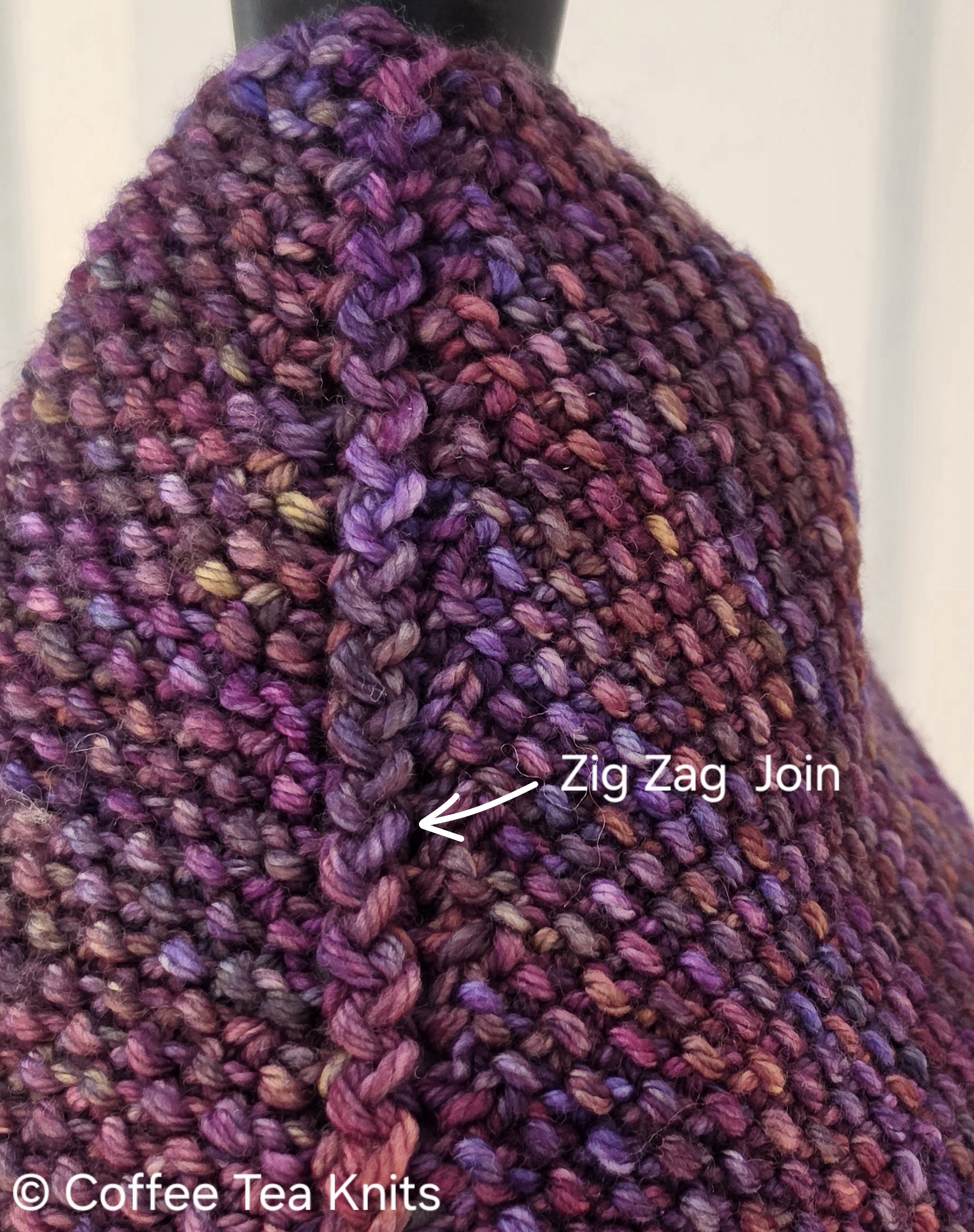
Crocheted or knitted pieces can be joined together in several ways, each offering unique benefits and aesthetic qualities. They can be seamed together with a mattress stitch, which provides a nearly invisible join, or joined with the three-needle bind-off technique used in joining knitted pieces together. Alternatively, certain crochet slip-stitch techniques, such as the crochet zig zag join is used not only to secure the pieces (knitted or crocheted) firmly but to also give the seam a decorative zig zag look. The join in this technique is created by a repetition of alternating crochet slip stitches from one piece to the other, resulting in a visually appealing texture that enhances the overall design.

Advertisements


The crochet zig zag join technique is one of my favorite join methods and I’ve included it in many of my patterns. The Comfy Poncho, Winterland Cowl, The Waiting Season Cowl, The Patchwork Petal Scarf, The Four Section Blanket, and Goes with Everything Cowl are some patterns that use the crochet zig zag method.

Advertisements

The written instructions and video below show how to use the Crochet Zig Zag join for right-handed crochet.

Advertisements


Written Instructions on how to Crochet Zig Zag Join:

  1. Insert the crochet hook from front to back under both the strands of the edge stitch in the first knitted or crocheted piece
  2. Yarn over with working yarn and pull the loop on the crochet hook under and through both the strands of the edge stitch in the first piece
  3. Slip stitch the loop to the loop on the hook (Tutorial Series: How to Crochet Slip Stitch)
  4. Insert the crochet hook from back to front under both the strands of the edge stitch in the second knitted or crocheted piece
  5. Yarn over with working yarn and pull the loop on the crochet hook under and through both the strands of the edge stitch in the second piece
  6. Slip stitch the loop to the loop on the hook (Tutorial Series: How to Crochet Slip Stitch)
  7. Repeat Steps 1 to 6 for the Crochet Zig Zag Join
Advertisements

~coffeeteaknits.com

Tutorial Series: Knit One Below (K1b)

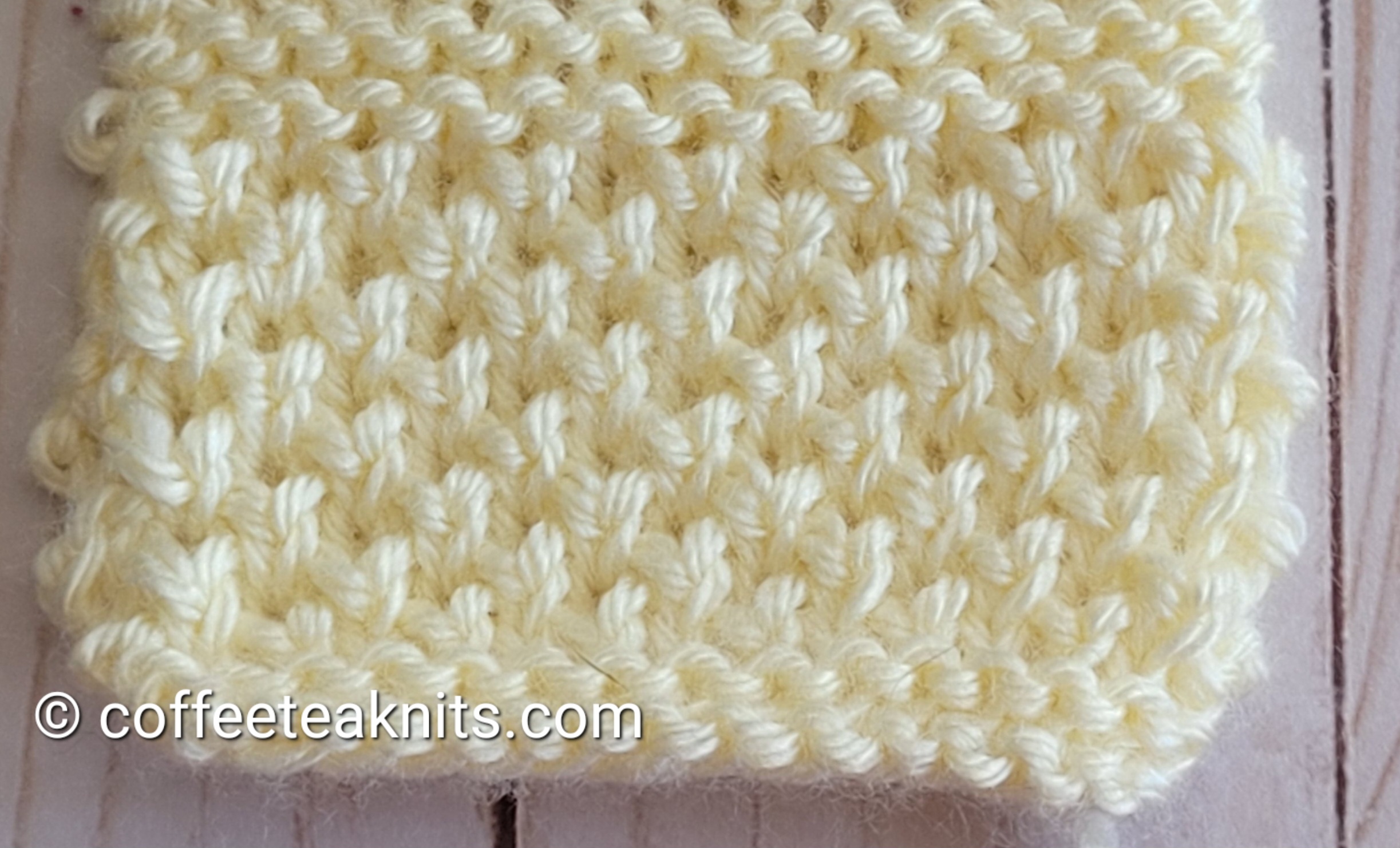
Knit one below (K1b) is a technique where the stitch on the knitting needle is not worked or knit. Instead the knit stitch right below is worked or knit. Examples of stitch patterns where K1b is used include the twisted seed stitch pattern, fisherman’s rib stitch pattern, some half brioche stitch patterns, honeycomb and textured rib patterns. Knit one below forms a fluffy and textured fabric. I have used K1b technique in the twisted seed stitch pattern for the Summertime Dishcloths and The Comfy Hat 1 patterns.

The twisted seed stitch pattern looks similar to the half brioche stitch pattern but differs in the techniques used to create the textured fabric (see image below)


Advertisements

The video and written instructions below show how to use the K1b technique for right-hand knitting

Knit One Below (K1b):

Written instructions for Knit one Below (K1b):

  • Insert the right knitting needle from front to back into the center of the stitch below the first stitch on the left knitting needle
  • Wrap the working yarn around the top of the right knitting needle to form a new loop (Tutorial Series: Knit and Tink)
  • Pull the loop through the center of the stitch below the stitch on the left knitting needle
  • The new knitted stitch is now on the right knitting needle
  • Slip the un-worked first stitch off the left knitting needle

~coffeeteaknits.com

The Textured Dishcloth Pattern


Knitting or crocheting dishcloths are useful for exploring various stitch patterns, for personal use, and for gifting. Dishcloths are quick projects that can be knit or crocheted in a few days. This makes them perfect for both beginners and seasoned crafters looking to learn new techniques. Dishcloths can enhance a kitchen décor or add a pop of color to it. Gifting dishcloths for those domestic muses in our lives that give us delicious and soul-satisfying meals is my way of thanking them for their effort and care. Also, knitting or crocheting dishcloths has been meditative and calming for me this winter season.


Advertisements

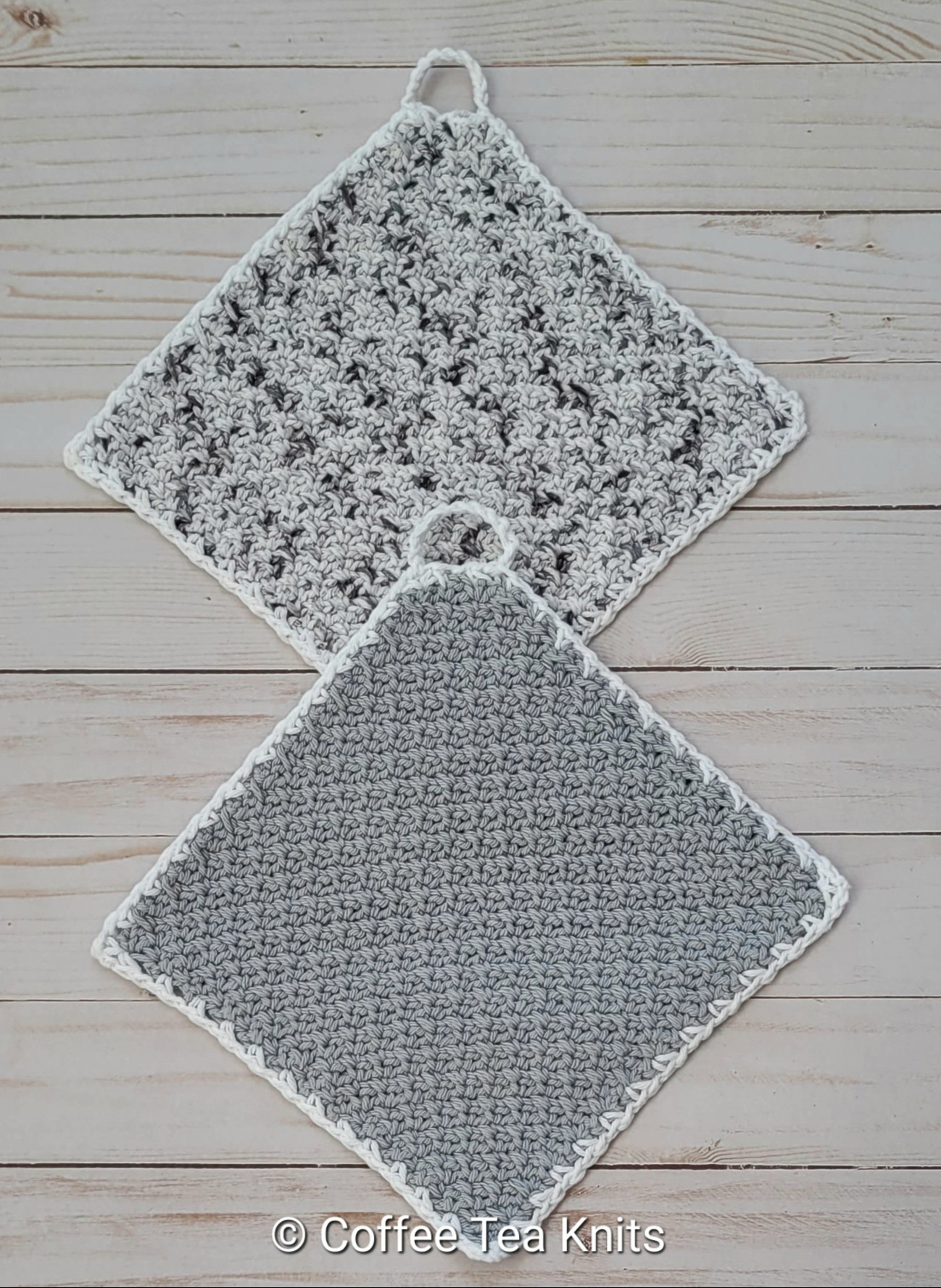
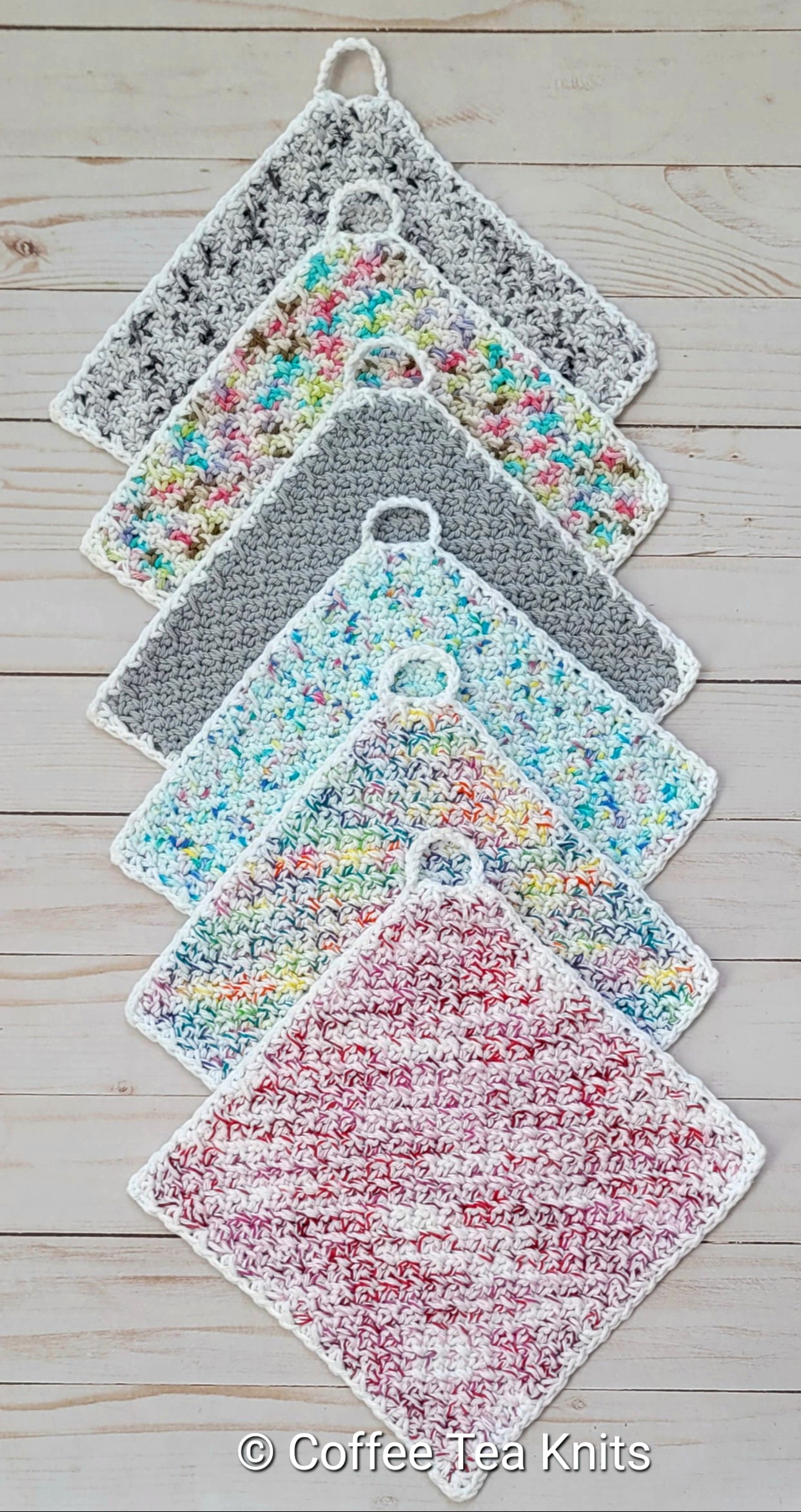
The Textured Dishcloth is crocheted flat from one corner to another in the granite crochet stitch pattern which is a variation of the crochet moss stitch pattern. It begins with a chain of 2 stitches with an increase of 4 stitches every other row, and then a decrease of 4 stitches every other row till a square shape is formed. The dishcloth is finished with a crochet moss stitch border along with a hanging loop of crochet chain stitches. This dishcloth is a two-row repeat pattern that can be customized to any size. It is beginner friendly and can be used with any worsted weight cotton yarn suitable for dishcloths.


The Textured Dishcloth Pattern (text and images for personal use only)

Advertisements

Materials Needed:

Yarn: Hobby Lobby Crafter’s Secret Cotton Yarn in several different colorways:
Main Colorways – Gray, City Stripe, Shaded Crimson, At The Fairgrounds, Extra Sprinkles, Potpourii Print
Contrast Colorway (for border edge) – White

Advertisements

PLEASE SUBSCRIBE FOR THE FREE PATTERN. THANK YOU

Subscribe to continue reading

Subscribe to get access to the rest of this post and other subscriber-only content.

2025 Year in Review and an Announcement

Hello folks, hope 2025 went well for you. For me, 2025 has been an eventful year. I published seven knit or crochet patterns, nine knitting or crochet technique video tutorials, and a few tidbits.

2025 also brought me some endings, loss, grief, celebrations, and not-so-fun health issues.

There’s also been a change in my journey with yarn.

After 55 published patterns, the call of yarn in my life has led me to a new beginning.

Coffee Tea Knits will be returning in January 2026 with new video tutorials and tidbits.

Stay tuned for updates as we explore the world of yarn and needles together.

Thank you to the fiber related crafts community. I am grateful to the subscribers and readers of this blog. Your feedback and encouragement have been invaluable in my journey with yarn.

All the best to you in the New Year!


~coffeeteaknits.com

The Dilemma of Leftover Yarn

Hello folks, I’m in the process of organizing my yarn. I face a dilemma because I do not know what to do with the project leftover yarn. The project leftover yarn has accumulated quite a bit over the years I’ve been knitting or crocheting.

I sometimes have a whole skein or two left over and sometimes just a small amount of yarn left over. With a skein or two of leftover yarn, making a hat, a dishcloth, or other small knitted items is possible. I have made such items in the past. I have also donated leftover skeins of yarn to charity.

The small amount of project leftover yarn puzzles me. I have no idea what to do with these bits of yarn leftover from a knitting or crochet project. Below is a picture of a small sample of the leftover yarn that I have. I probably have about 2 bags full of these bits and pieces of yarn.


Advertisements

Leftover yarn a, b, c, d, and e in the image above are from these knitting and crochet projects:


Advertisements

Is there something I can make out of this that is aesthetically pleasing? It’s hard for me to find the time. I struggle to find the motivation to mix them up to knit or crochet something. I don’t find the prospect of just knitting or crocheting for the sake of making something very appealing.

Your Suggestions/Feedback:

Do you also have an accumulation of project leftover yarn? Comment below on how you deal with these bits and pieces of project leftover yarn?


~coffeeteaknits.com

The Hydrangea Dishcloth Pattern


Five years ago I posted my first pattern “A Seed Stitch Mitered Dishcloth“. It was a time of social distancing and staying at home due to the coronavirus pandemic. Since we couldn’t go out much the yard and the flowers became our outdoor retreat. At that time the Hydrangeas were in full bloom (June-July) and I took a picture of these flowers with the “Seed Stitch Mitered Dishcloth”

A Seed Stitch Mitered Dishcloth
Advertisements

It’s five years later, and the hydrangeas are in bloom again.


Hence, the name of the dishcloth pattern for the month is the Hydrangea Dishcloth pattern. The Hydrangea Dishcloth is a mitered square dishcloth with a double vertical decrease and a 1×1 mistake rib stitch pattern. Two stitches are decreased using the double vertical decrease technique. I prefer this technique to the K2tog and SSK techniques I used in the Seed Stitch Mitered Dishcloth. The SSK does not form a straight line like the K2tog or the double vertical decrease.

Advertisements


The Hydrangea Dishcloth is then finished with a round of the wrapped single crochet stitch. Crochet chain stitches are added end of the round for the hanging loop.

The Hydrangea Dishcloth Pattern (text and images for personal use only)

PLEASE SUBSCRIBE FOR THE FREE PATTERN. THANK YOU

Subscribe to continue reading

Subscribe to get access to the rest of this post and other subscriber-only content.

When life gave me yarn revisited

It’s been five years since the March 2020 post “When life gave me yarn“. At that time a stay at home order was in place for a couple of weeks due to the coronavirus.

Advertisements

What yarn meant to me then:

March 2020

When life gave me yarn, I became an avid knitter.
I started a knitting blog and embarked on a journey paved with intricate designs, colors, and textures.
Thoughts of becoming a fiber artist crossed my path several times.
On this path I also picked up the yarn related crafts of crocheting and weaving.
All throughout the journey recurring dreams of someday designing my own yarn related items beckoned me towards more and more yarn.
Now, despite my efforts to the contrary, the yarn in my life keeps growing and growing.
So, tell me my friends, is this yarn in my life just a temporary haven or is the yarn calling me?

coffeeteaknits.com

Advertisements


And what yarn is to me now:

July 2025

When life gave me yarn, I became an avid knitter and crocheter.
On this journey paved with intricate designs and texture, I discovered the strength of prayer and manifestation.
The meditative rhythm of fiber related crafts soothed me during coronovirus pandemic and health issues.
While on this path I became immersed in creating video tutorials.
Recurring dreams of someday designing my own yarn related items led to publishing fifty two patterns and more yarn.
Now, I’m grateful for the abundance of yarn in my life.
So, tell me my friends, is this yarn in my life here to stay? If so, I must answer.

coffeeteaknits.com

The image in the background above is a cloth I wove using the rigid heddle loom. The yarn Home Cotton® Cone Select Colors in Vineyard Dots colorway for the warp and Jelly Dots colorway for the weft.

Advertisements


Thank you to the fiber related crafts community, subscribers and readers of this blog for your feedback and encouragement all along my journey with yarn.

Advertisements

~coffeeteaknits.com

The With a Twist Dishcloth Pattern


The With a Twist Dishcloth is a knitted mitered square dishcloth. Two stitches are decreased in the middle every other row to create a mitered square. The dishcloth is knitted using cotton yarn and the twisted stockinette pattern. The mitered square is created using the double vertical decrease technique. The double decrease technique creates a vertical stitch in the center of the mitered square. Dishcloths are budget friendly and versatile in their use for cleaning, wiping, and drying. They are also useful for learning new knitting stitch patterns and techniques. The With a Twist Dishcloth is finished using the crochet moss stitch in the round. This is followed by a round of slip stitch and a chain one border edge. A hanging loop of crochet chain is added to the dishcloth in the end.


Advertisements

Materials Needed to knit the With a Twist Dishcloth:

Yarn: Capri Eco Cotton™ by Loops and Threads® yarn in Gray Splash colorway. The yarn was purchased from Michaels and is now discontinued. Substitute for this yarn can be found on Yarn Sub
Gauge: 4.0 stitches / 7 rows per inch after blocking in the twisted stockinette stitch pattern
Knitting Needles: US #8 (5.0 mm) for knitting the dishcloth and US #9 (5.5 mm) for cast on.
Crochet hook: US size 7 (4.5 mm) for the border edge
Tapestry needle to weave in ends

Knitting Skill Level: Advanced beginner – knit, purl, knit through back loop, slip 2 together
Crochet Skill Level: Basic level with chain one and slip stitch

Advertisements

The With a Twist Dishcloth Pattern (text and images for personal use only)

PLEASE SUBSCRIBE FOR THE FREE PATTERN. THANK YOU

Subscribe to continue reading

Subscribe to get access to the rest of this post and other subscriber-only content.

Tutorial Series: The Basic Knit Bind Off

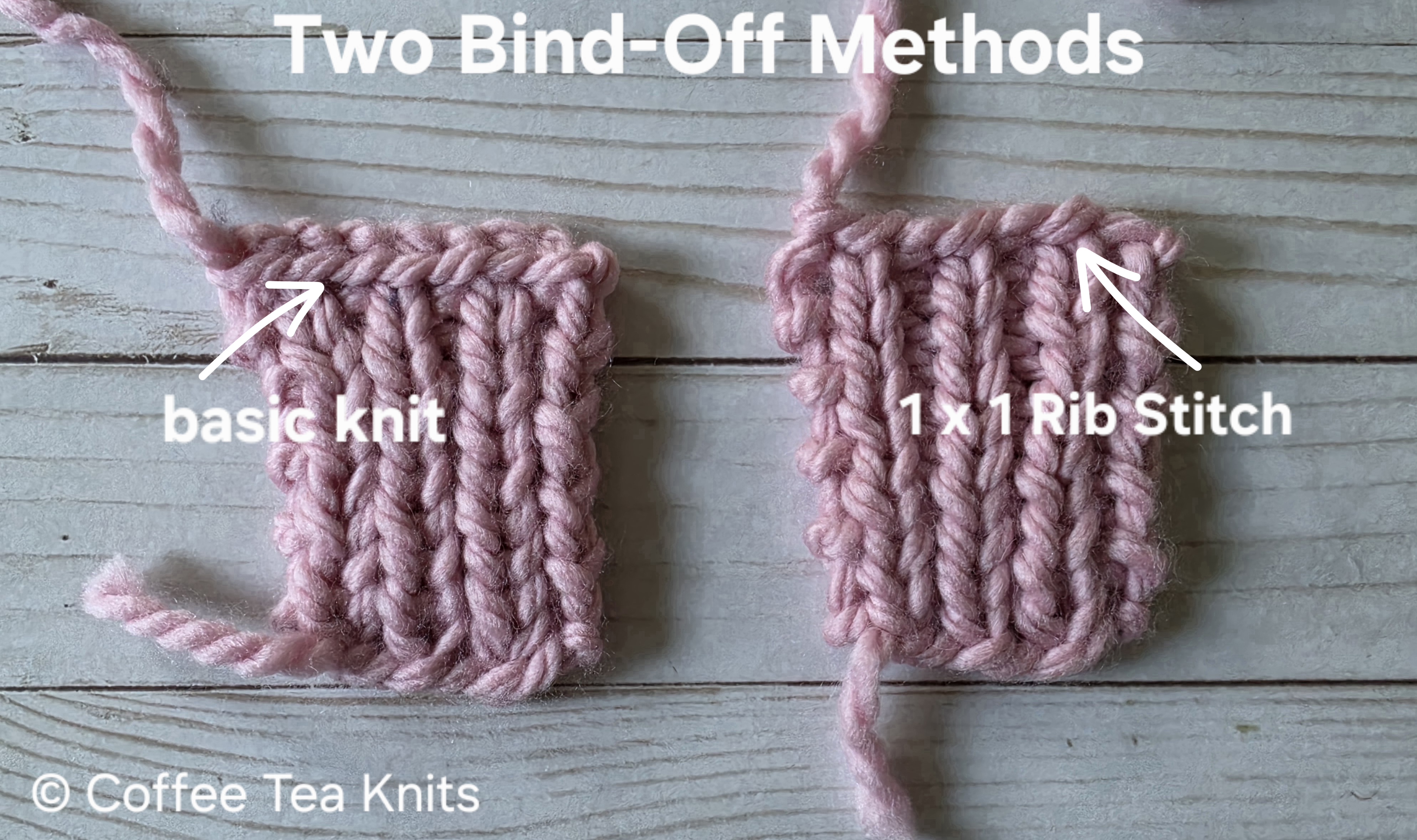
The live stitches on a knitting needle of a knitted piece are secured with a bind off row. This is also the last row. There are many bind off techniques. Some examples include the basic knit bind off, the stretchy bind off and the crochet bind off. Other examples include the picot bind off, the Icelandic bind off and so on. The basic knit method is the most common bind off method. In this technique, the first knitted stitch on the right knitting needle is passed over the second knitted stitch. This basic knit bind off is my favorite for blankets, dishcloths etc. since I can easily pick up the stitches to make a more decorative crochet or knitted border edge. I use knitting needles a size or two larger for the basic knit bind off. This makes the stitches easier to pick up for a border edge. The video and written instructions below for the basic knit bind off method are for right-hand knitting.

Advertisements

The Basic Knit Bind Off:


Written instructions for Basic Knit Bind Off Method:

Advertisements
  1. Knit (Tutorial Series: Knit and Tink) the first 2 stitches at beginning of the row
  2. Pass the first stitch knitted over the second stitch on the right hand knitting needle
  3. Slip the passed stitch off the right knitting needle (one stitch remains on the needle)
  4. Knit the next stitch on the left knitting needle
  5. Pass and slip the remaining stitch over the newly knitted stitch on the right knitting needle (one stitch remains on the right knitting needle)
  6. Repeat Steps 5 and 6 till the end of the row
  7. Break yarn and pull the working yarn through the last remaining stitch

~coffeeteaknits.com

Tutorial Series: K1tbl and P1tbl

A knit (Tutorial Series: Knit or Tink) or a purl (Tutorial Series: Purl or Un-Purl) stitch is created through the front loop of the stitch. A variation of the the knit or purl stitch is created through the back loop of the stitch. Knitting or purling through the back loop (K1tbl/Ktbl or P1tbl/Ptbl) twists the stitches. It looks quite different from the knit and purl stitch. K1tbl and P1tbl makes the knitted fabric more dense and is sometimes used in ribbing or as a design element.


The video and written instructions below show how to K1tbl and P1tbl for right-hand knitting.

Knit 1 through the Back Loop (K1tbl):


Written Instructions for Knit 1 through the Back Loop (K1tbl):

  • Insert the right knitting needle front to back through the back loop of the stitch on the left knitting needle.
  • Take the working yarn around the top of the right needle and wrap it between the two needles on top of the first stitch
  • Catch and pick up the working yarn loop (the new stitch) with and onto the right needle
  • Slip the remaining stitch off the left needle

Purl 1 through the Back Loop (P1tbl):


Written Instructions for Purl 1 through the Back Loop (P1tbl):

  • Insert the right needle from back to front through the back loop of the stitch on the left knitting needle
  • Wrap the working yarn around the inserted right needle
  • Catch the loop made made by the working yarn (the new stitch) with the right needle
  • Slip the loop (the new stitch) onto the right needle and the old stitch off the left needle

~coffeeteaknits.com