Tutorial Series: Double Vertical Decrease (S2kp)

In the double vertical decrease (S2kp), two stitches are decreased by slipping 2 stitches knitwise. Then, the next stitch is knit. Finally, the 2 slipped stitches are passed over the knitted stitch. This double vertical decrease is used for shaping in knitting. I used this technique in the Hydrangea Dishcloth and in the With a Twist Dishcloth. I like this method for the mitered square shaped dishcloths. The double decrease creates a straight vertical knit stitch when used in the center of the work. The video and written instructions below show how to do a double vertical decrease (s2kp) for right-hand knitting.


The Double Vertical Decrease (S2kp):


Steps to make a Double Vertical Decrease (S2kp):

1. Insert the right knitting needle into the front of second and then the first stitch as if to knit 2 together
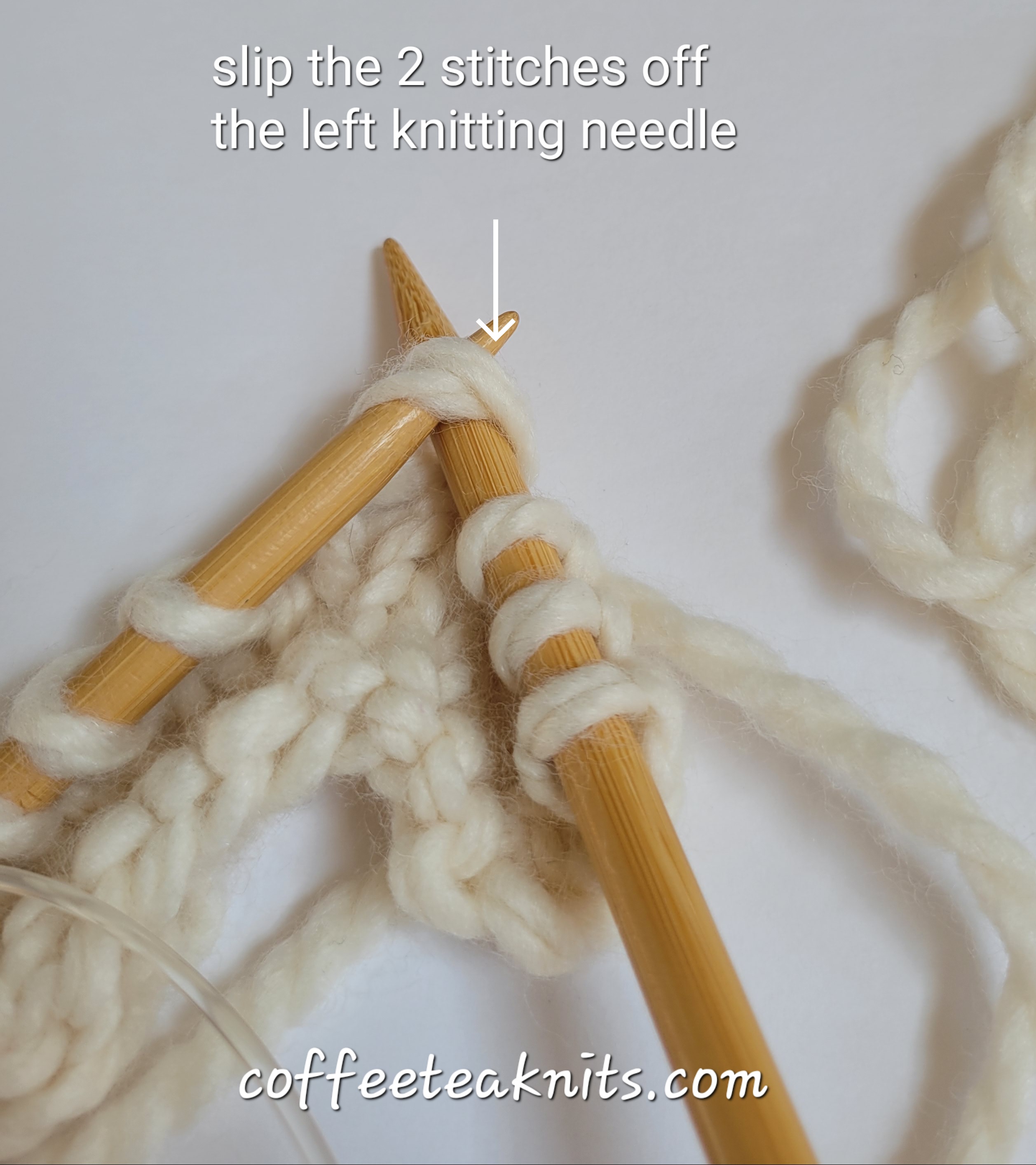
2. Slip the 2 stitches off the left knitting needle and onto the right knitting needle

3. The 2 slipped stitches are now on the right knitting needle
4. Knit the next stitch from the left knitting needle onto the right knitting needle
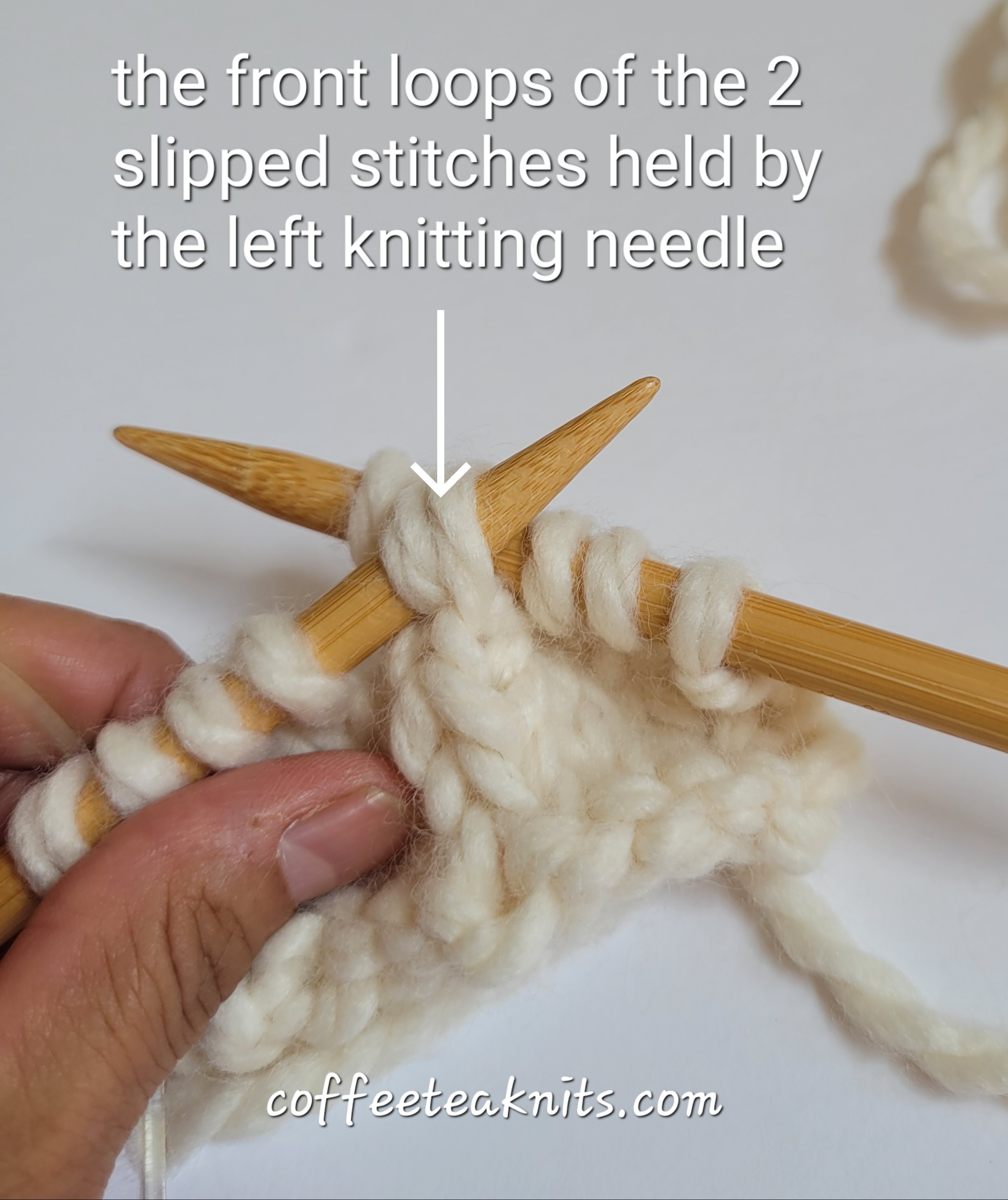
5. Insert the the left knitting needle into the front loop on the 2 slipped stitches
6. Catch and hold the 2 slipped stitches onto the left knitting needle
7. Pass the 2 held slipped stitches on the left knitting needle over the knitted stitch on the right knitting needle
8. The double vertical decrease (slip 2 stitches, knit 2, pass the slipped stitch over the knitted stitch) is now on the right knitting needle
9. Tug the working yarn to tighten the double vertical decrease stitch


Repeat Steps 1 through 9 for the double vertical decrease (s2kp)


~coffeeteaknits.com

Tutorial Series: The Basic Knit Bind Off

The live stitches on a knitting needle of a knitted piece are secured with a bind off row. This is also the last row. There are many bind off techniques. Some examples include the basic knit bind off, the stretchy bind off and the crochet bind off. Other examples include the picot bind off, the Icelandic bind off and so on. The basic knit method is the most common bind off method. In this technique, the first knitted stitch on the right knitting needle is passed over the second knitted stitch. This basic knit bind off is my favorite for blankets, dishcloths etc. since I can easily pick up the stitches to make a more decorative crochet or knitted border edge. I use knitting needles a size or two larger for the basic knit bind off. This makes the stitches easier to pick up for a border edge. The video and written instructions below for the basic knit bind off method are for right-hand knitting.

The Basic Knit Bind Off:


Written instructions for Basic Knit Bind Off Method:

  1. Knit (Tutorial Series: Knit and Tink) the first 2 stitches at beginning of the row
  2. Pass the first stitch knitted over the second stitch on the right hand knitting needle
  3. Slip the passed stitch off the right knitting needle (one stitch remains on the needle)
  4. Knit the next stitch on the left knitting needle
  5. Pass and slip the remaining stitch over the newly knitted stitch on the right knitting needle (one stitch remains on the right knitting needle)
  6. Repeat Steps 5 and 6 till the end of the row
  7. Break yarn and pull the working yarn through the last remaining stitch

~coffeeteaknits.com

Tutorial Series: K1tbl and P1tbl

A knit (Tutorial Series: Knit or Tink) or a purl (Tutorial Series: Purl or Un-Purl) stitch is created through the front loop of the stitch. A variation of the the knit or purl stitch is created through the back loop of the stitch. Knitting or purling through the back loop (K1tbl/Ktbl or P1tbl/Ptbl) twists the stitches. It looks quite different from the knit and purl stitch. K1tbl and P1tbl makes the knitted fabric more dense and is sometimes used in ribbing or as a design element.


The video and written instructions below show how to K1tbl and P1tbl for right-hand knitting.

Knit 1 through the Back Loop (K1tbl):


Written Instructions for Knit 1 through the Back Loop (K1tbl):

  • Insert the right knitting needle front to back through the back loop of the stitch on the left knitting needle.
  • Take the working yarn around the top of the right needle and wrap it between the two needles on top of the first stitch
  • Catch and pick up the working yarn loop (the new stitch) with and onto the right needle
  • Slip the remaining stitch off the left needle

Purl 1 through the Back Loop (P1tbl):


Written Instructions for Purl 1 through the Back Loop (P1tbl):

  • Insert the right needle from back to front through the back loop of the stitch on the left knitting needle
  • Wrap the working yarn around the inserted right needle
  • Catch the loop made made by the working yarn (the new stitch) with the right needle
  • Slip the loop (the new stitch) onto the right needle and the old stitch off the left needle

~coffeeteaknits.com

Tutorial Series: Single Crochet in Front Loop (SCFL)

Another variation of single crochet is the single crochet in front loop (SCFL). The stitch pattern gives a changed texture to a garment. This stitch pattern looks quite different from SCBL (Tutorial Series: Single Crochet in Back Loop).  


The Suddenly It’s Summer Dishcloth Pattern is in single crochet in the front loop (SCFL). This stitch pattern can also be used for blankets, garments etc.

Suddenly It’s Summer Dishcloth

After the foundation row for a single crochet has been worked (Tutorial Series: How to Single Crochet), all the following rows are worked only into the front loop. This gives the fabric a distinct textured pattern on both sides of the work. The video and written instructions provided below show how to make a single crochet in the front loop holding the crochet hook in your right hand.

How to Single Crochet in Front Loop (SCFL):


Written Instructions on How to Single Crochet in Front Loop (SCFL):

  1. After working single crochet in the last stitch of the foundation chain row (Tutorial Series: How to Single Crochet), chain one and turn
  2. Skip the first stitch from the hook, and insert crochet hook in the front loop of the next stitch
  3. Catch and pull yarn loop under and through the front loop of the stitch
  4. There are two loops on the crochet hook now
  5. Yarn over (wrap the working yarn around the hook counterclockwise)
  6. Catch and pull yarn through the remaining two loops on the hook.
  7. There is one loop left on the crochet hook
  8. Repeat Steps 2 to 7 till end of the row and all other subsequent rows (chain one after working the last stitch end of each row and turn to the next row)

~coffeeteaknits.com

Tutorial Series: How to Single Crochet in Back Loop (SCBL)

One variation of single crochet stitch pattern is the single crochet in back loop (SCBL). This stitch pattern is commonly used as a ribbed border for sweaters, blankets etc. In the February 2025 Earwarmer, the ribbing sections for the earwarmers are in the single crochet in the back loop stitch pattern.


Once the foundation row is worked for a single crochet, the crochet hook is inserted only into the back loop for all the the stitches in the next and the subsequent rows. After inserting the crochet hook in the back loop, a single crochet is worked. This differs from a regular single crochet where the crochet hook is inserted under both loops (strands) of a stitch. Using the single crochet in back loops gives the worked fabric a ribbed look.


The video and written instructions are below showing how to make a single crochet in the back loop. This technique is used for all the rows after the foundation chain row. The video and instructions below are for right-handed crocheting

How to Single Crochet in Back Loop (SCBL):


Written Instructions on How to Single Crochet in Back Loop (SCBL):

  1. After working single crochet (Tutorial Series: How to Single Crochet) in the last stitch of the foundation chain row, chain one and turn
  2. Skip the first stitch and insert crochet hook in the back loop of the next stitch
  3. Catch and pull yarn loop under the back loop of the stitch and on to the crochet hook
  4. There are two loops on the crochet hook now
  5. Yarn over (wrap the working yarn around the hook counterclockwise)
  6. Catch and pull yarn through the remaining two loops on the hook.
  7. There is one loop left on the crochet hook.
  8. Insert hook into the back loop of the next stitch and repeat Steps 3 to 7 till the end of the row
  9. Chain one after working the last stitch of the row and turn to the next row
  10. Repeat Steps 8 and 9 for all subsequent rows as specified in a pattern.

~coffeeteaknits.com