The Waiting Season Cowl Pattern


It’s the end of September and the leaves have begun to show their glorious autumnal colors. Nature is preparing to slow down and there is anticipation in the air. It’s a season to pause, to wait. We expect and linger to admire the glorious colors of autumnal leaves. We know that pretty soon the trees will be bare and Nature will rest for a few months. As a knitter/crocheter I wait for this season to start knitting with wool yarn again. It’s a season of fiber festivals and warm beverages. A season to curl up with our knitting/crochet projects and dream of all the new things to make.

Advertisements

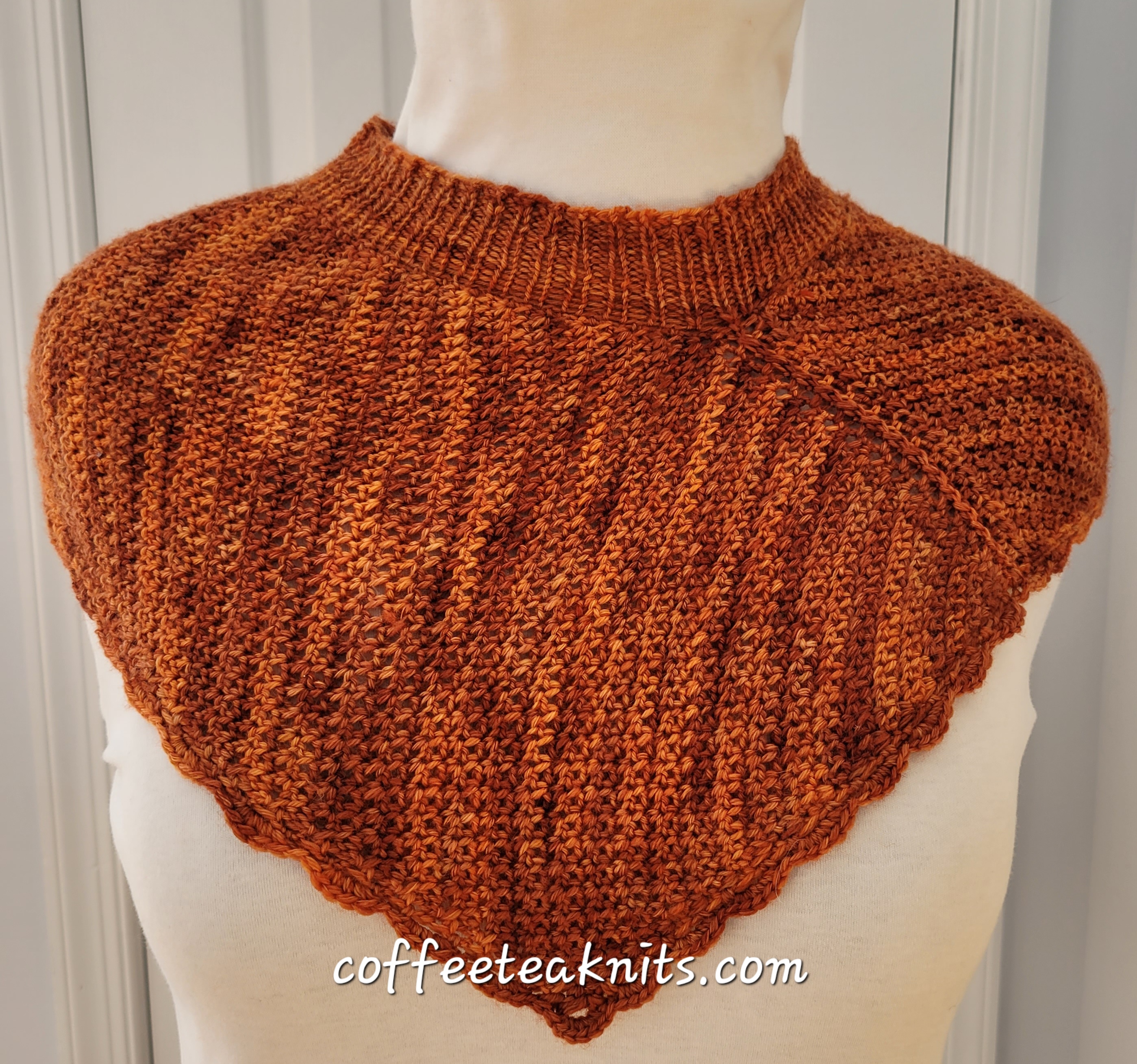
The Waiting Season Cowl is a rectangular scarf crocheted using the alternate crochet moss stitch like the Silky Long Scarf. The bind off edge is then joined to the side of the rectangular scarf to make the cowl. Stitches are picked up at the collar edge to knit a few rounds of 1×1 ribbing. The bottom edge of the cowl is finished with a round of the crochet moss. After that, a round of crochet shell stitch is added to complete the bottom edge of the cowl. The fingering weight budget friendly yarn is 100% superwash merino wool. This hand dyed tonal yarn reflects the vibrant autumnal colors. The Waiting Season Cowl was such an enjoyable project to crochet and knit.


Advertisements

The Waiting Season Cowl Pattern
(text and images for personal use only)

PLEASE SUBSCRIBE FOR THE FREE PATTERN. THANK YOU

Subscribe to continue reading

Subscribe to get access to the rest of this post and other subscriber-only content.

Tutorial Series: Double Vertical Decrease (S2kp)

In the double vertical decrease (S2kp), two stitches are decreased by slipping 2 stitches knitwise. Then, the next stitch is knit. Finally, the 2 slipped stitches are passed over the knitted stitch. This double vertical decrease is used for shaping in knitting. I used this technique in the Hydrangea Dishcloth and in the With a Twist Dishcloth. I like this method for the mitered square shaped dishcloths. The double decrease creates a straight vertical knit stitch when used in the center of the work. The video and written instructions below show how to do a double vertical decrease (s2kp) for right-hand knitting.


Advertisements


The Double Vertical Decrease (S2kp):

Advertisements


Steps to make a Double Vertical Decrease (S2kp):

Advertisements
1. Insert the right knitting needle into the front of second and then the first stitch as if to knit 2 together
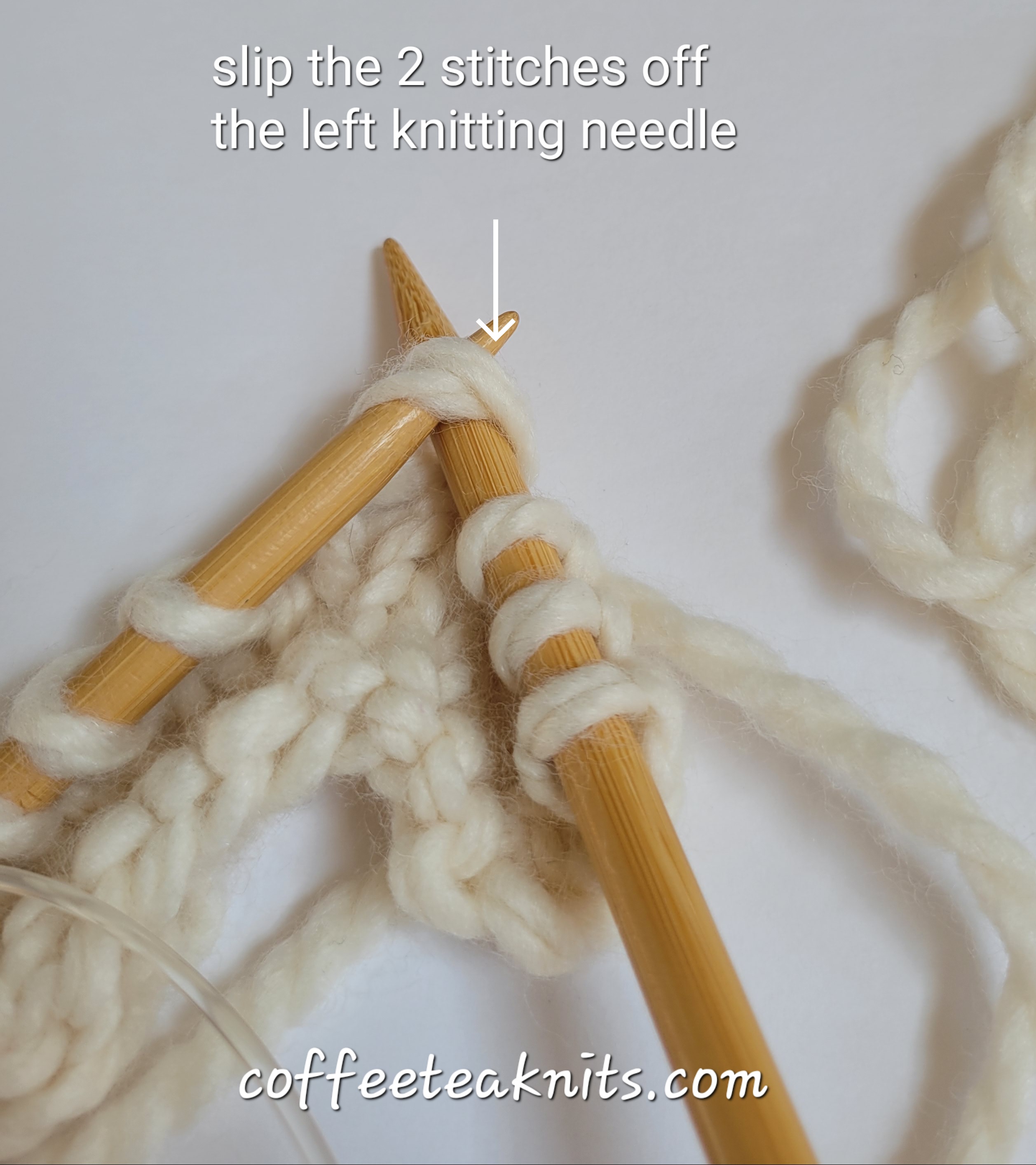
2. Slip the 2 stitches off the left knitting needle and onto the right knitting needle

3. The 2 slipped stitches are now on the right knitting needle
4. Knit the next stitch from the left knitting needle onto the right knitting needle
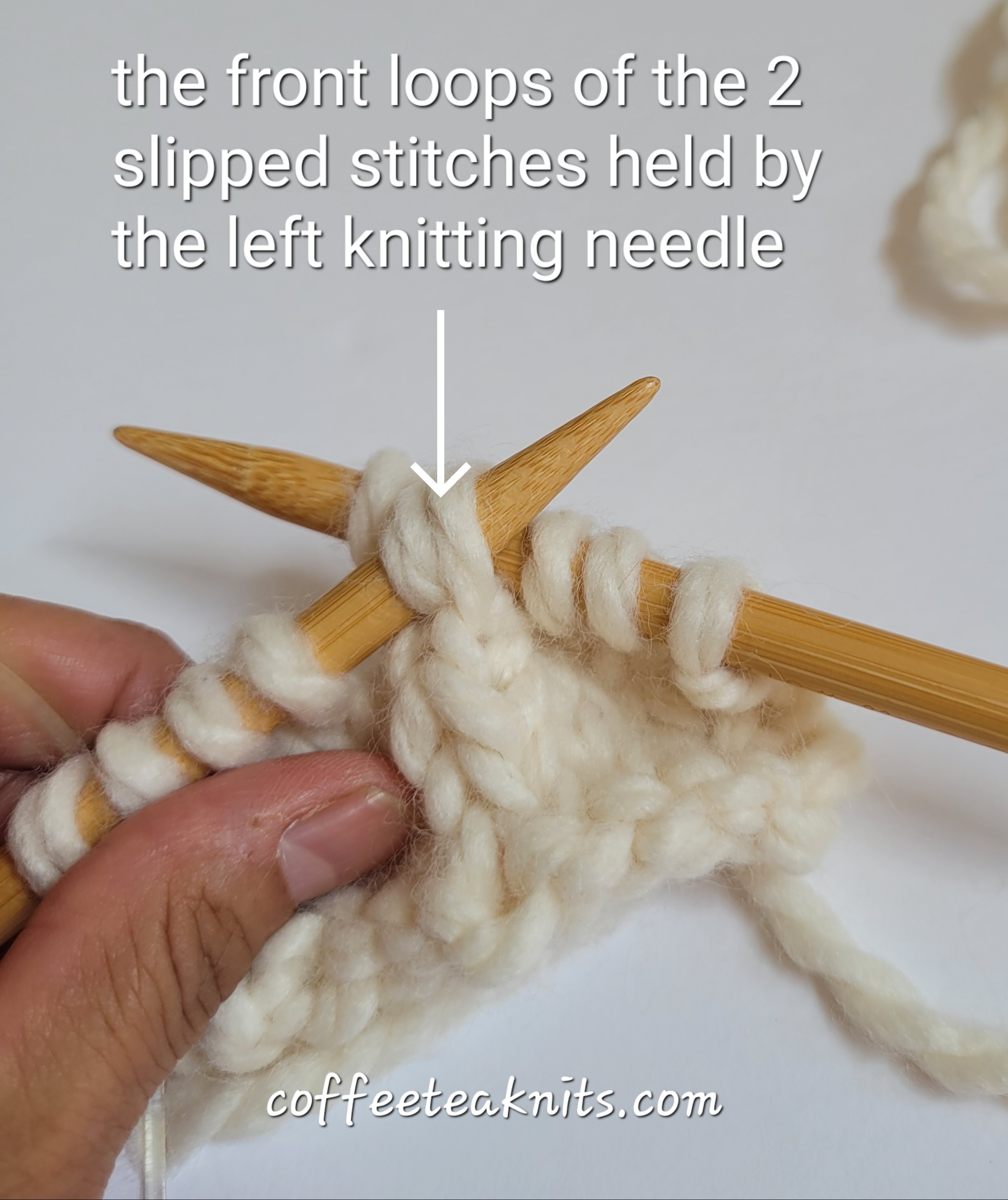
5. Insert the the left knitting needle into the front loop on the 2 slipped stitches
6. Catch and hold the 2 slipped stitches onto the left knitting needle
7. Pass the 2 held slipped stitches on the left knitting needle over the knitted stitch on the right knitting needle
8. The double vertical decrease (slip 2 stitches, knit 2, pass the slipped stitch over the knitted stitch) is now on the right knitting needle
9. Tug the working yarn to tighten the double vertical decrease stitch
Advertisements


Repeat Steps 1 through 9 for the double vertical decrease (s2kp)


~coffeeteaknits.com