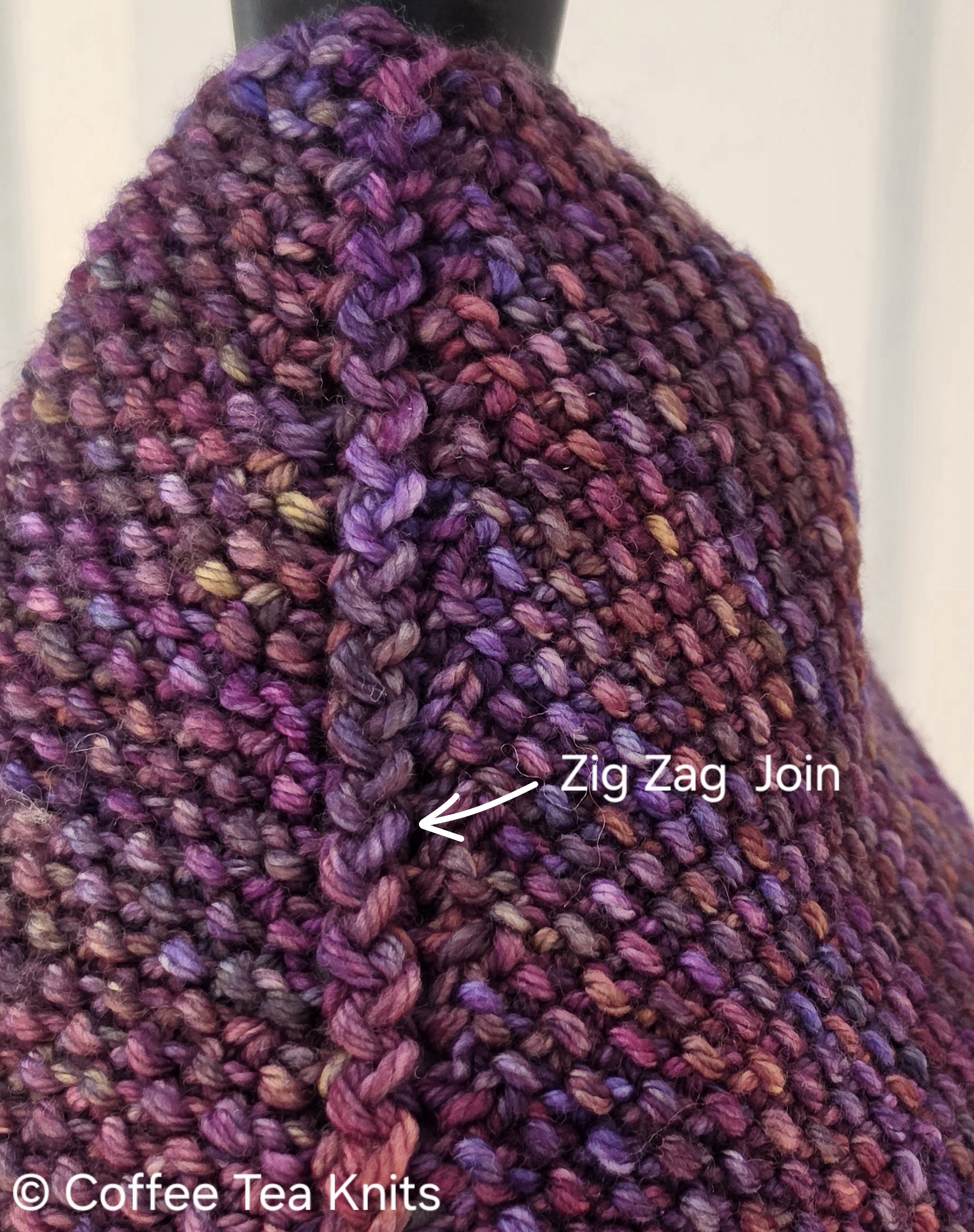
Crocheted or knitted pieces can be joined together in several ways, each offering unique benefits and aesthetic qualities. They can be seamed together with a mattress stitch, which provides a nearly invisible join, or joined with the three-needle bind-off technique used in joining knitted pieces together. Alternatively, certain crochet slip-stitch techniques, such as the crochet zig zag join is used not only to secure the pieces (knitted or crocheted) firmly but to also give the seam a decorative zig zag look. The join in this technique is created by a repetition of alternating crochet slip stitches from one piece to the other, resulting in a visually appealing texture that enhances the overall design.
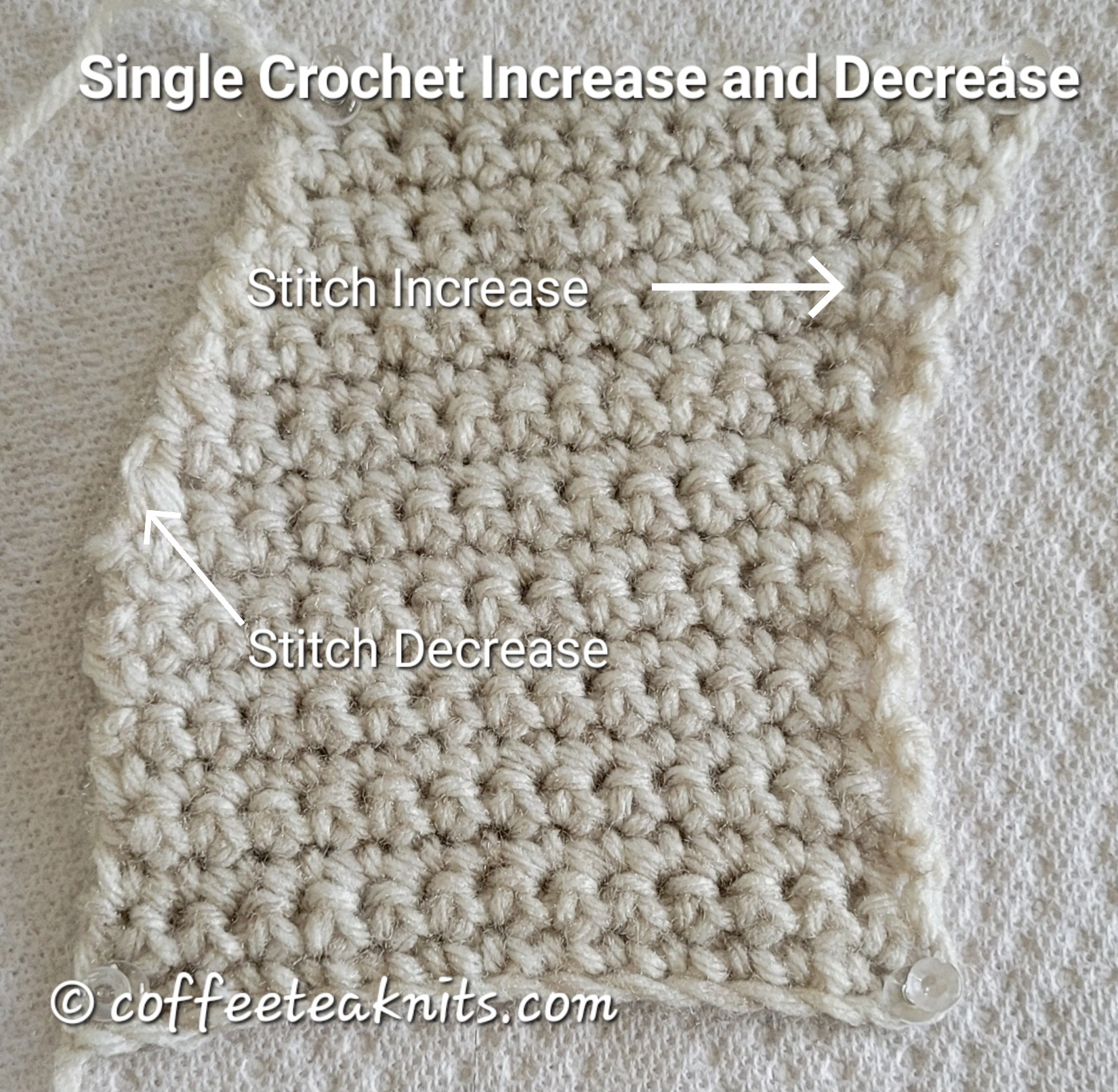
As in knitting, shaping in crochet also includes increasing or decreasing of stitches in a pattern. For a stitch increase in single crochet, another single crochet is made in the same stitch. For a stitch decrease, the crochet hook is inserted into two single crochet stitches and then the yarn over loop is pulled through all the loops on the crochet hook. The image below shows one stitch increase and one stitch decrease in single crochet.
The written instructions and video below show how to increase and decrease a stitch in single crochet for right-handed crocheting.
Stitch Increase in Single Crochet:
Written Instructions for Stitch Increase in Single Crochet:
Insert the crochet hook under both the strands of a stitch
Wrap working yarn counterclockwise around hook (yarn over), catch and pull the loop through both the strands of that stitch
There are two loops on the crochet hook
Wrap the working yarn counterclockwise around hook (yarn over), catch and pull loop through the two loops on the crochet hook (one single crochet stitch made)
Repeat Steps 2 to 5 in the same stitch again for one single crochet stitch increase (two single crochet stitches made in the same stitch)
Stitch Decrease in Single Crochet:
Written Instructions for Stitch Decrease in Single Crochet:
Insert the crochet hook under both the strands of a stitch as if to single crochet
Wrap working yarn counterclockwise around hook (yarn over), catch and pull the loop through both the strands of that stitch (2 loops on the hook)
Insert crochet hook under both strands of the next stitch
Wrap working yarn counterclockwise around hook (yarn over), catch and pull the loop through both the strands of that stitch (3 loops on the hook)
Wrap working yarn counterclockwise around hook (yarn over), catch and pull loop through all three loops on the crochet hook
One single crochet stitch decreased
Repeat Steps 1 to 5 to decrease one single crochet stitch
Another variation of single crochet is the single crochet in front loop (SCFL). The stitch pattern gives a changed texture to a garment. This stitch pattern looks quite different from SCBL (Tutorial Series: Single Crochet in Back Loop).
After the foundation row for a single crochet has been worked (Tutorial Series: How to Single Crochet), all the following rows are worked only into the front loop. This gives the fabric a distinct textured pattern on both sides of the work. The video and written instructions provided below show how to make a single crochet in the front loop holding the crochet hook in your right hand.
How to Single Crochet in Front Loop (SCFL):
Written Instructions on How to Single Crochet in Front Loop (SCFL):
Skip the first stitch from the hook, and insert crochet hook in the front loop of the next stitch
Catch and pull yarn loop under and through the front loop of the stitch
There are two loops on the crochet hook now
Yarn over (wrap the working yarn around the hook counterclockwise)
Catch and pull yarn through the remaining two loops on the hook.
There is one loop left on the crochet hook
Repeat Steps 2 to 7 till end of the row and all other subsequent rows (chain one after working the last stitch end of each row and turn to the next row)
This year at the New Jersey Sheep and Fiber Festival, I was happy to see Marian of the Marianted Yarns since it was her last time vending there. A few years ago, I bought a Practicality 75/25 (superwash merino/nylon) fingering weight skein in the Beeswax colorway from her. I wanted another skein in that colorway this year, but it was unavailable. Instead, I chose the Honeycomb colorway and purchased it. Both colors remind me of the autumn leaves in my yard. I will miss Marianated Yarns next year, but the Autumn Leaves Cowl will help me remember this wonderful day at the festival.
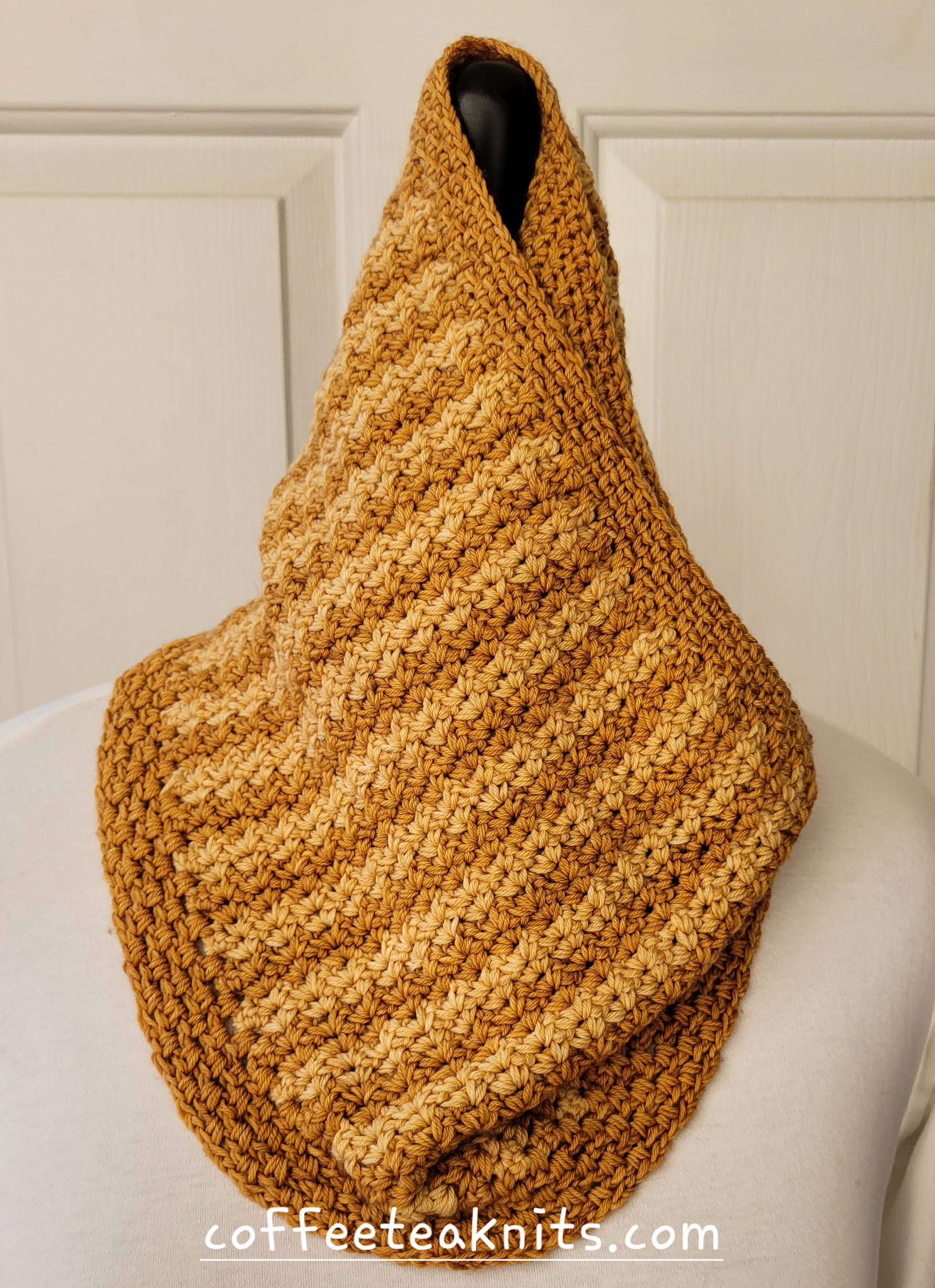
The Autumn Leaves Cowl is crocheted back and forth, holding two strands of the same colorway of yarn together. The single crochet V stitch pattern is repeated several times, with alternating colorways every 2 rows. A row of crochet moss stitch is made from the right side to the left. This helps flatten the bump from the V stitch cluster. A row of crochet moss stitch is also made on the foundation chain edge, starting at the slip knot stitch. The 2 edges are then joined using the crochet zig-zag join method. Lastly, the Autumn Leaves Cowl is completed with a crochet moss stitch border. This border is on both the top and bottom edges of the cowl.
The Autumn Leaves Cowl Pattern (text and images for personal use only)
Materials Needed: Yarn: Marianted Yarns in Beeswax and Honeycomb colorways (1 skein each) Tapestry needle to weave in ends Gauge: 4 stitches per inch in the single crochet V stitch pattern Crochet hook: US size F-5 or 3.75 mm for the single crochet V stitch pattern. US size E-4 or 3.5 mm for the top and US size G6 or 4.00 mm for the bottom crochet moss stitch border edges
Abbreviations: sc: single crochet hdc: half double crochet RS: right side WS: wrong side […]: pattern repeat
Crochet Skill Level: Basic level with single crochet, half double crochet and slip stitches
Holding two strands of Beeswax colorway yarn together, make a slip knot (How to Slip Knot) and with US size F-5 (3.75 mm) crochet hook chain 47 stitches (How to Crochet Chain).
Row 1 (RS): With the Beeswax colorway – Skip the first chain from the hook, and make a hdc (How to Half Double Crochet) in the back of the second chain (the purl bump) from the hook. Optional: You can also make the hdc on the top strand of the second chain stitch, [Skip two chains and sc (How to Single Crochet) in the next chain (back of the stitch or the top strand of the stitch), chain 2, sc again in the same stitch], Repeat […] till three stitches left, Make a hdc in the last stitch of the foundation chain (slip knot stitch), chain 1 and turn
Row 2 (WS): With the Beeswax colorway – Make a hdc in the second chain from the hook, [Make a sc in the next chain 2 space of the single crochet V stitch, chain 2, and sc again in the same chain 2 space], Repeat […] for the chain 2 spaces in the row till the last stitch, In the last stitch, make a hdc, attach two strands of the Honeycomb colorway and with it chain 1, turn
Row 3 (RS): With the two strands of the Honeycomb colorway – make a hdc in the second stitch from the hook, [Make a sc in the next chain 2 space of the single crochet V stitch, chain 2, and sc again in the same chain 2 space], Repeat […] for the chain 2 spaces in the row till the last stitch, In the last stitch, make a hdc, chain 1 and turn
Row 4 (WS): With the two strands of the Honeycomb colorway – make a hdc in the second stitch from the hook, [Make a sc in the next chain 2 space of the single crochet V stitch, chain 2, and sc again in the same chain 2 space], Repeat […] for the chain 2 spaces in the row till the last stitch, In the last stitch, make a hdc, change to two strands of Beeswax colorway and with it chain 1, turn
Row 5 (RS): With the Beeswax colorway – Make a hdc in the second chain from the hook, [Make a sc in the next chain 2 space of the single crochet V stitch, chain 2, and sc again in the same chain 2 space], Repeat […] for the chain 2 spaces in the row till the last stitch, In the last stitch, make a hdc, chain 1, turn
Row 6 (WS):With the Beeswax colorway – Make a hdc in the second chain from the hook, [Make a sc in the next chain 2 space of the single crochet V stitch, chain 2, and sc again in the same chain 2 space], Repeat […] for the chain 2 spaces in the row till the last stitch, In the last stitch, make a hdc, change to two strands of the Honeycomb colorway and with it chain 1, turn
Repeat Rows 3 to 6, twenty-five more times. Cut yarn (Beeswax colorway) and pull through the last stitch
Joining the Foundation Chain Edge to the Bind off (last row) Edge:
The Bind off (last row) Edge – With 2 strands of the Honeycomb colorway yarn, crochet one row of the moss stitch, [sc into the stitch between the V stitch clusters, chain 1, sc into the next stitch between the V stitch clusters], repeat […] all along the bind off edge row. This is to flatten the V stitch cluster bumps of the last row (bind off edge) (see image below)
Cut yarn and pull through the last stitch
Foundation Chain Edge – With 2 strands of the Honeycomb colorway yarn, crochet one row of the moss stitch to the foundation chain edge (see image below)
Cut yarn and pull through the last stitch.
With 2 strands of the Honeycomb colorway yarn, make a slip knot and pull the slip knot through the last crochet moss stitch on the left side (see image below) and chain 1
Make a crochet zig zag* join going from the left to the right side of the cowl
Crochet Moss Stitch for the Top Edge Border: Continuing with the Honeycomb colorway yarn, change to US size E-4 (3.5 mm) crochet hook. Begin with the last stitch of the crochet zig zag join (beginning of round).
Round 1: [sc, chain 1, skip the next stitch], repeat […] all along the right side (top edge) of the cowl Round 2: [sc in the chain 1 space, chain, sc in the next chain 1 space], repeat[…] till the end of the round Rounds 3 and 4: Repeat Round 2 Round 5: Repeat Round 2 till the beginning of round. Slip stitch into the first stitch of the round, cut yarn and pull yarn through
Crochet Moss Stitch for the Bottom Edge Border: With 2 strands of Honeycomb colorway yarn and US size G-6 (4.0 mm) crochet hook, make a slip knot. Insert hook into the first stitch of the crochet zig zag join and pull it through, chain 1 (beginning of round)
Round 1:[sc, chain 2, skip the next stitch], repeat […] all along the bottom edge of the cowl Round 2: [sc in the chain 2 space, chain 2, sc in the next chain 2 space], repeat […] till the end of the round Rounds 3 and 4: Repeat Round 2 Round 5: Repeat Round 2 till the beginning of round. Slip stitch into the first stitch of the round, cut yarn and pull yarn through
Weave in the ends, wash and block to complete the Autumn Leaves Cowl
Another fundamental crochet stitch is the double crochet. It is taller than a single crochet and a half double crochet, but shorter than a treble or triple crochet. Fabric made with the double crochet stitch is less dense than fabric made with a half double crochet or single crochet. Below, you can find video and written instructions demonstrating how to make a double crochet for all the rows after the foundation chain when crocheting with your right hand.
How to Double Crochet (video in slow motion):
Written Instructions on How to Double Crochet in the rows after the Foundation Chain:
After a double crochet in the last chain stitch of the foundation chain row has been worked, chain three and turn the work for the second and all subsequent rows.
Wrap working yarn around the hook (counterclockwise), skip the first three stitches from the loop on the crochet hook and insert the crochet hook under both the strands of the next stitch
Wrap working yarn around hook (counterclockwise), catch and pull yarn under and through both the strands of the next stitch in the row
There are three loops on the crochet hook
Wrap the working yarn around the hook (counterclockwise), catch and pull yarn through the first two loops on the hook. There are two loops left on the crochet hook
Wrap the working yarn around the hook (counterclockwise), catch and pull yarn through the remaining two loops on the hook. There is one loop left on the crochet hook
Wrap working yarn around the hook (counterclockwise) and insert the crochet hook under both the strands of the next stitch in the row
Repeat steps 3 to 6
Repeat steps 7 and 8 till the last stitch in the row
For the last stitch of the row, repeat steps 3 and 6, chain three and turn
Repeat Steps 2 to 9 to double crochet all the subsequent rows
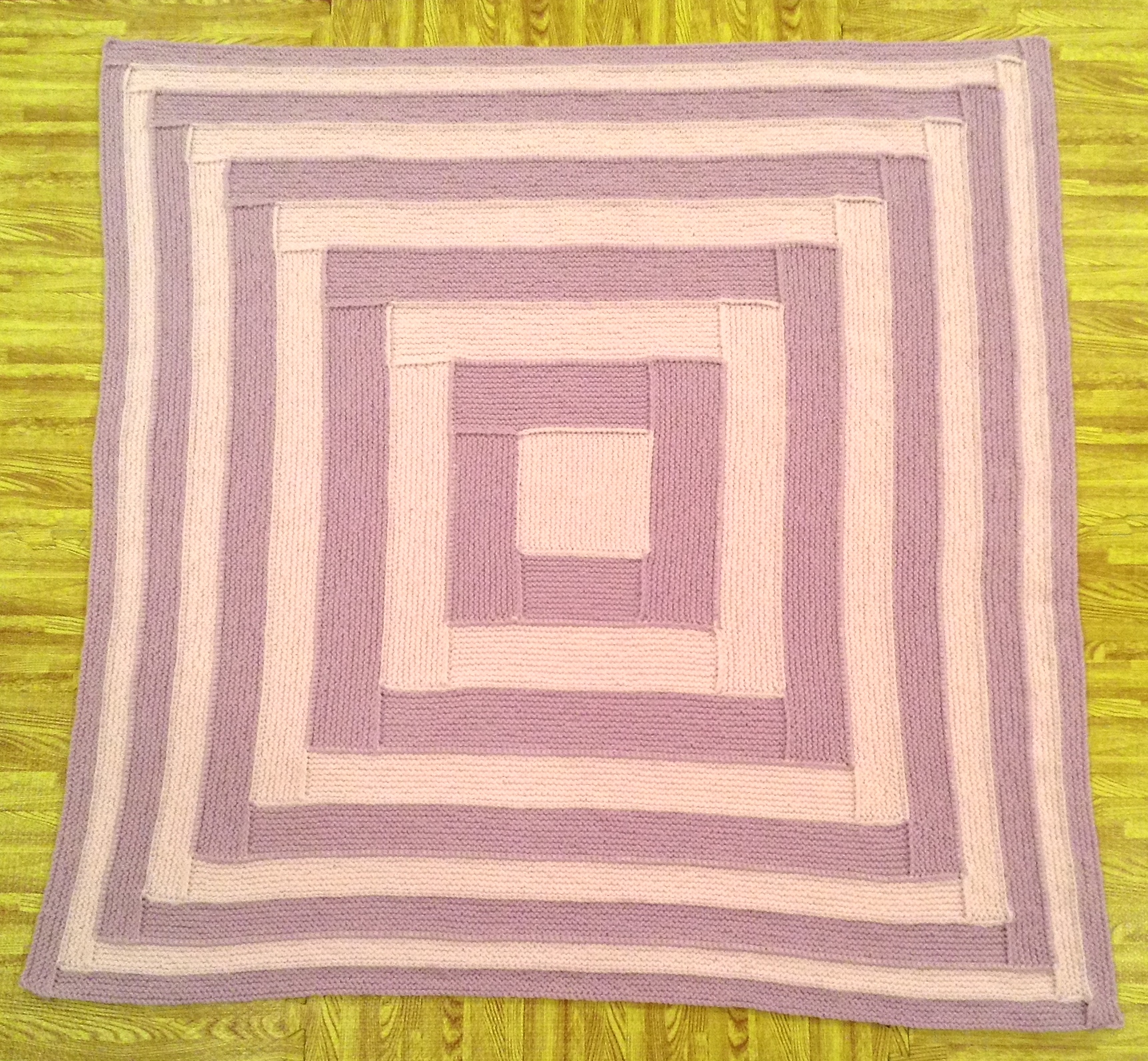
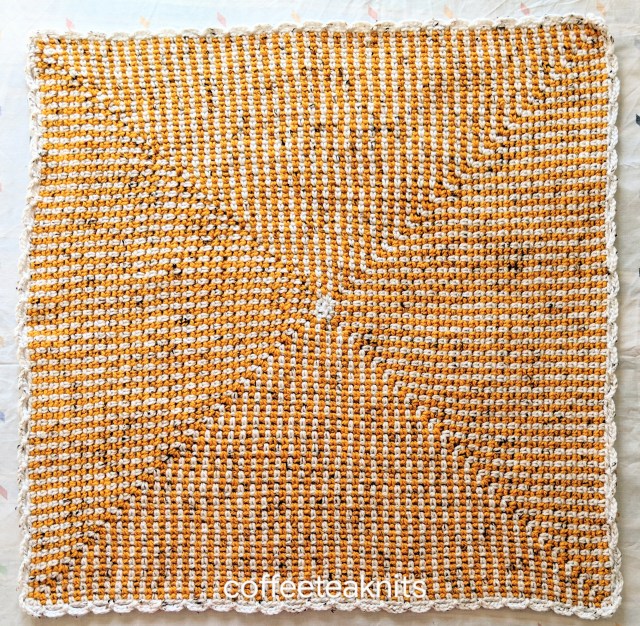
Since my post “To crochet or knit center out” I’ve crocheted several dishcloths and a worsted weight baby blanket using the center out technique. A baby blanket with bulky yarn (yarn weight: 5) and the center out moss stitch pattern can be crocheted in a matter of days.
Crochet Moss Stitch Baby Blanket with bulky yarn
I also started knitting a center out garter stitch baby blanket. Knitting a center out baby blanket in one piece with worsted weight or bulky yarn is a bit more challenging in terms of hand fatigue. This is because the growing blanket with the increasing number of stitches gets heavier since the weight of the whole blanket rests on the circular needle and your hands. Needless to say that the center out knitted baby blanket is still a work in progress.
Not so with a crocheted center out baby blanket. There is only one stitch on the crochet hook and the weight of the growing blanket rests on your lap or sofa/chair etc. By using bulky yarn or holding two strands of lighter weight yarn together a blanket can be crocheted very quickly with varying combinations.
This makes center out crocheting more appealing and versatile to me than center out knitting – at least for large seamless projects made in one piece.
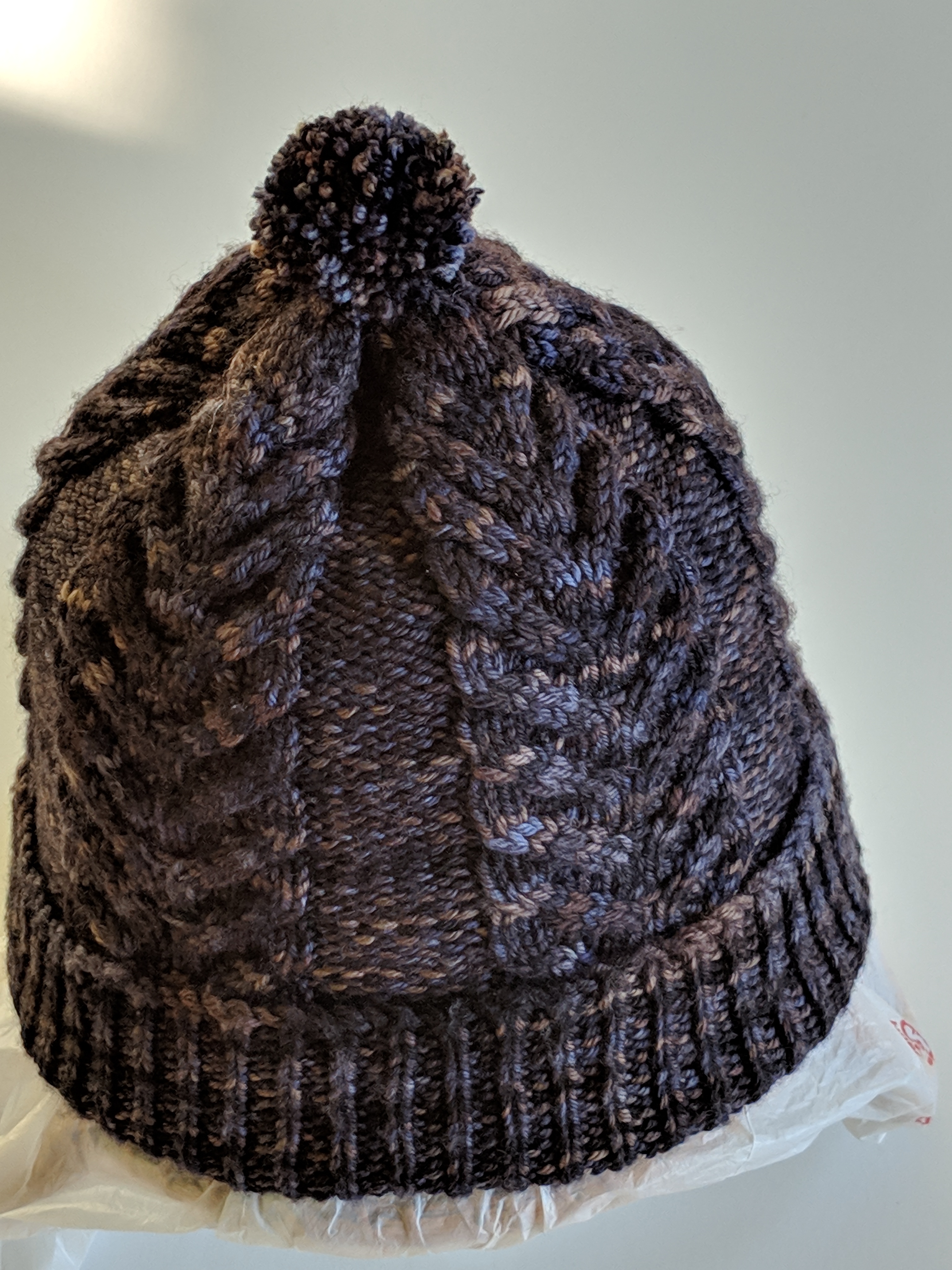
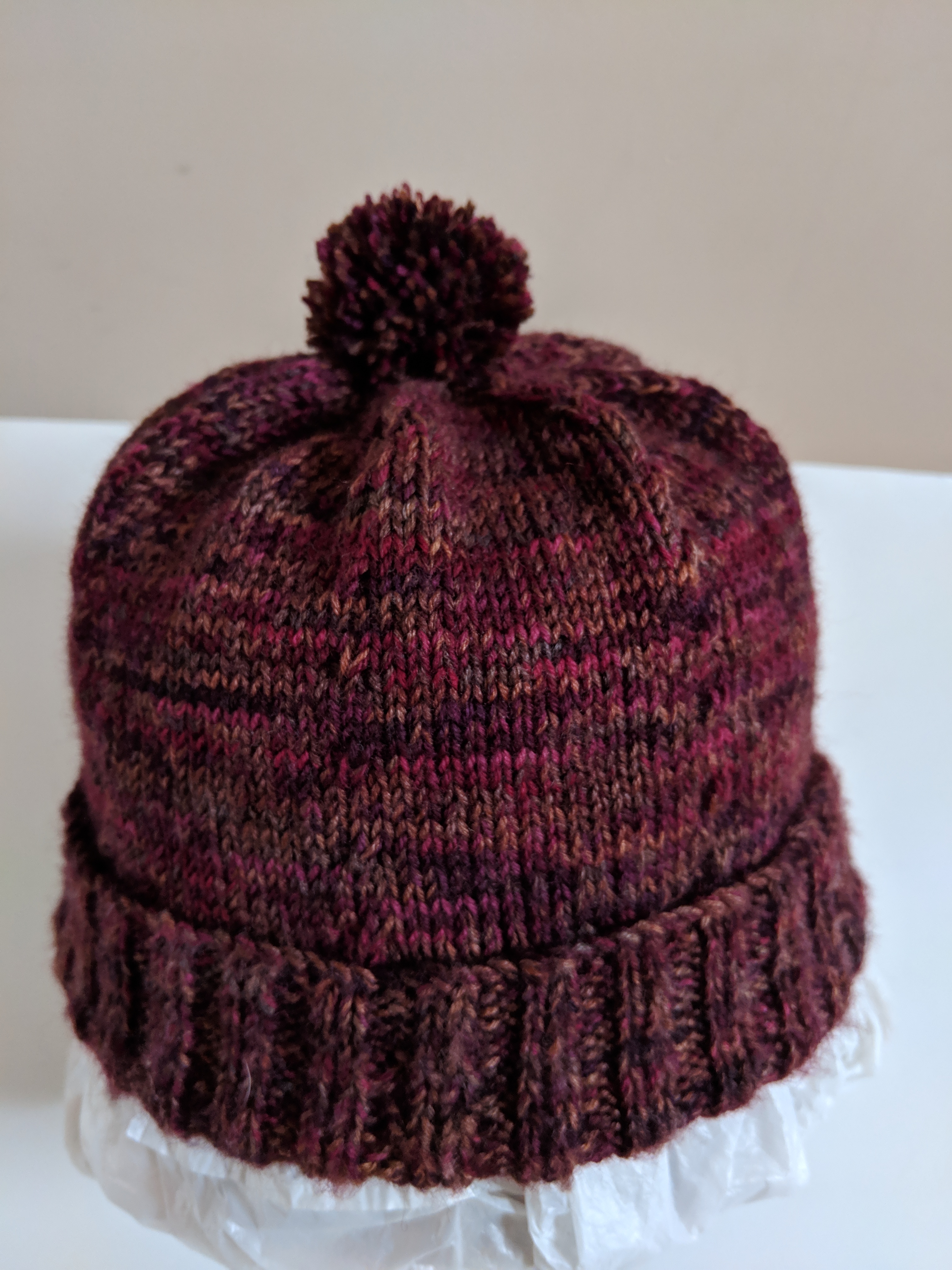
Hat made with two strands of sock yarn held together. More details can be found on my Ravelry project page.
a year to explore and learn more challenging stitch patterns,
and a year to continue knitting sweaters and blankets with the yarn I already have
Finished Sweaters:
Finally after two years this lingering Top down striped tunic is complete. It turned out to be different than what I had initially planned to knit. While I was not quite successful in helical striping (see more details on my Ravelry project page), I did learn how to crochet and sew the duplicate stitch.
In the Top down moss stitch pullover, I knit a double brim collar after picking up the provisionally cast on stitches.
My knit-along experience: I enjoyed exploring many new knit stitch patterns this year. The knitted squares were joined using the flat single crochet method (a tutorial by ChemKnits). Since I made the blanket twice as big as the knit-along pattern, the blanket fits a queen size bed lengthwise but could be a little wider for a better side drape. I may add additional squares to increase the width or add more rounds to the single crochet edging.
The things I would do differently was to make sure I had all the yarn I needed before modifying the knit-along pattern and joining the knitted squares earlier rather than waiting for all of them to be completed. Knitting a square or two a month with yarn I already have is doable and great for exploring and learning many knit stitch patterns. At the end of the year there’s a completed blanket. This year was a year I learnt new stitch patterns, learnt a new joining method, tried different knitting and crocheting techniques, and took part in a year-long knit-along.
Thanks to all knitters and non knitters who read this blog.