The Dotted Dishcloth Pattern PDF

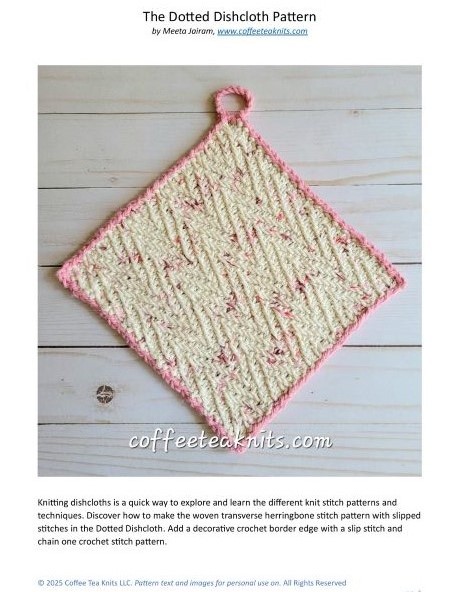
The Dotted Dishcloth Pattern PDF includes the following:

  • It is 4 pages with images
  • It has detailed knitting instructions to knit the Dotted Dishcloth with the textured woven transverse herringbone knit stitch pattern
  • It has the Abbreviations and Materials sections for this dishcloth
  • It also includes detailed instructions with an image on how to crochet the slip stitch border edge

Knitting Skills: knit, purl, slipping stitches purlwise, cast-on, and bind off
Crochet Skills: slip knot, crochet slip stitch, and chain one

Good for beginners who want to explore textured stitch patterns and techniques

Download and enjoy this ad-free pattern pdf. The Dotted Dishcloth pattern was originally posted in June 2024 on Coffee Tea Knits

Thank you to my subscribers and readers of this blog. As always your feedback is much appreciated.


~coffeeteaknits.com

.

.

Tutorial Series: Slip Slip Knit (SSK)

Another way to decrease a stitch in knitting is to do a “Slip Slip Knit (SSK)”. In SSK, a stitch is decreased when two stitches are slipped and then knit together through the back loop. Decreasing stitches like increasing stitches are techniques in knitting used to give shape to knitted items. Unlike K2tog (Tutorial Series: K2tog and P2tog) technique which forms a right-leaning decrease, SSK technique forms a left-leaning decrease. The written instructions and video below show how to decrease one stitch for right handed knitting.

Slip Slip Knit (SSK):


The Steps for Slip Slip Knit (SSK):

  1. Slip the first two stitches knitwise (one at a time) on the left knitting needle to the right knitting needle
  2. Transfer the two slipped stitches (one at a time) now on the right knitting needle back to the left knitting needle
  3. Insert the right knitting needle through the back loop of those two slipped stitches on the left knitting needle
  4. Knit (Tutorial Series: Knit and Tink) the two stitches together through the back loop (one stitch decreased)
  5. Repeat steps 1 to 4 as needed for a knitting pattern

~coffeeteaknits.com

Tutorial Series: The Knitted Cast-On Method

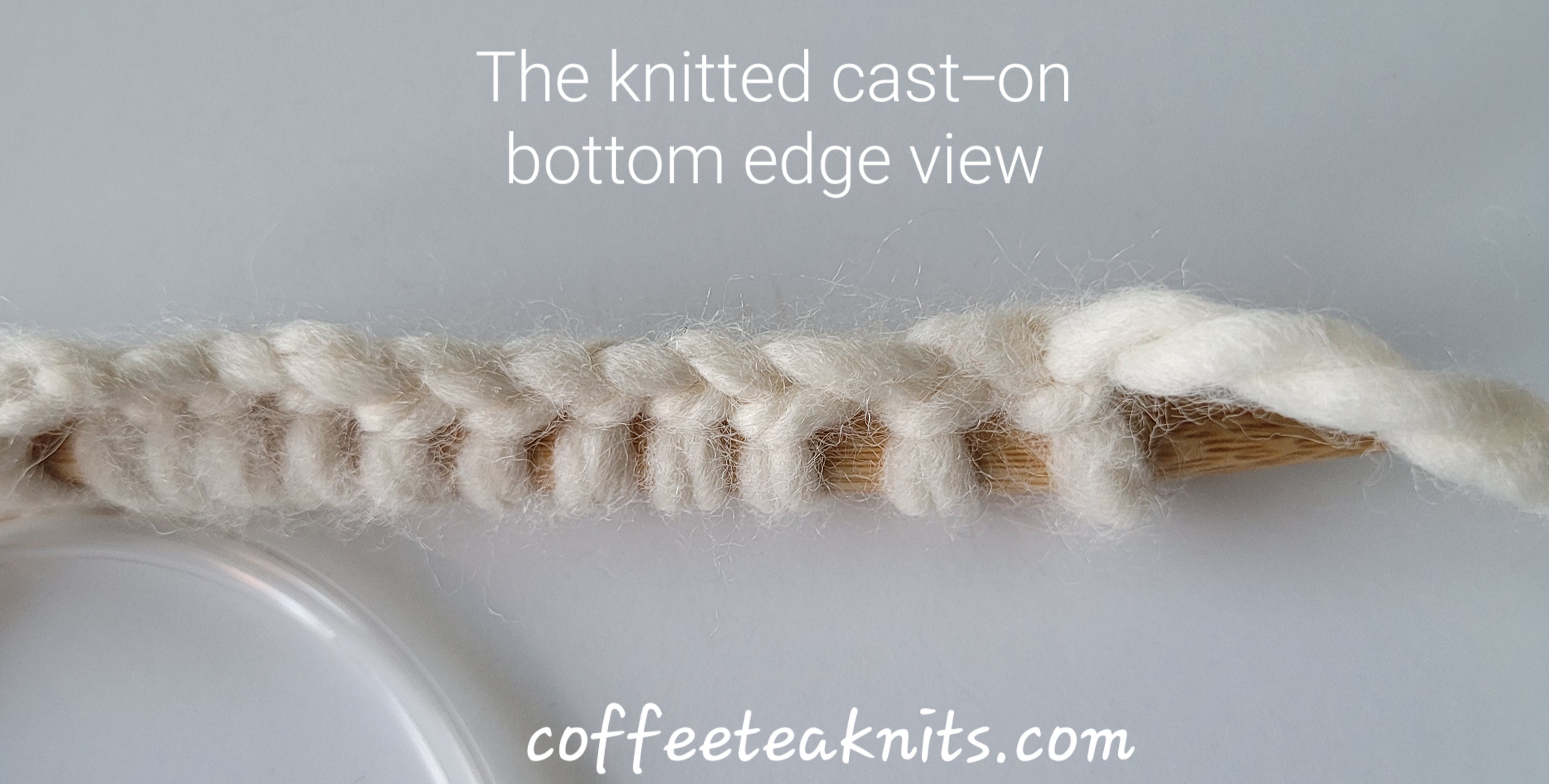
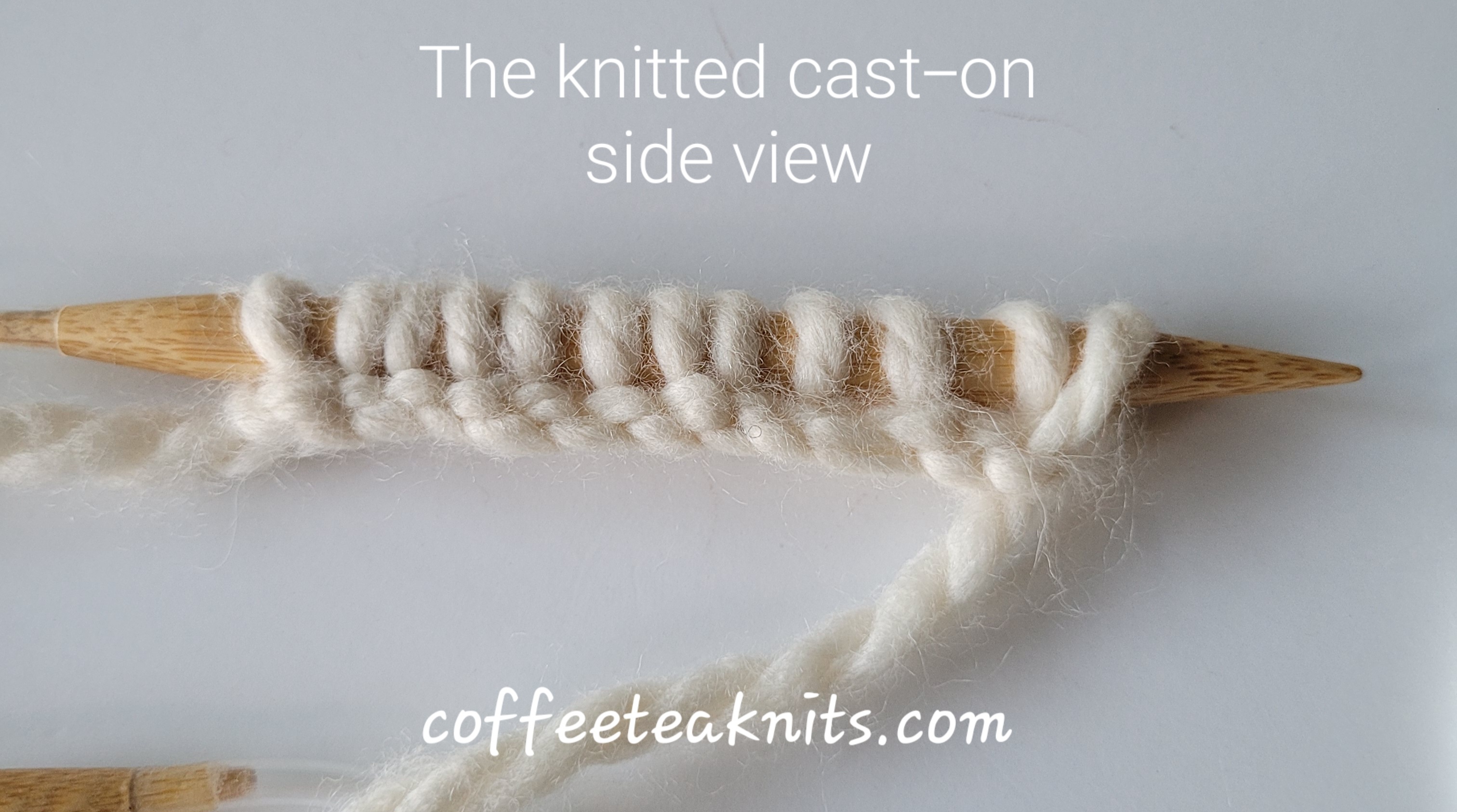
The Knitted Cast-On is one of many cast-on techniques in knitting. Other cast-on methods include the long tail cast-on, cable cast-on, provisional cast-on, the thumb method, picot cast-on, stretchy cast-on etc. The Knitted cast-on method is ideal for large projects. Use it when a large number of stitches are required for cast-on. This is typical for a blanket or shawl pattern. This method like the cable cast-on does not need a long yarn tail. The Knitted Cast-On is also a great beginner friendly cast-on method since it is basically the knit stitch. I usually use the knitted cast-on for knitting projects where all the edge stitches are later picked up for a more decorative border. The knitted cast-on begins with a slip knot and each additional stitch is then knitted on. The written instructions and video below on how to do the knitted cast-on is shown for right-handed knitting.

The Knitted Cast-On:


The Knitted Cast-on Steps:

  1. Make a slip knot (How To Slip Knot)
  2. Transfer the slip knot loop onto the left knitting needle
  3. Insert the right knitting needle into the slip knot and bring working yarn around and in between the two needles as if to knit (Knit and Tink)
  4. Catch and pull the working yarn loop onto the right knitting needle
  5. Transfer the new stitch loop from the right knitting needle onto the left knitting needle by inserting the left knitting needle under the front strand of the new stitch loop
  6. Tug the working yarn to tighten the new stitch loop on the left knitting needle
  7. Insert the right knitting needle into the first stitch on the left knitting needle
  8. Catch and pull the working yarn loop with the right knitting needle
  9. Move the new stitch loop from the right knitting needle to the left knitting needle by inserting the left knitting needle under the front strand of the new stitch loop
  10. Tug the working yarn to tighten the new stitch loop on the left knitting needle
  11. Repeat steps 7 – 10 till the desired number of stitch count is reached for a knitting project

~coffeeteaknits.com

Tutorial Series: The Cable Cast-on Method

One of the decorative cast-on methods I like to use is the Cable Cast-on method. I’ve used this cast-on method on several of my knits including The Cozy Season Shrug and The Cozy Mood Winter Hat. It gives a nice finished edge for any top down or bottom up knitted items. An advantage to this method is that you don’t need a long yarn tail to begin casting on the stitches. The cable cast-on begins with a slip knot and each additional stitch is added using an alternative to the knitted cast-on method. The written instructions and video below on how to do the cable cast-on is shown for right handed knitting.

The Cable Cast-on Method

The Cable Cast-on Steps:

  1. Make a slip knot
  2. Transfer the slip knot onto the left knitting needle
  3. Insert the right knitting needle into the slip knot and bring working yarn around and in between the two needles as if to knit
  4. Catch and pull the working yarn loop onto the right knitting needle
  5. Transfer the new stitch loop from the right knitting needle onto the left knitting needle
  6. Insert the right knitting needle into the space in between the bottom of first 2 stitches on the left knitting needle
  7. Catch and pull the working yarn loop with the right knitting needle
  8. Transfer the new stitch loop from the right knitting needle onto the left knitting needle
  9. Repeat steps 6 – 8 till the desired number of stitch count is reached for a knitting project

~coffeeteaknits.com

Yarn and a loom

My interest in weaving started more as a way to reduce the amount of yarn I had but now it has grown into a genuine interest in this craft. Weaving dates back to the paleolithic era and is much older than knitting or other fiber related crafts. In 2019 when I got a rigid heddle loom, I found myself learning about warp and weft** and trying out various combinations of plain weaving first with whatever yarn I had on hand and then with yarn bought specifically for weaving. 

Since weaving has been around for so long, there are many different types of weaving patterns other than plain weaving. Other weaving patterns with a rigid heddle loom include soumak, leno, tapestry, and many more. The loom with two heddles and pick up sticks makes double width weaving as well as various twill weave patterns possible. I’ve just begun to discover all these various weaving patterns and combinations.

I find weaving to be much faster than knitting or crocheting. Large projects such as blankets or wraps can be woven in a matter of days rather than months. Weaving has also reduced my yarn stash. Although I still prefer knitting sweaters, hats etc., it is a relief to be able to weave the larger projects quickly. Since I have only one rigid heddle loom I can only weave one project at a time.

Weaving, however, requires more finishing afterwards than knitting or crocheting. For someone who likes seamless knits with minimal finishing, finding the motivation to finish the woven pieces can be quite a task. Also, unlike knitting or crocheting where most of the leftover yarn is left intact, discarding some of the warp yarn still bothers me. Even with these minor drawbacks, I find the craft of weaving very interesting and look forward to learning more about it.


** warp yarn runs lengthwise and is held under tension whereas the weft yarn runs side to side and is inserted by the weaver.


~coffeeteaknits.com