Tutorial Series: How to Crochet Slip Stitch

Slip stitches in crochet serve to join rounds, connect pieces, create texture, and form edges, making them an essential technique for any crocheter. The crochet slip stitches are tighter stitches that create a dense fabric, providing not only durability but also a polished finish to your projects. In the crochet slip stitch technique, there is no row height increase, allowing for a seamless transition between different sections of your work. In the single crochet slip stitch, a new loop is created with the working yarn that is then slipped through the loop on the crochet hook, effectively allowing you to move through your pattern without adding bulk. The slip stitch technique is useful in enhancing the overall structure and aesthetics of the crocheted item.
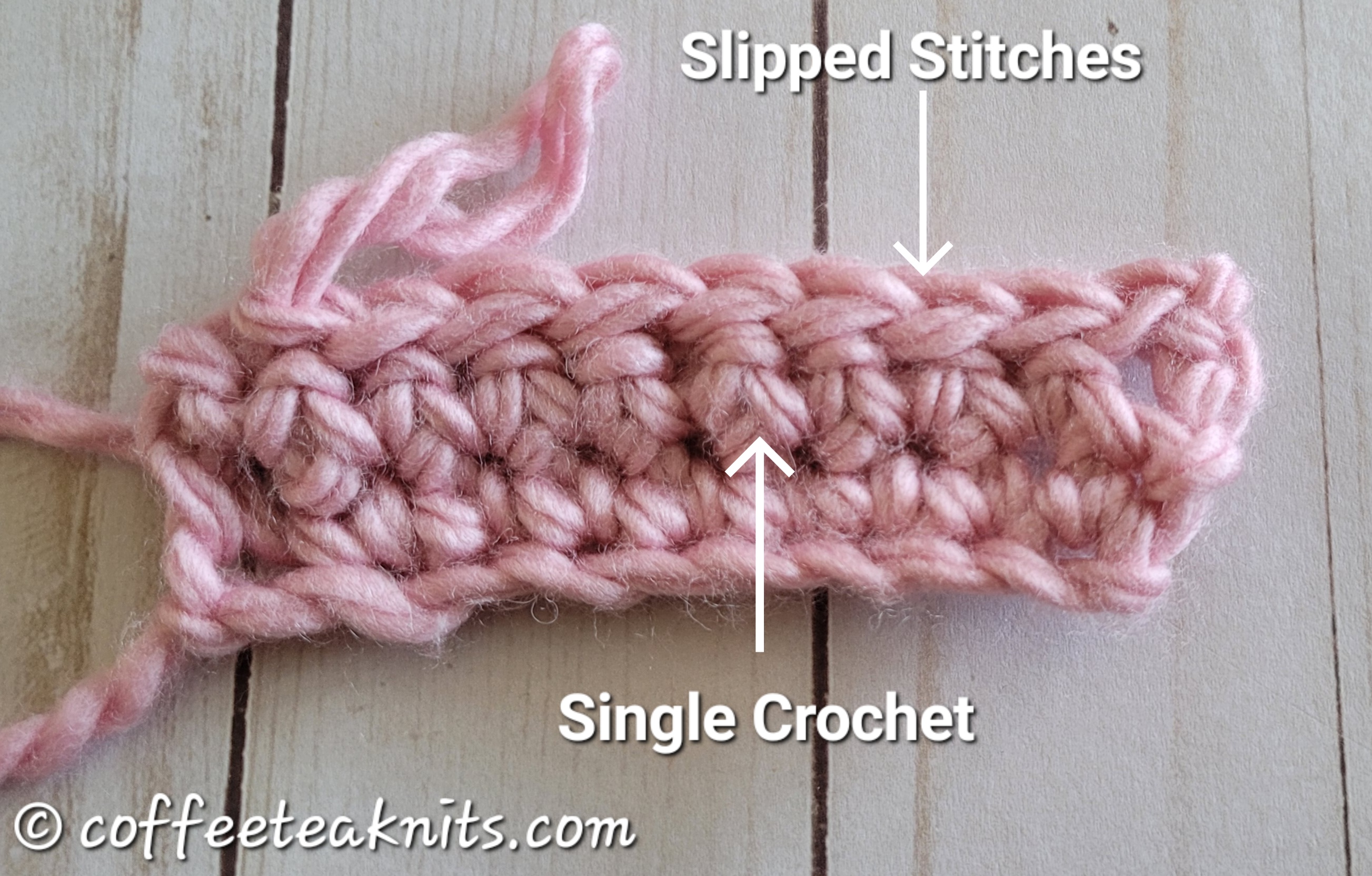

I have used crochet slip stitches as a decorative edging in “The With a Twist Dishcloth“, “The Speckles Dishcloth“, and “The Dotted Dishcloth“. The crochet zigzag slip stitch has been used to join together the “Winterland Cowl“, the “Four Seasons Blanket“, and the “Waiting Season Cowl“.

The video and written steps below on how to use the Crochet Slip Stitch technique in a single crochet stitch pattern are shown below for right-handed crocheters.

How to Crochet Slip Stitch:


Written Steps on How to Crochet Slip Stitch:

  1. Insert crochet hook under both strands into the next stitch as if to single crochet (Tutorial Series: How to Single Crochet)
  2. Catch the working yarn with the hook and pull the loop under and through both the strands of the next stitch
  3. Pull the same loop through the loop on the crochet hook
  4. Repeat Steps 1 to 3 until the end of the row for the crochet slip stitch

~coffeeteaknits.com

Tutorial Series: Increase and Decrease in Single Crochet

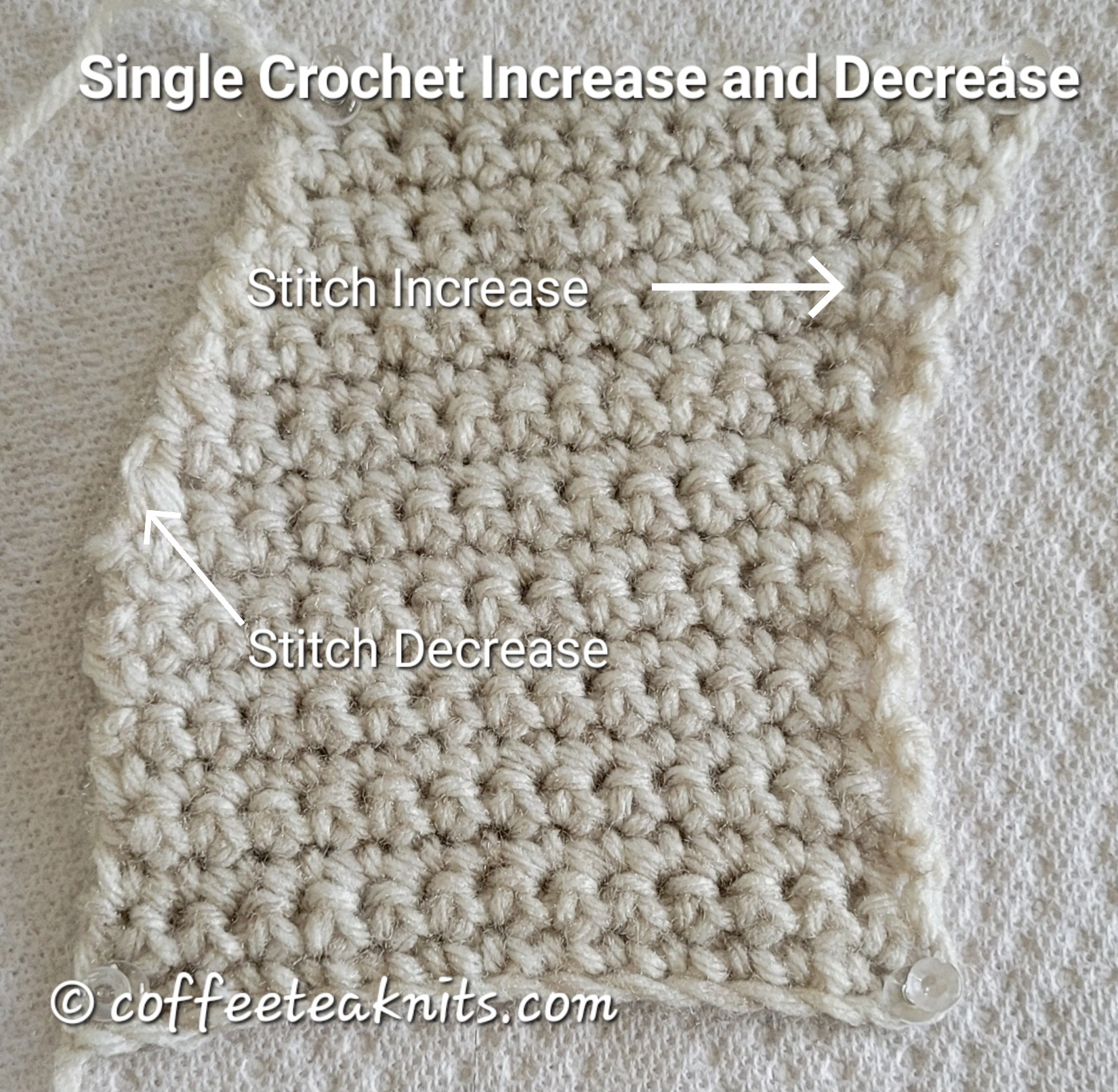
As in knitting, shaping in crochet also includes increasing or decreasing of stitches in a pattern. For a stitch increase in single crochet, another single crochet is made in the same stitch. For a stitch decrease, the crochet hook is inserted into two single crochet stitches and then the yarn over loop is pulled through all the loops on the crochet hook. The image below shows one stitch increase and one stitch decrease in single crochet.


The written instructions and video below show how to increase and decrease a stitch in single crochet for right-handed crocheting.

Stitch Increase in Single Crochet:


Written Instructions for Stitch Increase in Single Crochet:

  1. Single crochet (Tutorial Series: How to Single Crochet)
  2. Insert the crochet hook under both the strands of a stitch
  3. Wrap working yarn counterclockwise around hook (yarn over), catch and pull the loop through both the strands of that stitch
  4. There are two loops on the crochet hook
  5. Wrap the working yarn counterclockwise around hook (yarn over), catch and pull loop through the two loops on the crochet hook (one single crochet stitch made)
  6. Repeat Steps 2 to 5 in the same stitch again for one single crochet stitch increase (two single crochet stitches made in the same stitch)

Stitch Decrease in Single Crochet:


Written Instructions for Stitch Decrease in Single Crochet:

  1. Insert the crochet hook under both the strands of a stitch as if to single crochet
  2. Wrap working yarn counterclockwise around hook (yarn over), catch and pull the loop through both the strands of that stitch (2 loops on the hook)
  3. Insert crochet hook under both strands of the next stitch
  4. Wrap working yarn counterclockwise around hook (yarn over), catch and pull the loop through both the strands of that stitch (3 loops on the hook)
  5. Wrap working yarn counterclockwise around hook (yarn over), catch and pull loop through all three loops on the crochet hook
  6. One single crochet stitch decreased
  7. Repeat Steps 1 to 5 to decrease one single crochet stitch

~coffeeteaknits.com

Tutorial Series: Knit One Below (K1b)

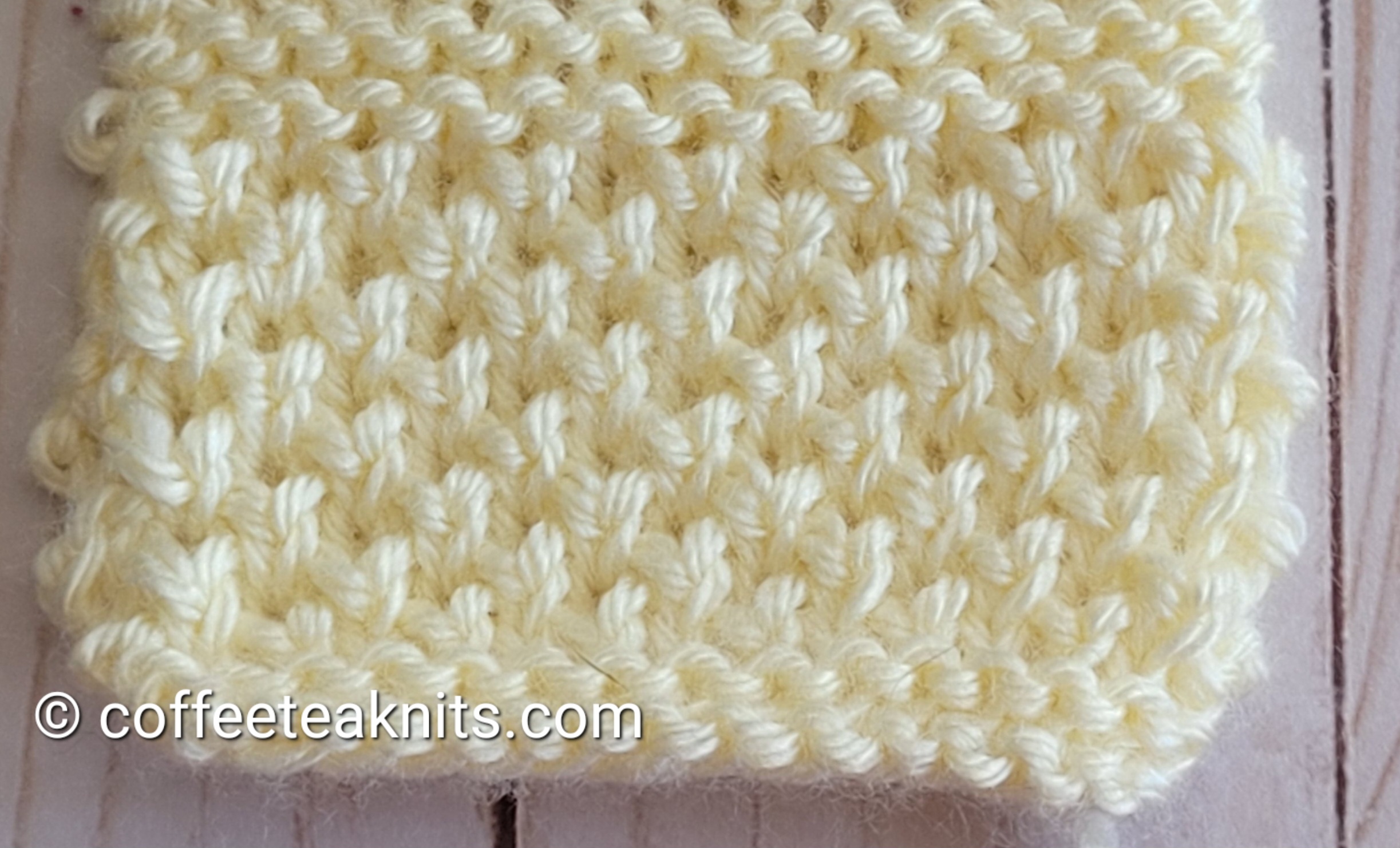
Knit one below (K1b) is a technique where the stitch on the knitting needle is not worked or knit. Instead the knit stitch right below is worked or knit. Examples of stitch patterns where K1b is used include the twisted seed stitch pattern, fisherman’s rib stitch pattern, some half brioche stitch patterns, honeycomb and textured rib patterns. Knit one below forms a fluffy and textured fabric. I have used K1b technique in the twisted seed stitch pattern for the Summertime Dishcloths and The Comfy Hat 1 patterns.

The twisted seed stitch pattern looks similar to the half brioche stitch pattern but differs in the techniques used to create the textured fabric (see image below)


The video and written instructions below show how to use the K1b technique for right-hand knitting

Knit One Below (K1b):

Written instructions for Knit one Below (K1b):

  • Insert the right knitting needle from front to back into the center of the stitch below the first stitch on the left knitting needle
  • Wrap the working yarn around the top of the right knitting needle to form a new loop (Tutorial Series: Knit and Tink)
  • Pull the loop through the center of the stitch below the stitch on the left knitting needle
  • The new knitted stitch is now on the right knitting needle
  • Slip the un-worked first stitch off the left knitting needle

~coffeeteaknits.com

Tutorial Series: Make One (M1R and M1L)

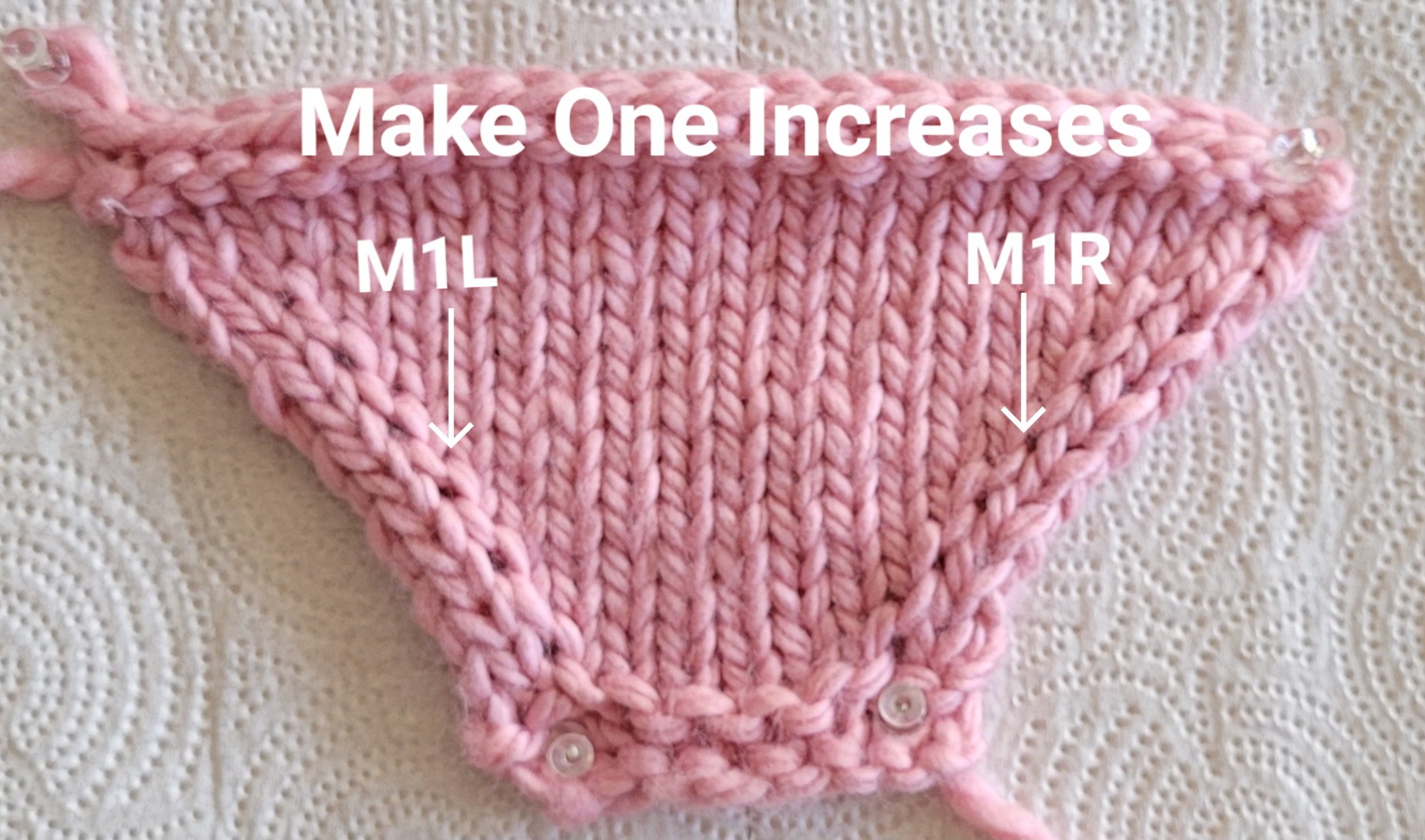
Another way to increase one stitch in knitting is to make one right (M1R) or make one left (M1L). M1L is a left-leaning increase while M1R is a right-leaning increase.


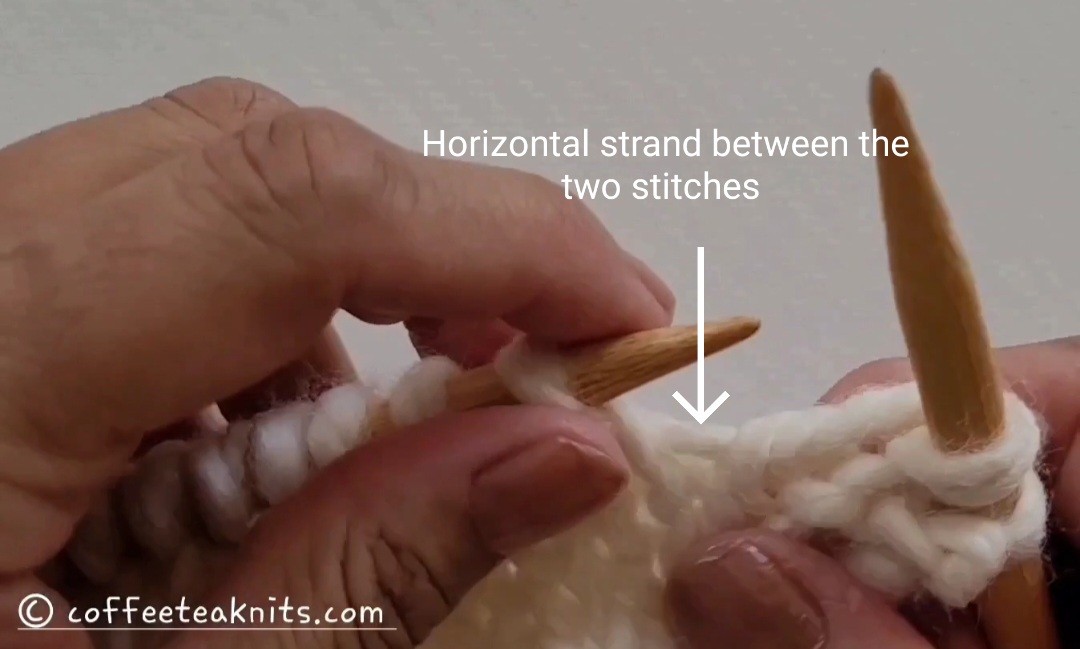
The horizontal strand between the stitch just worked on the right knitting needle and the stitch on the left knitting needle is lifted and placed on the left knitting needle. The loop made by the horizontal strand on the left knitting needle is then knit to create an extra stitch.

The make one (M1R or M1L) increase technique is used in the shaping of knitted items such as shawls, sweaters etc.


The video clip and the written instructions below show how to make one right (M1R) and then how to make one left (M1L) for right hand knitting.

Make One (M1R and M1L):


Written Instructions for M1R and M1L:

Make One Right (M1R):

  • To M1R increase, insert left knitting needle from back to front under the horizontal strand between the stitch on the right and the left knitting needle
  • Slip the horizontal strand loop on the left knitting needle
  • Insert the right knitting needle in the front leg of the loop on the left knitting needle (Tip: Loosen the front leg of the loop by tugging and pulling it with the right knitting needle as shown in the video clip above)
  • Knit (Tutorial Series: Knit and Tink) the front leg of the horizontal strand loop to increase one stitch

Make One Left (M1L):

  • To M1L increase, insert left knitting needle front to back under the horizontal strand between the stitch on the right and the left knitting needle
  • Slip the horizontal strand loop on the left knitting needle
  • Insert the right knitting needle in the back leg of the loop on the left knitting needle
  • Knit (Tutorial Series: Knit and Tink) the back leg of the horizontal strand loop to increase one stitch


~coffeeteaknits.com

Tutorial Series: Slip, Knit, Pass (Skp)

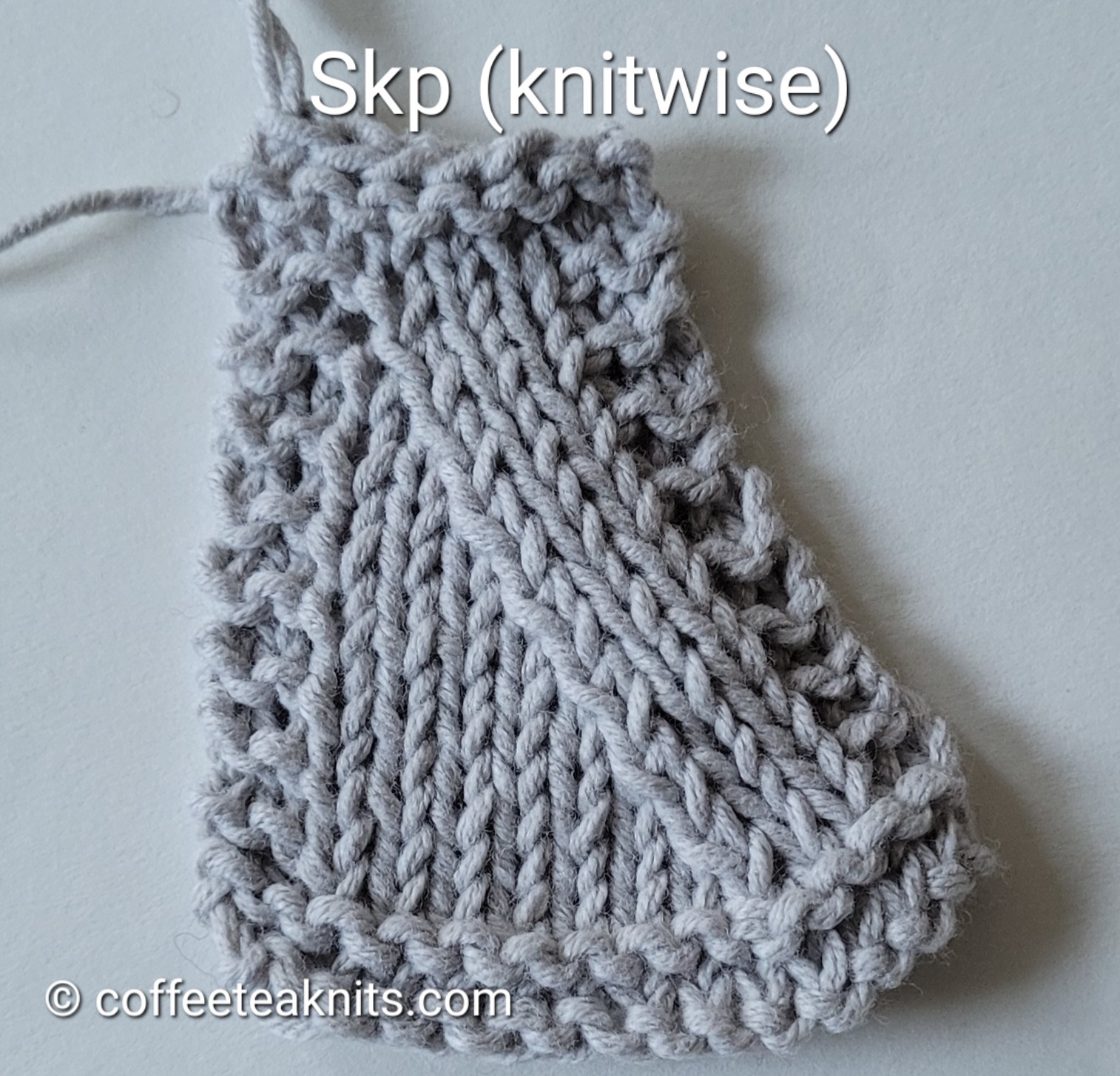
The Skp is a method used to decrease one stitch in knitting. Skp means to slip 1 stitch, either knitwise or purlwise. Then, knit 1 stitch. Finally, pass the slipped stitch over the knit stitch. Unlike K2tog (Tutorial Series: K2tog and P2tog) which is a right slanting decrease, Skp is a left slanting decrease. When you slip the stitch knitwise or purlwise, the knitting looks different. This topic is covered in the Tutorial Series: Slipping Stitches (knitwise and purlwise). A knitting pattern usually will specify how to slip a stitch. Below are samples of Skp knitwise and Skp purlwise.


The video and written instructions below show how to slip stitches knitwise and purlwise for right-hand knitting.

Slip, Knit, Pass (Skp): Video below shows how to Skp knitwise and then purlwise


Written Instructions for Skp (knitwise and then purlwise):

  • Slip the next stitch (knitwise or purlwise) on the left knitting needle onto the right knitting needle
  • Knit (Tutorial Series: Knit and Tink) the next stitch on the left knitting needle
  • Insert the left knitting needle into the front loop of the slipped stitch on the right knitting needle
  • Pull and lift the slipped stitch with the left knitting needle and pass it over the knitted stitch on the right knitting needle
  • Slide the slipped stitch off the right knitting needle
  • Repeat as specified in a knitting pattern to make one stitch decrease

~coffeeteaknits.com