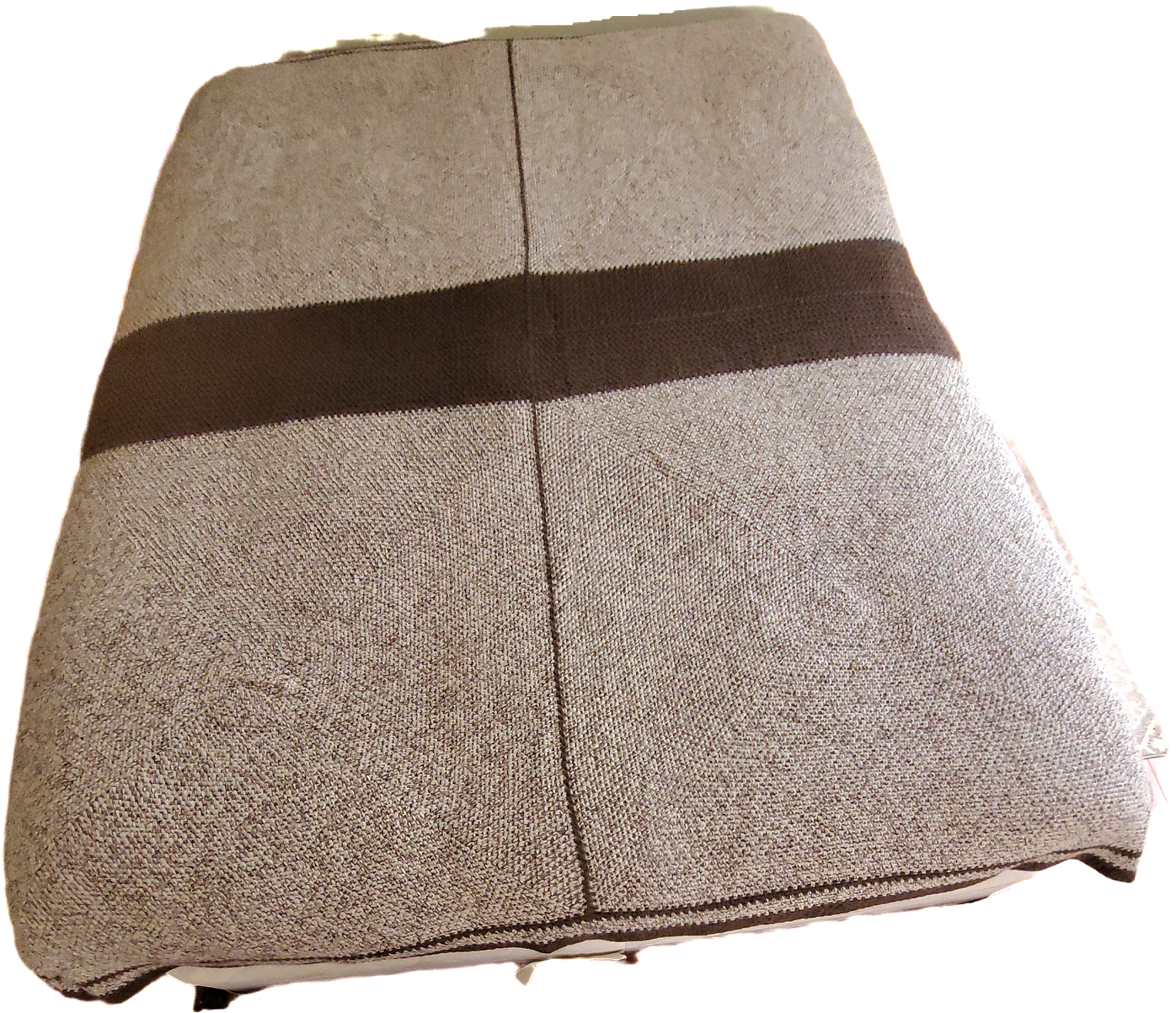
The Silky Long Scarf Pattern


JoAnn Fabrics closed it stores May 2025. Of course I went on a yarn-buying spree there before it closed. I’m sure other knitters and crocheters did too. One of my purchases was KC Botanical by K+C Yarns, a yarn exclusive to JoAnn Fabrics. Unfortunately it’s not available now since the store has closed. While the yarn is discontinued, there may be some still be available on eBay, Amazon, etc. Yarn Sub offers a list of yarns the can be substituted for the KC Botanical yarn. This yarn is a bamboo viscose and cotton blend with a soft shiny sheen. It’s smooth and drapes well. I used this yarn in a different colorway to crochet The Favorite Things Cowl. The yarn is thick and made up of several (I counted 18) strands of thinner threads. Because of the several strands it has a tendency to split at times while crocheting. Overall I like this yarn and crocheted The Silky Long Scarf with it.

The Silky Long Scarf is a rectangular scarf. It is crocheted flat from corner to corner using a single crochet, chain one stitch pattern. The Silky Long Scarf like The Springtime Baby Blanket and Favorite Things Cowl starts with a chain of 2. There is an increase section, a length extension section, and a decrease section. In the increase section, four stitches are increased every other row. This continues until a specific number of stitches is reached. In the length extending section the number of stitches stays the same while the scarf increases in length. Finally in the decrease section, four stitches are decreased every other row down to one stitch. A crochet moss stitch in the round is used as a border to finish the scarf. The Silky Long Scarf pattern is beginner friendly and the length or the width can be customized easily.

The Silky Long Scarf Pattern (text and images for personal use only)

Materials Needed:
Yarn: KC Botanical by K+C Yarn in the Camel colorway (2 skeins used for the scarf). An image of the yarn label with more information is shown below


Gauge:  4.5 stitches per inch in the variation crochet moss stitch pattern 
Crochet hook: US size H-8 (5.00 mm) 
Tapestry needle to weave in ends

Abbreviations:
sc: single crochet (Tutorial Series: How to Single Crochet)
[…]: pattern repeat
Skill Level: Beginner friendly pattern with single crochet and crochet chains

Crochet Foundation Chain:

  • Chain 2 using US size H-8 (5.00 mm) crochet hook

Increase Section:

  • Row 1 (RS): Single crochet, chain 1 in the second foundation chain stitch from the crochet hook, sc, chain 1 again in the same second stitch and turn
  • Row 2 (WS): Single crochet in the second stitch from the crochet hook, chain 1, skip a stitch and sc in the last stitch, chain 1 and turn (4 stitches)
  • Row 3 (RS): Single crochet in the second stitch from the crochet hook, chain 1, sc in the same stitch again, chain 1, skip a stitch, and sc in the last stitch, chain 1, sc in the same last stitch again, chain 1 and turn 
  • Row 4 (WS): Single crochet in the second stitch from the crochet hook, chain 1, [skip a stitch, sc in the next stitch, chain 1], repeat […] till the last stitch, sc in the last stitch, chain 1 and turn (8 stitches)
  • Row 5 (RS): Single crochet in the second stitch from the crochet hook, chain 1, sc in the same stitch again, chain 1, [skip a stitch, sc in the next stitch, chain 1], repeat […] till the last stitch of the row, sc in the last stitch, chain 1, sc again in the same last stitch, chain 1 and turn 
  • Row 6 (WS): Single crochet in the second stitch from the crochet hook, chain 1, [skip a stitch, sc in the next stitch, chain 1], repeat […] till the last stitch, sc in the last stitch, chain 1 and turn (12 stitches)

Repeat Rows 5 and 6 of the increase section till 28 stitches in the row. The width can be increased by continuing repeats of Rows 5 and 6 till preferred width reached. The Silky Long Scarf is about 5 inches wide. 

Length Extension Section: There is an increase of two stitches in the beginning of the row and a decrease of two stitches at the end of the row. 

  • Row 1 (RS): Single crochet in the second stitch from the crochet hook, chain 1, sc in the same stitch again, chain 1, [skip a stitch, sc in the next stitch, chain 1], repeat […] till 4 stitches left, insert crochet hook into the next stitch, yarn over and pull the loop under and through that stitch (there are 2 loops on the crochet hook), skip a stitch and insert hook in the last stitch, yarn over and pull the loop under and through that stitch (three loops on the hook), yarn over and pull loop through the three loops on the hook, chain 1 and turn
  • Row 2 (WS): Single crochet in the second stitch from the crochet hook, chain 1, [skip a stitch, sc in the next stitch, chain 1], repeat […] till the last stitch, sc in the last stitch, chain 1 and turn

Repeat Rows 1 and 2 of the length extension section till preferred length is reached. The Silky Long Scarf is about 94 inches in length

Decrease Section:

  • Row 1 (RS): Skip the first stitch, insert crochet hook into the next stitch, wrap yarn around the crochet hook and pull the loop under and through that stitch (there are 2 loops on the crochet hook), skip a stitch and insert hook in the next stitch (4th stitch from the beginning), wrap yarn around the crochet hook and pull the loop under and through that stitch (three loops on the hook now), yarn over and pull loop through the three loops on the hook, chain 1, [skip a stitch, sc in the next stitch, chain 1], repeat […] till 4 stitches left, insert crochet hook into the next stitch, yarn over and pull the loop under and through that stitch (there are 2 loops on the crochet hook), skip a stitch and insert hook in the last stitch, yarn over and pull the loop under and through that stitch (three loops on the hook), yarn over and pull loop through the three loops on the hook, chain 1 and turn
  • Row 2 (WS): [Skip the first stitch and sc in the next stitch, chain 1], repeat […] till 2 stitches left, sc in the last stitch, chain 1, and turn 

Repeat Rows 1 and 2 of the decrease section till 4 stitches left. Facing the right side of the work, insert hook into the second stitch, yarn over and pull the working yarn through that stitch (2 loops on the hook). Skip a stitch and insert crochet hook into the next stitch, yarn over and pull working yarn through that stitch (three loops on the hook). Yarn over and pull working yarn through all three loops. One loop remains on the crochet hook.  

Crochet Moss Stitch Border (in the round):

Round 1:

  • With the remaining loop on the hook, chain 2, sc in the same stitch again and chain 1 (beginning of round). Facing the top left corner of right side of the scarf turn counter clockwise
  • Pick up stitches in the crochet in moss stitch pattern (pick up a stitch and sc, chain 2, skip the next stitch and repeat) all along the left side
  • At the bottom left corner edge stitch of the right side of the scarf, sc, chain 2, sc again in the same corner stitch, chain 2
  • Turn and pick up stitches in the crochet moss stitch pattern (pick up a stitch and sc, chain 2, skip the next stitch and repeat) along the bottom edge.
  • At the bottom right corner edge stitch of the right side of the scarf, sc, chain 2, sc again in the same corner stitch, chain 2
  • Turn and pick up stitches in the crochet in moss stitch pattern (pick up a stitch and sc, chain 2, skip the next stitch and repeat) going up all along the right side
  • At the top right corner edge stitch of the right side of the scarf, sc, chain 2, sc again in the same corner stitch, chain 2
  • Turn and pick up stitches in the last row in the crochet in moss stitch pattern (pick up a stitch and sc, chain 2, skip the next stitch and repeat) along that last row till the beginning of the round.

Insert hook into the chain 2 space of the beginning of round stitch, yarn over and pull working yarn through the remaining loop on the crochet hook.

Weave in the ends. Wash and block the Silky Long Scarf.


~coffeeteaknits.com

The Hydrangea Dishcloth Pattern


Five years ago I posted my first pattern “A Seed Stitch Mitered Dishcloth“. It was a time of social distancing and staying at home due to the coronavirus pandemic. Since we couldn’t go out much the yard and the flowers became our outdoor retreat. At that time the Hydrangeas were in full bloom (June-July) and I took a picture of these flowers with the “Seed Stitch Mitered Dishcloth”

A Seed Stitch Mitered Dishcloth

It’s five years later, and the hydrangeas are in bloom again.


Hence, the name of the dishcloth pattern for the month is the Hydrangea Dishcloth pattern. The Hydrangea Dishcloth is a mitered square dishcloth with a double vertical decrease and a 1×1 mistake rib stitch pattern. Two stitches are decreased using the double vertical decrease technique. I prefer this technique to the K2tog and SSK techniques I used in the Seed Stitch Mitered Dishcloth. The SSK does not form a straight line like the K2tog or the double vertical decrease.


The Hydrangea Dishcloth is then finished with a round of the wrapped single crochet stitch. Crochet chain stitches are added end of the round for the hanging loop.

Materials Needed to knit the Hydrangea Dishcloth:

Yarn 1: Peaches & Crème in Panorama colorway
Yarn 2: Lily Sugar’n Cream in Country Red colorway
Gauge: 4.5 stitches per inch in 1×1 mistake rib stitch pattern
Knitting Needles: US #7 (4.5 mm) and US #8 (5.0 mm) 
Crochet hook: G-6 (4.0 mm)
Tapestry needle to weave in ends

Knitting Skill Level: Advanced Beginner to Intermediate level – knit, purl, slip stitches, and familiarity with reading knitting patterns
Crochet Skill Level: Basic level with chain one and slip stitch 

Abbreviations:

  • K: Knit
  • P: Purl
  • sm: slip marker
  • pm: place marker
  • wyif S1: with yarn in front slip one stitch purlwise
  • RS: right side
  • s2kp: slip two stitches on the left knitting needle as if to knit 2 stitches together onto the right knitting needle, knit the next stitch on the left knitting needle, and then pass the two slipped stitches on the right knitting needle with the left knitting needle over the knitted stitch (see photo tutorial below*)
  • s2kp with a stitch marker: slip 2 stitches as if to knit 2 stitches together onto the right needle, remove stitch marker, K1, pass the 2 slipped stitches over the knitted one, place the removed stitch marker back on the right knitting needle
  • WS: wrong side
  • Sc or sc: single crochet (Tutorial Series: How to Single Crochet)
  • […]: stitch pattern repeats

Knitting Skill Level: Advanced beginner – knit, purl, and slip 2 together
Crochet Skill Level: Basic level with chain one and slip stitch

The Hydrangea Dishcloth Pattern (text and images for personal use only)

Knitting the Mitered Square:

With Yarn 1, cast on 65 stitches with a US #8 (5.0 mm) knitting needle using any longtail cast on method of choice.

With a US #7 (4.5 mm) knitting needle begin knitting as follows:

  • Setup Row (WS): K1, pm, P till 1 stitch before last, pm, wyif S1
  • Row 1 (RS): K1, sm, [K1, P1] 15 times, s2kp, pm, [P1,K1] 15 times, sm, wyif S1
  • Row 2 (WS): K1, sm, P to marker, sm, P to marker, sm, wyif S1 
  • Row 3 (RS): K1, sm, K1, [P1, K1] till 2 stitches before marker, s2kp with a stitch marker (slip 2 stitches as if to knit 2 stitches together onto the right needle, remove marker, K1, pass the 2 slipped stitches over the knitted one, place the removed stitch marker back on the right knitting needle), K1, [P1, K1] till marker, sm, wyif S1
  • Row 4 (WS): K1, sm, P to marker, sm, P to marker, sm, wyif S1
  • Row 5 (RS): K1, sm, [K1, P1] till 2 stitches before marker, s2kp with a stitch marker (slip 2 stitches as if to knit 2 stitches together onto the right needle, remove marker, K1, pass the 2 slipped stitches over the knitted one, place the removed stitch marker back on the right knitting needle), [P1, K1] till marker, sm, wyif S1
  • Row 6 (WS): K1, sm, P to marker, sm, P to marker, sm, wyif S1
  • Row 7 (RS): K1, sm, K1, [P1, K1] till 2 stitches before marker, s2kp with a stitch marker (slip 2 stitches as if to knit 2 stitches together onto the right needle, remove marker, K1, pass the 2 slipped stitches over the knitted one, place the removed stitch marker back on the right knitting needle), K1, [P1, K1] till marker, sm, wyif S1
  • Row 8 (WS): K1, sm, P to marker, sm, P to marker, sm, wyif S1

Repeat Rows 5 to 8 twelve more time (nine stitches remaining at the end of Row 56)

  • Row 57 (RS): Repeat Row 5
  • Row 58 (WS): Repeat Row 6 (7 stitches remaining)
  • Row 59 (RS): K1, sm, K1, slip 2 stitches as if to knit two stitches together, remove marker, K1, pass the 2 slipped stitches over the knitted stitch, place marker back, K1, sm, wyif S1 
  • Row 60 (WS): K1, sm, P1, sm, P2, sm, wyif S1 (5 stitches remaining)
  • Row 61 (RS): K1, sm, slip 2 stitches as if to knit two stitches together, remove marker, K1, pass the 2 slipped stitches over the knitted stitch, sm, wyif S1 
  • Row 62 (WS): K1, remove marker, P1, remove marker, wyif S1 (3 stitches remaining)
  • Last Row (RS): s2kp (1 stitch remaining)

*How to do the double vertical decrease (s2kp):


Slip the last stitch off the knitting needle and onto a US #G-6 (4.0 mm) crochet hook.

The Wrapped Single Crochet Border Edge (worked in the round):

With Yarn 2 make a slip knot (How to Slip Knot) and place the loop onto the US #G-6 (4.0 mm) crochet hook. Insert the slip knot loop through the remaining stitch on the crochet hook and chain 1 (beginning of round)


Turn the work in a counter clockwise direction (see image below) to work the wrapped single crochet border stitch


Step 1: Insert the crochet hook under both the strands of the slipped edge stitch (Side 1). There are two loops on the crochet hook


Step 2: Wrap the working yarn counter clockwise around the crochet hook


Step 3: Yarn over with the working yarn and pull though the 2 loops on the crochet hook as in single crochet (see images below of the worked stitches Side 1 of the dishcloth)


Repeat Steps 1 to 3 all along Side 1 of the dishcloth.

At the corner stitch of Side 1, make 2 wrapped single crochet stitches. Then turn to the first cast on edge stitches (Side 2). Repeat Steps 1 to 3 all along Side 2 until you reach the corner stitch

At the corner stitch, make 2 wrapped single crochet stitches. Then turn to the second cast on edge stitches (Side 3). Repeat Steps 1 to 3 all along Side 3 until you reach the corner stitch

At the corner stitch, make 2 wrapped single crochet stitches. The turn to the slipped edge stitches on Side 4. Repeat Steps 1 to 3 all along Side 4 until you reach the beginning of the round stitch

Slip stitch into the first stitch of the beginning of the round and chain 10 stitches (How to Crochet Chain). Slip stitch the loop on the crochet hook into the fist chain stitch, break yarn and pull yarn through

Weave in the ends. Wash and block the Hydrangea Dishcloth


~coffeeteaknits.com

When life gave me yarn revisited

It’s been five years since the March 2020 post “When life gave me yarn“. At that time a stay at home order was in place for a couple of weeks due to the coronavirus.

What yarn meant to me then:

March 2020

When life gave me yarn, I became an avid knitter.
I started a knitting blog and embarked on a journey paved with intricate designs, colors, and textures.
Thoughts of becoming a fiber artist crossed my path several times.
On this path I also picked up the yarn related crafts of crocheting and weaving.
All throughout the journey recurring dreams of someday designing my own yarn related items beckoned me towards more and more yarn.
Now, despite my efforts to the contrary, the yarn in my life keeps growing and growing.
So, tell me my friends, is this yarn in my life just a temporary haven or is the yarn calling me?

coffeeteaknits.com


And what yarn is to me now:

July 2025

When life gave me yarn, I became an avid knitter and crocheter.
On this journey paved with intricate designs and texture, I discovered the strength of prayer and manifestation.
The meditative rhythm of fiber related crafts soothed me during coronovirus pandemic and health issues.
While on this path I became immersed in creating video tutorials.
Recurring dreams of someday designing my own yarn related items led to publishing fifty two patterns and more yarn.
Now, I’m grateful for the abundance of yarn in my life.
So, tell me my friends, is this yarn in my life here to stay? If so, I must answer.

coffeeteaknits.com

The image in the background above is a cloth I wove using the rigid heddle loom. The yarn Home Cotton® Cone Select Colors in Vineyard Dots colorway for the warp and Jelly Dots colorway for the weft.


Thank you to the fiber related crafts community, subscribers and readers of this blog for your feedback and encouragement all along my journey with yarn.


~coffeeteaknits.com

The With a Twist Dishcloth Pattern


The With a Twist Dishcloth is a knitted mitered square dishcloth. Two stitches are decreased in the middle every other row to create a mitered square. The dishcloth is knitted using cotton yarn and the twisted stockinette pattern. The mitered square is created using the double vertical decrease technique. The double decrease technique creates a vertical stitch in the center of the mitered square. Dishcloths are budget friendly and versatile in their use for cleaning, wiping, and drying. They are also useful for learning new knitting stitch patterns and techniques. The With a Twist Dishcloth is finished using the crochet moss stitch in the round. This is followed by a round of slip stitch and a chain one border edge. A hanging loop of crochet chain is added to the dishcloth in the end.

Materials Needed to knit the With a Twist Dishcloth:

Yarn: Capri Eco Cotton™ by Loops and Threads® yarn in Gray Splash colorway. The yarn was purchased from Michaels and is now discontinued. Substitute for this yarn can be found on Yarn Sub
Gauge: 4.0 stitches / 7 rows per inch after blocking in the twisted stockinette stitch pattern
Knitting Needles: US #8 (5.0 mm) for knitting the dishcloth and US #9 (5.5 mm) for cast on.
Crochet hook: US size 7 (4.5 mm) for the border edge
Tapestry needle to weave in ends

Knitting Skill Level: Advanced Beginner to Intermediate level – knit, purl, slip stitches, and familiarity with reading knitting patterns
Crochet Skill Level: Basic level with chain one and slip stitch 

Abbreviations:

  • K: Knit
  • P: Purl
  • sm: slip marker
  • pm: place marker
  • K1tbl or Ktbl: Knit 1 stitch through the back loop (Tutorial Series: K1tbl and P1tbl)
  • wyif S1: with yarn in front slip one stitch purlwise
  • RS: right side
  • s2kp: slip two stitches on the left knitting needle as if to knit 2 stitches together onto the right knitting needle, knit the next stitch on the left knitting needle, and then pass the two slipped stitches on the right knitting needle with the left knitting needle over the knitted stitch
  • s2kp with a stitch marker: slip 2 stitches as if to knit 2 stitches together onto the right needle, remove stitch marker, K1, pass the 2 slipped stitches over the knitted one, place the removed stitch marker back on the right knitting needle
  • WS: wrong side
  • Sc or sc: single crochet (Tutorial Series: How to Single Crochet)
  • […]: stitch pattern repeats

Knitting Skill Level: Advanced beginner – knit, purl, knit through back loop, slip 2 together
Crochet Skill Level: Basic level with chain one and slip stitch

The With a Twist Dishcloth Pattern (text and images for personal use only)

Knitting the Mitered Square:

Cast on 65 stitches (63 stitches plus 2 edge stitches) using a US #9 (5.5 mm) knitting needle using any longtail cast on method of choice.

With a US #8 (5.0 mm) knitting needle begin knitting as follows:

  • Row 1 (RS): K1, pm, Ktbl the next 30 stitches, s2kp, pm, Ktbl the next 30 stitches, pm, wyif S1
  • Row 2 (WS): K1, sm, P to marker, sm, P to marker, sm, wyif S1
  • Row 3 (RS): K1, sm, Ktbl to 2 stitches before marker, s2kp with a stitch marker (slip 2 stitches as if to knit 2 stitches together onto the right needle, remove marker, K1, pass the 2 slipped stitches over the knitted one, place the removed stitch marker back on the right knitting needle), Ktbl to marker, sm, wyif S1
  • Row 4 (WS): K1, sm, P to marker, sm, P to marker, sm, wyif S1

Repeat Rows 3 and 4 till five stitches left. 

Repeat Rows 3 and 4 one more time removing all the stitch makers (3 stitches remaining)

Last Row (RS): sk2p the remaining three stitches (1 stitch remaining)

Slip the last stitch off the knitting needle and onto a US #7 (4.5 mm) crochet hook

Border Edge for the With a Twist Dishcloth (worked in the round):

Round 1 (Crochet Moss Stitch):

  1. With the US #7 (4.5 mm) crochet hook, chain two and then single crochet into the V of the  last remaining stitch, chain one (beginning of the round). Turn in counter clockwise direction (see image below)
  2. [Sc in the slipped row edge stitch, chain 1, skip the next stitch], and repeat […] all along the left front side of the dishcloth till the last corner stitch
  3. Sc in the corner stitch, chain 2, sc chain one all in the same corner stitch, turn in counter clockwise direction
  4. [Sc, chain 1 in the next stitch of the first cast on edge, skip the next stitch], repeat […] all along the first cast on edge till the last corner stitch
  5. Repeat step 3 at the corner stitch
  6. [Sc, chain 1 in the next stitch of the second cast on edge, skip the next stitch], repeat […] all along the second cast on edge till the last corner stitch
  7. Repeat step 3 at the corner stitch
  8. Repeat step 4 all along the right front side of the dishcloth till the first corner stitch at beginning of round 

Round 2 (Slip stitch, chain 1):

  1. In the beginning of the round corner stitch chain 2 space, [slip stitch in the chain 2 space, chain 1], repeat […] once more . Turn in counter clockwise direction
  2. [In the chain 1 space of the crochet moss stitch, slip one, chain one], repeat […] all along the left front side of the dishcloth
  3. At the corner stitch, [slip one, chain one] twice in the chain 2 space of the crochet moss stitch. Turn in counter clockwise direction
  4. Repeat step 2 all along the first cast on edge of the dishcloth
  5. At the corner stitch, [slip one, chain one] twice in the chain 2 space of the crochet moss stitch, turn in counter clockwise direction
  6. Repeat step 2 all along the second cast on edge of the dishcloth
  7. At the corner stitch, [slip one, chain one] twice in the chain 2 space of the crochet moss stitch, turn in counter clockwise direction
  8. Repeat step 2 all along the right front side of the dishcloth till the last stitch in that row.
  9. Chain 12 stitches (Tutorial Series: How to Crochet Chain) for the hanging loop 
  10. Slip stitch the last chain stitch into the chain 2 space of the beginning of round corner stitch and pull yarn through


Weave in the ends, wash and block the With a Twist Dishcloth


~coffeeteaknits.com

Tutorial Series: The Basic Knit Bind Off

The live stitches on a knitting needle of a knitted piece are secured with a bind off row. This is also the last row. There are many bind off techniques. Some examples include the basic knit bind off, the stretchy bind off and the crochet bind off. Other examples include the picot bind off, the Icelandic bind off and so on. The basic knit method is the most common bind off method. In this technique, the first knitted stitch on the right knitting needle is passed over the second knitted stitch. This basic knit bind off is my favorite for blankets, dishcloths etc. since I can easily pick up the stitches to make a more decorative crochet or knitted border edge. I use knitting needles a size or two larger for the basic knit bind off. This makes the stitches easier to pick up for a border edge. The video and written instructions below for the basic knit bind off method are for right-hand knitting.

The Basic Knit Bind Off:


Written instructions for Basic Knit Bind Off Method:

  1. Knit (Tutorial Series: Knit and Tink) the first 2 stitches at beginning of the row
  2. Pass the first stitch knitted over the second stitch on the right hand knitting needle
  3. Slip the passed stitch off the right knitting needle (one stitch remains on the needle)
  4. Knit the next stitch on the left knitting needle
  5. Pass and slip the remaining stitch over the newly knitted stitch on the right knitting needle (one stitch remains on the right knitting needle)
  6. Repeat Steps 5 and 6 till the end of the row
  7. Break yarn and pull the working yarn through the last remaining stitch

~coffeeteaknits.com