The Simple Elegance of the Garter Stitch

Lately, I’ve rediscovered the simple elegance of the garter stitch. The garter stitch is a textured pattern that uses the knit stitch on both sides for flat knitting or knit stitch on one round followed by a purl stitch on the second round for circular knitting. It’s reversible and the edges don’t curl up making it a simple yet versatile stitch pattern. Garter stitch is usually the first stitch pattern we learn as a beginning knitter and then move on to more complex stitch patterns. . As we learn other more complex knit stitch patterns, we end up using the garter stitch pattern mostly for borders and edges of our knits. Yet one can create many beautiful and versatile knits when the garter stitch is combined with lace, shorts rows, or different yarn color variations. Several examples of knits with garter stitch patterns can be found on Ravelry.

Here is my version of the simple and elegant Purl Soho’s Dovetail Scarf pattern. I modified the pattern using a different yarn and a picot bind off. More project detail on this knitting project can be found here. For this project I used yarn left over from a previous sweater project.

Garter Stitch Scarf

So whether you are a beginning or an expert knitter, I invite you to rediscover the simple elegance of the garter stitch. I have and will be using this simple and elegant stitch pattern more this year to create a number of new knits.


~coffeeteaknits.com

Benefits of doing the twist with knit stitches

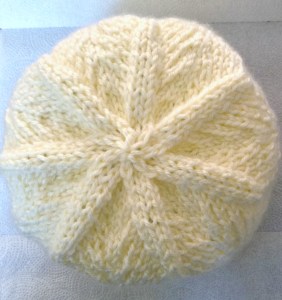
Knitted Hat with left and right twist stitches

I knit this hat using the Sitka Spruce Hat pattern by Tin Can Knits. Many thanks to Tin Can Knits for doing the 12 Days of Christmas pattern downloads. It’s a special treat for hobby knitters on a budget like me.  Yarn used: Caron’s Simply Soft in Vanilla. In keeping with my theme of minimalism in the craft of knitting I used yarn which I had purchased a few years ago.

sitka2sitka1

Left and Right twist stitches (LT and RT) are mini cable stitch patterns. These twist stitches add texture to a variety of knits and because they involve 2 or less stitches for the pattern no cable needle is required.

Benefits of doing twist stitches:

In “Why Crafting Is Great For Your Brain: A Neuroscientist Explains” several health benefits of crafting with a friend are mentioned. The versatile craft of knitting has several health benefits too (1). I found knitting with twist stitches helped most with mindfulness and focus.  So how do the benefits mentioned apply when one is knitting alone and doing the twist stitches? I’ve listed the benefits* on the left and my comments on the right.

  • Mindfulness – Yes, this was an exercise in mindfulness. You can’t watch TV while you knit or think of other things when you are doing the twist stitch round. All you can do is keep repeating 2LT, 2RT, etc. The minute your mind wanders you end up making a mistake. The knit rounds were a break where the mind could relax and think of other things.
  • Focusing attention and thoughts on a task – Definitely
  • Mental challenge and problem solving – Since I was following a pattern, the challenge was more to knit the twist stitch patterns without making mistakes.
  • Development of hand-eye coordination, spatial awareness and fine motor dexterity – Yes, to hand-eye coordination but I have to say that doing the twist stitches did cause hand fatigue for me. Even for a small project such as a hat I had to take breaks and could only do a certain number of rounds in one sitting.
  • Teaches patience and perseverance –  Yes doing the twist stitches does teach patience because this is my second hat. The first hat I messed up and instead of tinking (knitting backwards) and redoing the rounds I decided to start over with a new yarn. To help with not having to frog my knitting again I put a couple of lifelines and counted each knit round to make sure I had the same number of stitches.
  • Facilitates memory formation and retrieval – A chart was included in the pattern for reference but for each twist round memorizing the pattern repeats helped in my knitting speed
  • Social connection – This was a solitary activity for me but I am connected to the online knit community.
  • Learning and teaching – Learning – yes. Teaching – I don’t think so unless sharing my knitting experience counts as teaching?
  • Encouraging active creativity – Not so much since I was following a pattern.
  • Gives a sense of pride and achievement – I guess I can now say I know how to do twist stitches.

I found that there were some health benefits to doing the twist with knit stitches. Is that your experience too my fellow knitters?


*The list (in italics) taken from the article “Why Crafting Is Great For Your Brain: A Neuroscientist Explains” has been rearranged here according to relevance to knitting twist stitches

1. The Truth About Knitting and Crochet….They are Good for You!


~coffeeteaknits.com

Minimalism in the craft of knitting

Hello folks my theme this year is to feature minimalism in the craft of knitting. Minimalism is the use of the fewest and barest essentials or elements, as in the arts, literature, or design to create maximum effect.  Some knitwear designers (Jane Richmond, Tin Can Knits etc.) have used the art of minimal design elements to create a number of beautiful knits. Minimalism combined with Zen habits has also been applied to manage knitting projects and yarn (1). Knitting is recreational and therapeutic for me but it can easily become overwhelming with too many WIP’s (work in progress) and an increasing yarn stash (2). The benefits of applying minimalism to manage yarn and knitting projects include increased productivity, reduced clutter and decreased stress. It is for these benefits that I want to feature minimalism in the craft of knitting this year. Specifically my goal is to knit as much as possible with yarn I already have and also to feature minimal design elements in my knitting projects.

So folks will you share your theme for knitting this year?


1. Let it Go: Zen and the Art of Crafty Minimalism
2. On Knitting, Yarn Stashing and Consumerism


~coffeeteaknits.com

Coffee Tea or Knits is now Coffee Tea Knits

Hello folks welcome to Coffee Tea Knits. It’s Coffee Tea or Knits with a new name and a new look. My previous blog entries are available at here. I will be moving these entries to the new site soon. Right now I have several incomplete knitting projects that I’m trying to finish by the end of this year.

A Piece by Piece Blanket

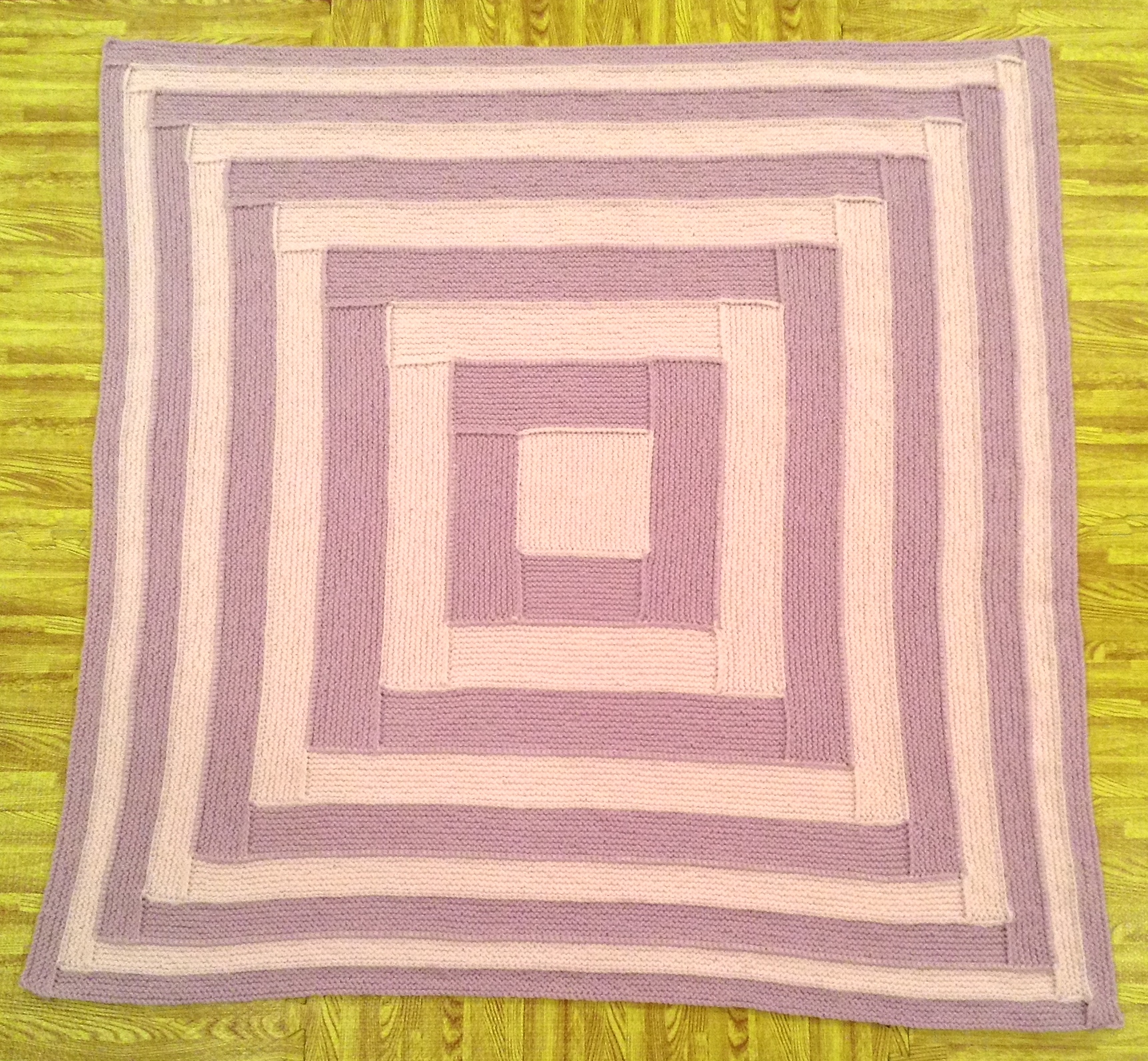
This blanket is a modified version of the log cabin scrap blanket pattern. I knit this using garter stitch and two colors only. The center square is knit first. With the last stitch remaining on the needle after bind off, the piece is rotated to one side and stitches are picked up and knitted. This process is then continued for all sides. I kept the garter stitch pattern so I could knit while I watched TV.  One side of this blanket is smooth while the other side shows the ridges of the picked up stitches. I like the pattern the ridges form. Yarn used:  Lion Brand Pound of Love in pastel pink and lilac.

blanket1

blanket2

Product vs. Process Knitter

I was reading some knitting blogs and came across product versus process knitters. A product knitter is one who has a specific purpose for the knitted item (a blanket, sweater etc.) while a process knitter is one who knits for the technique, the pattern or the yarn and not so much to complete a knitting  project.  I like to complete knitting projects so I think I’m a product knitter although the more I learn about yarn and the various stitch patterns and techniques the more I find myself thinking of the process than the project. Knitting just swatches to try out new yarn or stitch patterns still bothers me. So I think small knitting projects such as dishcloths or scarves satisfy both the product and the process knitter in me. So tell me are you a product or process knitter?


~coffeeteaknits.com