The Yarn Over Washcloth

The Yarn Over Washcloth

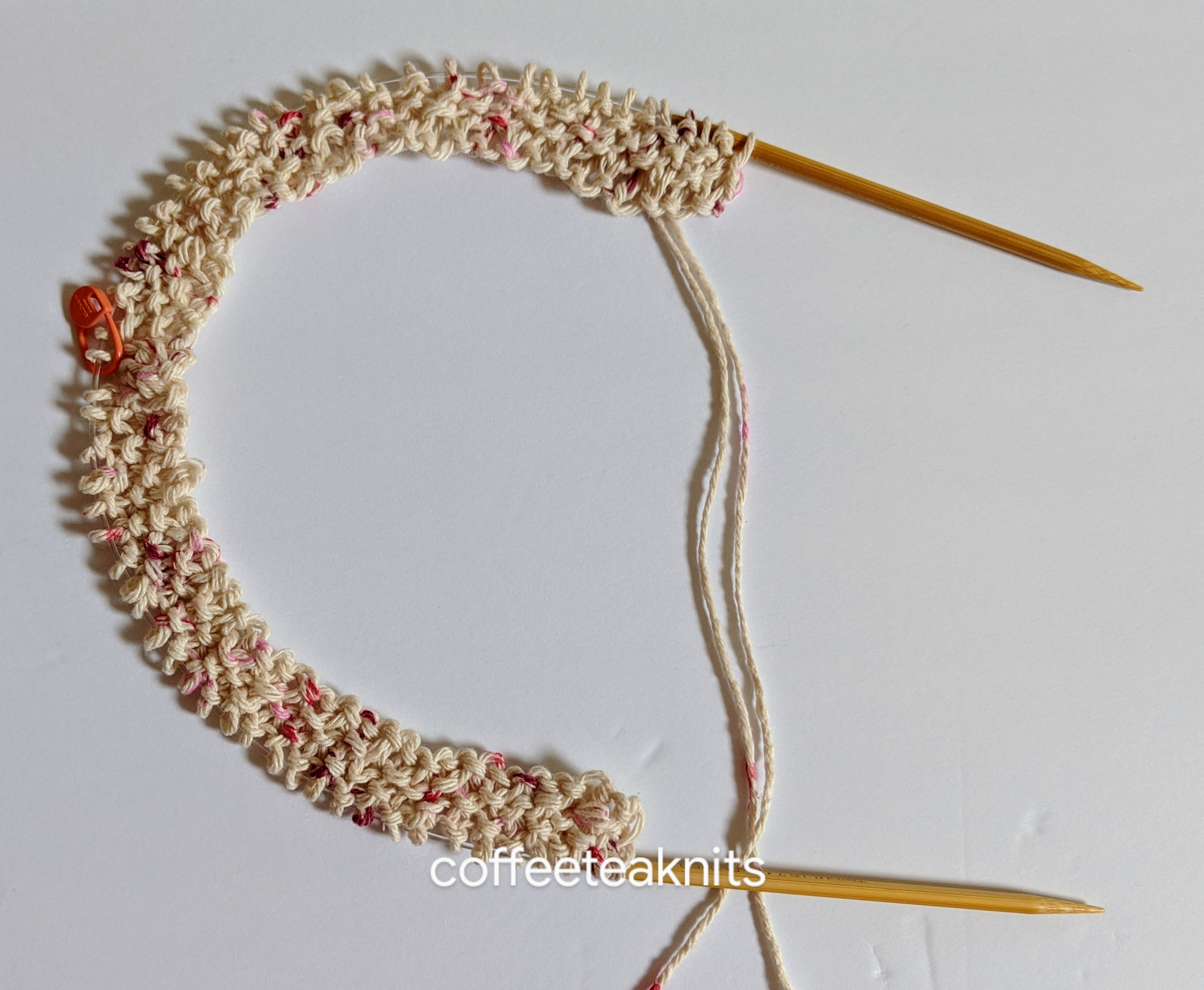
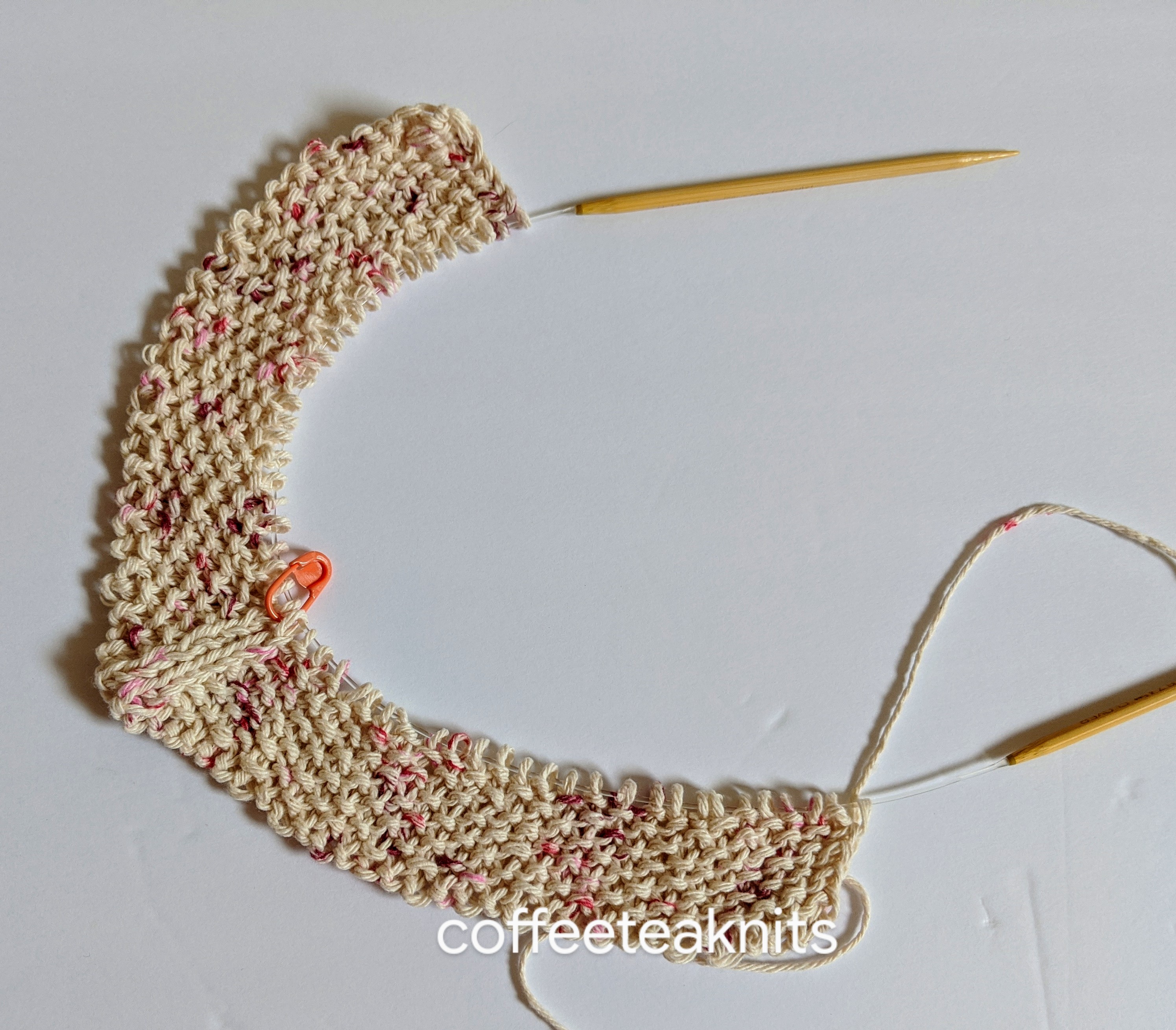
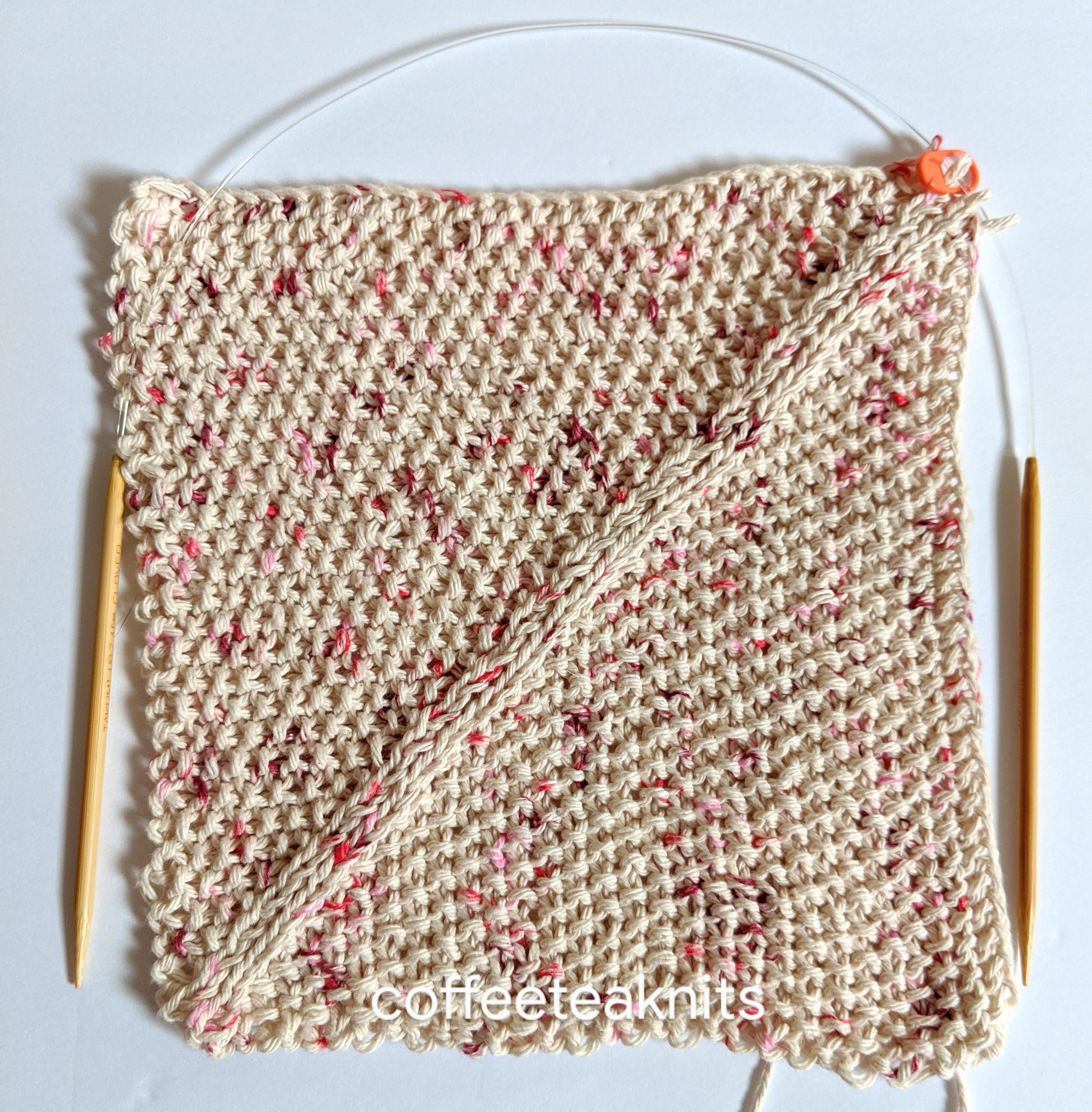
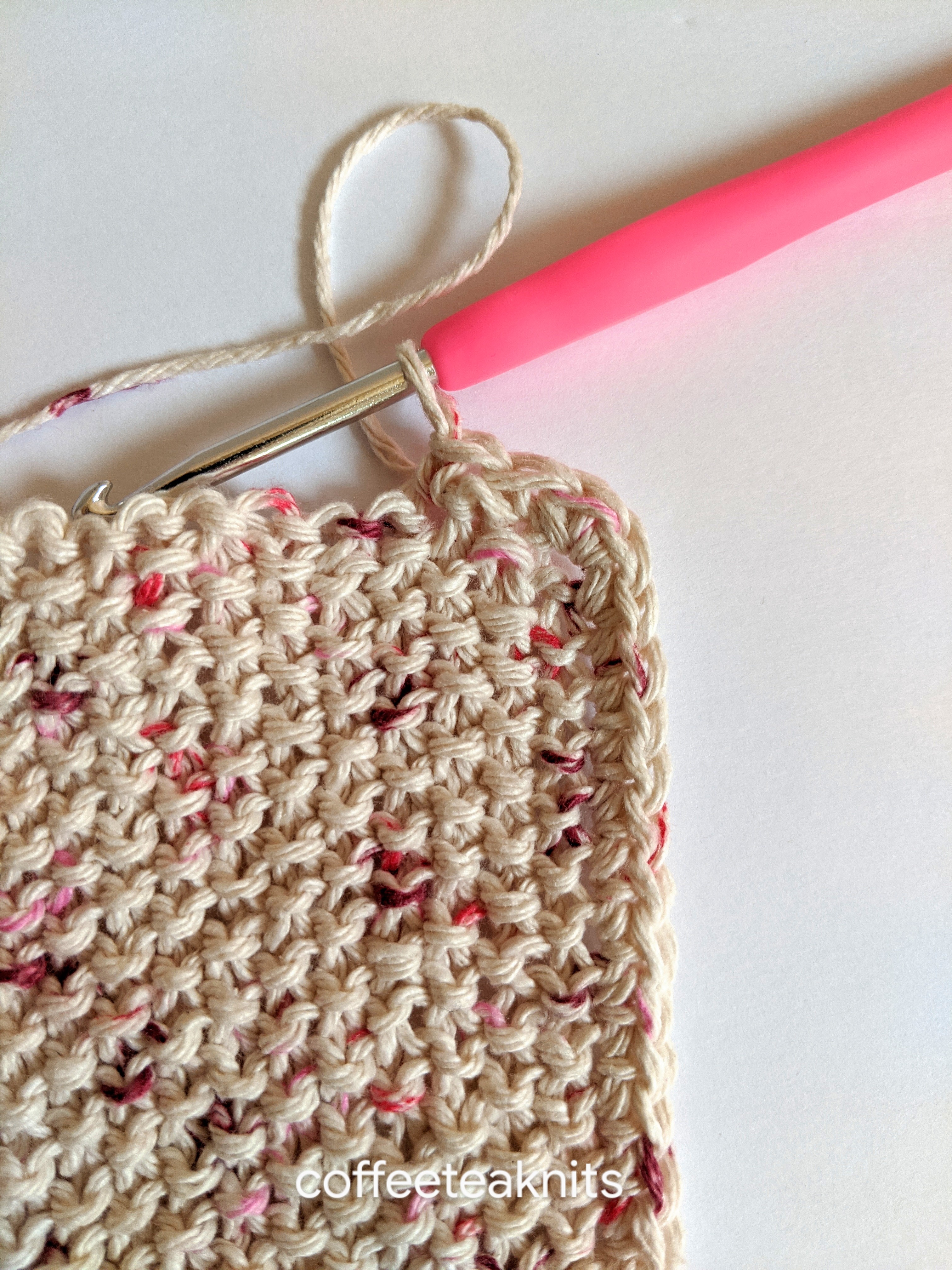
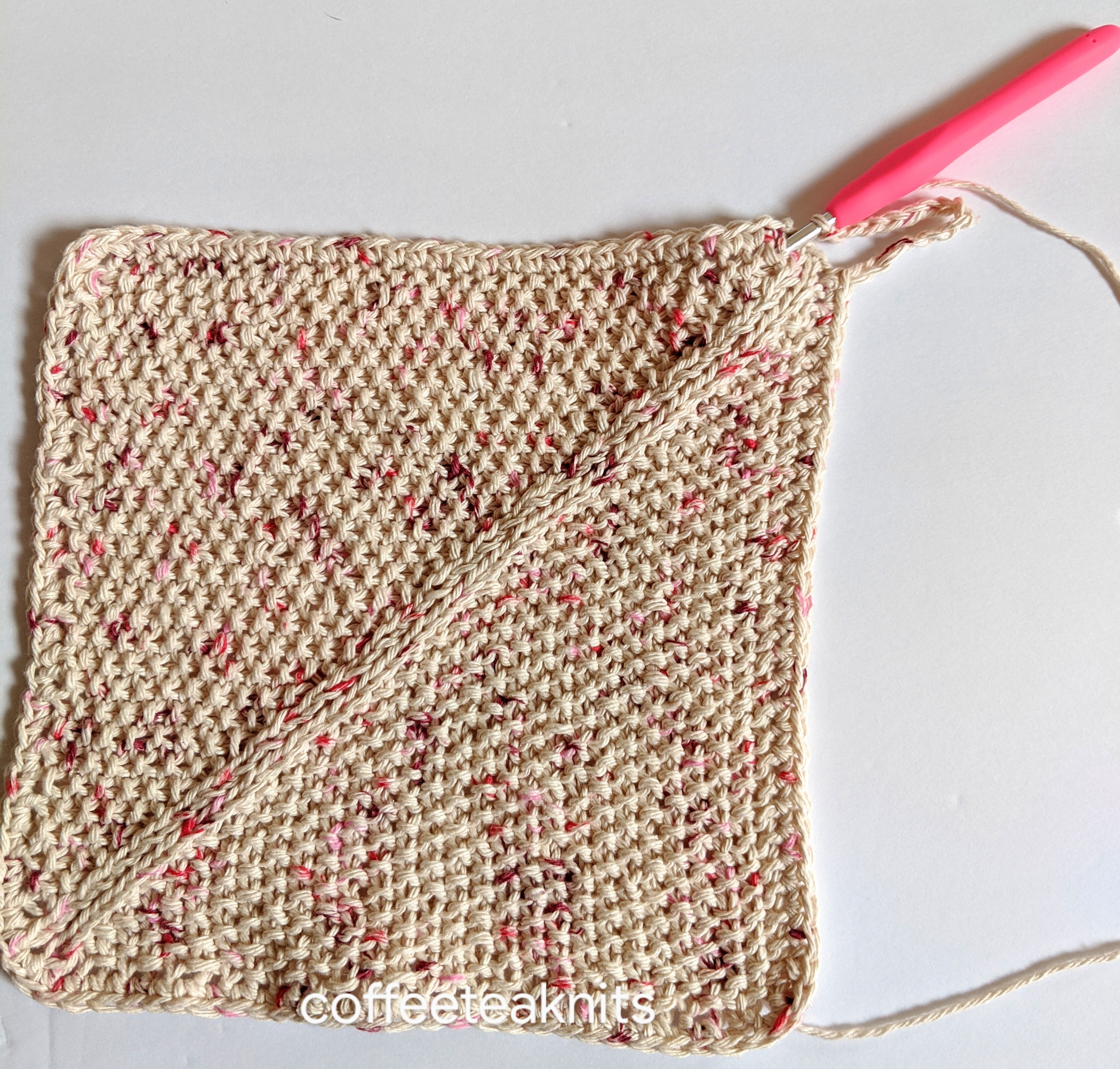
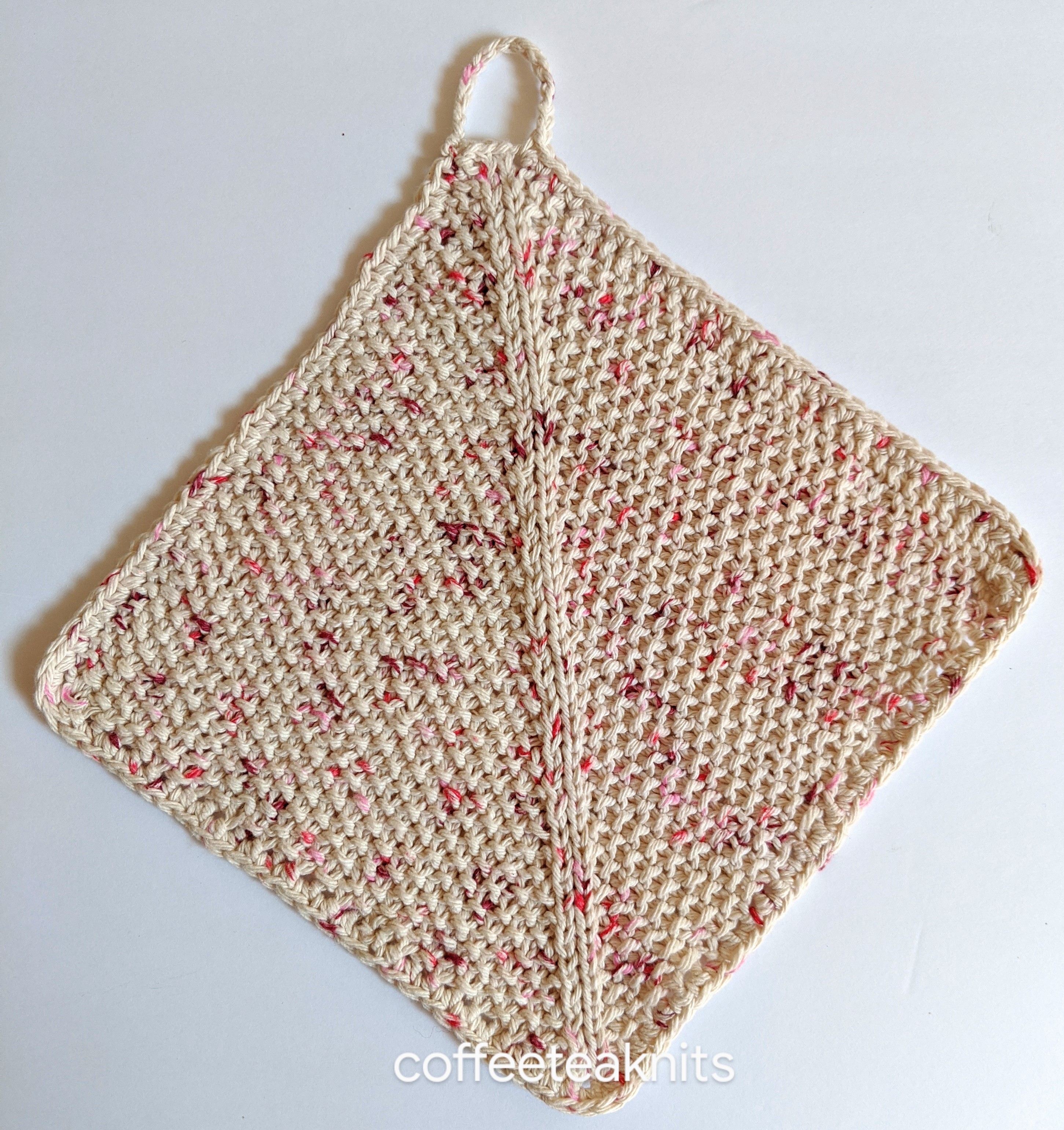
The Yarn Over Washcloth is knit corner to corner with a two row slip stitch pattern. Two stitches are increased every other row and then two stitches are decreased every other row. The washcloth has yarn overs all around between the stitch pattern and the border edge stitches. One stitch is cast on and through a series of increases and decreases this washcloth is worked in one piece ending with a two stitch I-cord hanging loop.

Yarn: Lily Sugar’n Cream in Colorways: Soft Ecru and Butter Cream Ombre
Knitting Needles: US #7 circular needle
Gauge: Not needed for this project
Abbreviations:

  • K: Knit
  • P: Purl
  • RS: right side
  • WS: wrong side
  • Kfb: Knit front and back (knit one stitch first in the front and then knit the same stitch in the back before slipping it off the left needle) – 1 stitch increase 
  • K2tog: Knit two stitches together on the left needle – 1 stitch decrease
  • ssk (left-slanting decrease): slip slip knit (slip 2 stitches to right hand needle then insert the left needle in front of the two slipped stitches and knit them together) – 1 stitch increase
  • rsd (right-slanting decrease): knit 1 stitch, slip one stitch knitwise, return the slipped stitch and the knitted stitch back to the left needle, pass the slipped stitch over the knitted stitch and then return the knitted stitch back to the right needle – 1 stitch decrease
  • sk2p (left-slanting double decrease): slip the next stitch knitwise, k2tog the next two stitches, then pass the slipped stitch over the decreased stitch – 2 stitch decrease
  • rsdd (right-slanting double decrease): slip one stitch knitwise and knit the next stitch. Pass the slipped stitch over the knit stitch. Return this decreased knit stitch back to the left needle and pass the second stitch on the left needle over the decreased stitch. Transfer the decreased stitch back to the right needle – 2 stitch decrease
  • pm: place marker
  • rm: remove marker
  • sm: slip marker
  • wyif S1: with yarn in front slip one stitch purlwise, wrap the working yarn around the front of the slipped stitch and move the yarn to the back
  • yo: yarn over – knit one stitch and then bring the working yarn over the right needle before knitting the next stitch (1 stitch increase)

The Yarn Over Washcloth (text and images for personal use)

Cast on 1 stitch with US #7 circular needle

  • Row 1 (RS): Kfb
  • Row 2 (WS): K2
  • Row 3: Kfb, Kfb
  • Row 4: K4
  • Row 5: Kfb, K2, Kfb
  • Row 6: K6
  • Row 7: Kfb, K4, Kfb
  • Row 8: K8
  • Row 9: Kfb, K6, Kfb
  • Row 10: K4, pm, K2, pm, K4
  • Row 11: K4, sm, yo, K2, yo, sm, K4
  • Row 12: K4, sm, K1, p2, K1, sm, K4
  • Row 13: K4, sm, yo, K1, [K1, wyif S1 then move yarn to the back] to 1 stitch before marker, K1, yo, sm, K4
  • Row 14: K4, sm, K1, purl till 1 stitch before marker, K1, sm, K4

Repeat rows 13 and 14 [repeat section] till 48 stitches on the needle.

Double Decreases:

  • Row 1 (RS): K4, sm, yo, sk2p, [K1, wyif S1 then move yarn to the back] till 3 stitches before marker, rsdd, yo, sm, K4
  • Row 2 (WS): K4, sm, K1, purl till 1 stitch before marker, K1, sm, K4

Repeat these two rows till 14 stitches left on the needle.

  • Row (RS): K4, sm, yo, sk2p, rsdd, yo, sm, K4
  • Row (WS): K4, sm, K1, p2, K1, sm, K4          (12 stitches)

Single decreases:

  • Row 1 (RS):  ssk, knit to 2 stiches before end of the row removing markers, rsd
  • Row 2 (WS): K10

Repeat Rows 1 and 2 till 4 stitches left on the needle.

  • Row (RS): ssk, rsd     (2 stitches left on the needle)

Make an I-cord hanging loop (about 10 to 12 rows) with the 2 stitches on the needle (several tutorials on knitting I-cord are available on YouTube) and bind off.

Attach the I-cord bind off end to the wrong side of the washcloth and weave in ends.

Wash and block the washcloth


Enjoy!


~coffeeteaknits.com

A Corner to Corner Dishcloth

Corner to Corner Dishcloth

Corner to Corner Dishcloth

Corner to corner knitting is another technique that can be used to knit square dishcloths, blankets etc. I like this technique because it’s worked flat and starts with a cast on of just 1 stitch. That 1 stitch through a series of increases and decreases ends in a square dishcloth or a blanket. The dishcloth pattern below is my version of the corner to corner knitting technique using the seed stitch pattern.

The Corner to Corner Dishcloth Pattern (text and images for personal use only):

Yarn: Lily Sugar’n Cream in Colorways: Potpourri Ombre and Country Red
Knitting Needles: US #7
Crochet hook: US size 7 or 4.5 mm crochet hook
Gauge: Not needed for this project
Abbreviations:

  • K: Knit
  • P: Purl
  • Kfb: Knit front and back (knit one stitch first in the front and then knit the same stitch in the back before slipping it off the left needle – 1 stitch increase) 
  • K2tog: Knit the first two stitches together on the left needle (1 stitch decrease)
  • ssk: slip slip knit (slip 2 stitches to right hand needle then insert the left needle in front of the two slipped stitches and knit them together)
  • pm: place marker
  • rm: remove marker
  • sm: slip marker
  • wyif: with yarn in front
  • RS: right side
  • WS: wrong side

The seed stitch pattern:
Row 1 (RS): *K1, P1*; repeat from *…* to end of the row
Row 2 (WS): *P1, K1*; repeat  from *…* to end of the row
*Knit in seed stitch pattern: Knit the purl stitches and purl the knit stitches

With a size US #7 knitting needle cast on 1 stitch with the Potpourri Ombre colorway.

Increase Rows:

  • Row 1 (RS): Kfb and turn to the WS row
  • Row 2 (WS): K2
  • Row 3 (RS): Kfb, Kfb
  • Row 4 (WS): K1, pm, K2, pm, wyif S1
  • Row 5 (RS): K1, sm, Kfb, Kfb, sm, wyif S1. Place a removable stitch marker for the RS row. 
  • Row 6 (WS): K1, sm, K1, P1, K2, sm, wyif S1
  • Row 7 (RS): K1, sm, Kfb, K1, P1, Kfb, sm, wyif S1
  • Row 8 (WS): K1, sm, K1, [K1, P1] 2x, K1, sm, wyif S1
  • Row 9 (RS): K1, sm, Kfb, [knit in seed stitch pattern*] till 1 stitch before marker, Kfb, sm, wyif S1
  • Row (WS): K1, sm, K1, [knit in seed stitch pattern] till 1 stitch before marker, K1, wyif S1

Repeat rows 9 and 10 till the number of stitches for the preferred dishcloth size is reached.

Transition Rows:

  • Row 1 (RS): K1, sm, K1, [knit in seed stitch pattern] till 1 stitch before marker, K1, sm, wyif S1
  • Row 2 (WS): K1, sm, K1, [knit in seed stitch pattern] till 1 stitch before marker, K1, sm, wyif S1

Decrease Rows:

  • Row 1 (RS): K1, sm, K2tog, [knit in seed stitch pattern] till 2 stitches before marker, ssk, sm, wyif S1
  • Row 2 (WS): K1, sm, K1, [knit in seed stitch pattern] till 1 stitch before marker, K1, sm, wyif  S1
  • Repeat Rows 1 and 2 till 6 stitches left on the needle on the WS row
  • RS row: K1, sm, K2tog, ssk, sm, wyif S1
  • WS row: K1, rm, K2, rm, wyif S1
  • RS row: K2tog, ssk
  • WS row: Bind off

Wash and block dishcloth.

Crochet a single crochet border edging around the dishcloth in the Country Red colorway with a Size 7 or 4.5 mm crochet hook.

Weave in the ends.


~coffeeteaknits.com

Knitting a seed stitch mitered dishcloth

A Seed Stitch Mitered Dishcloth


In between large and lingering knitting projects (blankets, sweaters etc.), I find knitting dishcloths both appealing and interesting. I can explore and learn different stitch patterns using a particular knitting technique without spending too much time to finish the project. Dishcloths, of course, are useful to have around the kitchen and they also make great gifts. During one such in between period I knit this seed stitch mitered dishcloth (see a previous blog post “To knit a mitered square” for more information about this knitting technique). Below with photos and text (for personal use only), is the knitting progression of this mitered dishcloth in a seed stitch pattern.


The seed stitch pattern:
Row 1 (RS): *K1, P1*; repeat from *…* to end of the row
Row 2 (WS): *P1, K1*; repeat  from *…* to end of the row
Knit in seed stitch pattern: Knit the purl stitches and purl the knit stitches

Yarn: PREMIER HOME® COTTON CONE YARN Colorway: Jelly Dots
Knitting Needles: US #10 and US #7
Crochet hook: US size 7 or 4.5 mm crochet hook
Gauge: Not needed for this project
Abbreviations:


  • K: Knit

  • P: Purl

  • K2tog: Knit two stitches together

  • ssk: slip slip knit (slip 2 stitches to right hand needle then insert the left needle in front of the two slipped stitches and knit them together.

  • rm: remove marker

  • sm: slip marker

  • wyif: with yarn in front

  • RS: right side

  • WS: wrong side


1. Cast on 64 stitches with US #10 size knitting needles and place a removable stitch marker after 32 stitches.


2. Switch to a US #7 needle and start knitting the dishcloth as follows:


  • Setup Row 1 (RS): K1, *K1, P1* (repeat from*…* 14 times), K1, K2tog, sm, ssk, *K1, P1* (repeat from *…*14 times), K1, wyif slip the last stitch purlwise.


  • Setup Row 2 (WS): K1, knit in seed stitch pattern till 1 stitch before marker, P1, sm, P1, knit in seed stitch pattern till 1 stitch before last, wyif slip the last stitch purlwise.


  • Row 3 (RS): K1, knit in seed stitch pattern till 2 stitches before maker, K2tog, sm, ssk, knit in seed stitch pattern till 1 stitch before last, wyif slip the last stitch purlwise.

  • Row 4 (WS): K1, knit in seed stitch pattern till 1 stitch before marker, P1, sm, P1, knit in seed stitch pattern till 1 stitch before last, wyif slip the last stitch purlwise.

  • Repeat the last 2 rows till 4 stitches are left on the needle.


  • Bind off row (RS): K2, pass the first stitch over the second stitch on the right hand needle, rm, *K1, pass the first stitch on the right hand needle over the second stitch*; repeat from *…* once more and one stitch is left on the needle.


  • Insert a 4.5 mm ( US 7) crochet hook into the remaining stitch and single crochet along the edge of the dishcloth.


  • To get a more curved corner edge on the two non mitered corners, single crochet twice into the same corner edge stitch.


  • Single crochet all around ending at the first bind off stitch. Crochet 15 chain stitches.


  • Slip stitch into the first single crochet stitch.


  • Weave in the ends, wash and block the dishcloth.


  • The finished dishcloth.


Enjoy! 


~coffeeteaknits.com

The crochet moss stitch and bulky yarn

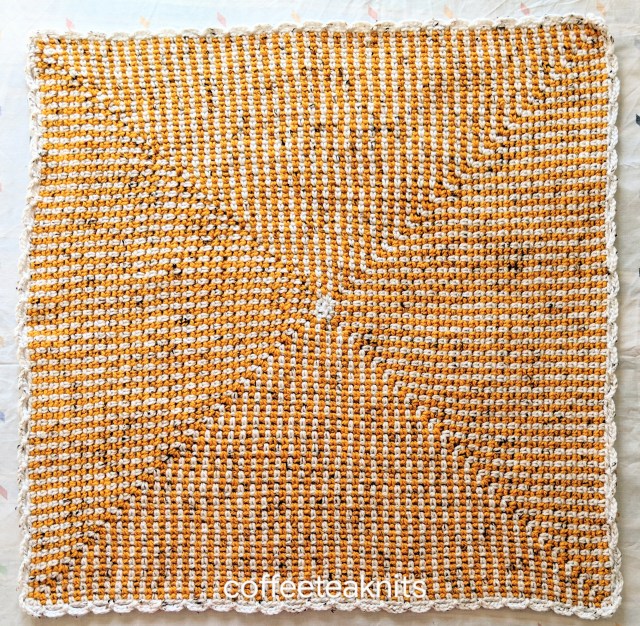
Since my post “To crochet or knit center out” I’ve crocheted several dishcloths and a worsted weight baby blanket using the center out technique. A baby blanket with bulky yarn (yarn weight: 5) and the center out moss stitch pattern can be crocheted in a matter of days.

Crochet Moss Stitch Baby Blanket with bulky yarn

I also started knitting a center out garter stitch baby blanket. Knitting a center out baby blanket in one piece with worsted weight or bulky yarn is a bit more challenging in terms of hand fatigue. This is because the growing blanket with the increasing number of stitches gets heavier since the weight of the whole blanket rests on the circular needle and your hands. Needless to say that the center out knitted baby blanket is still a work in progress.

Not so with a crocheted center out baby blanket. There is only one stitch on the crochet hook and the weight of the growing blanket rests on your lap or sofa/chair etc. By using bulky yarn or holding two strands of lighter weight yarn together a blanket can be crocheted very quickly with varying combinations.

This makes center out crocheting more appealing and versatile to me than center out knitting – at least for large seamless projects made in one piece.


~coffeeteaknits.com

A yarn made for improvised knitting

The Yarn: Lion Brand® Comfy Cotton Blend™

Improvised knitting: to knit spontaneously without a published knitting pattern in front of you.

The knitted item: A Comfortable Cardigan (more details on my Ravelry project page)

The knitting experience: It was enjoyable, relaxing, creatively satisfying, engaging, and gave me a chance to apply some of the knitting techniques (such as cables, short rows, single crochet edging etc.) I had already learnt.

The yarn experience: The yarn is machine washable, budget friendly, so soft to knit and so comfortable to wear.


August Hat for the #WNHyearofhatsKAL2019


Yarn used: Lion Brand® Touch of Alpaca®