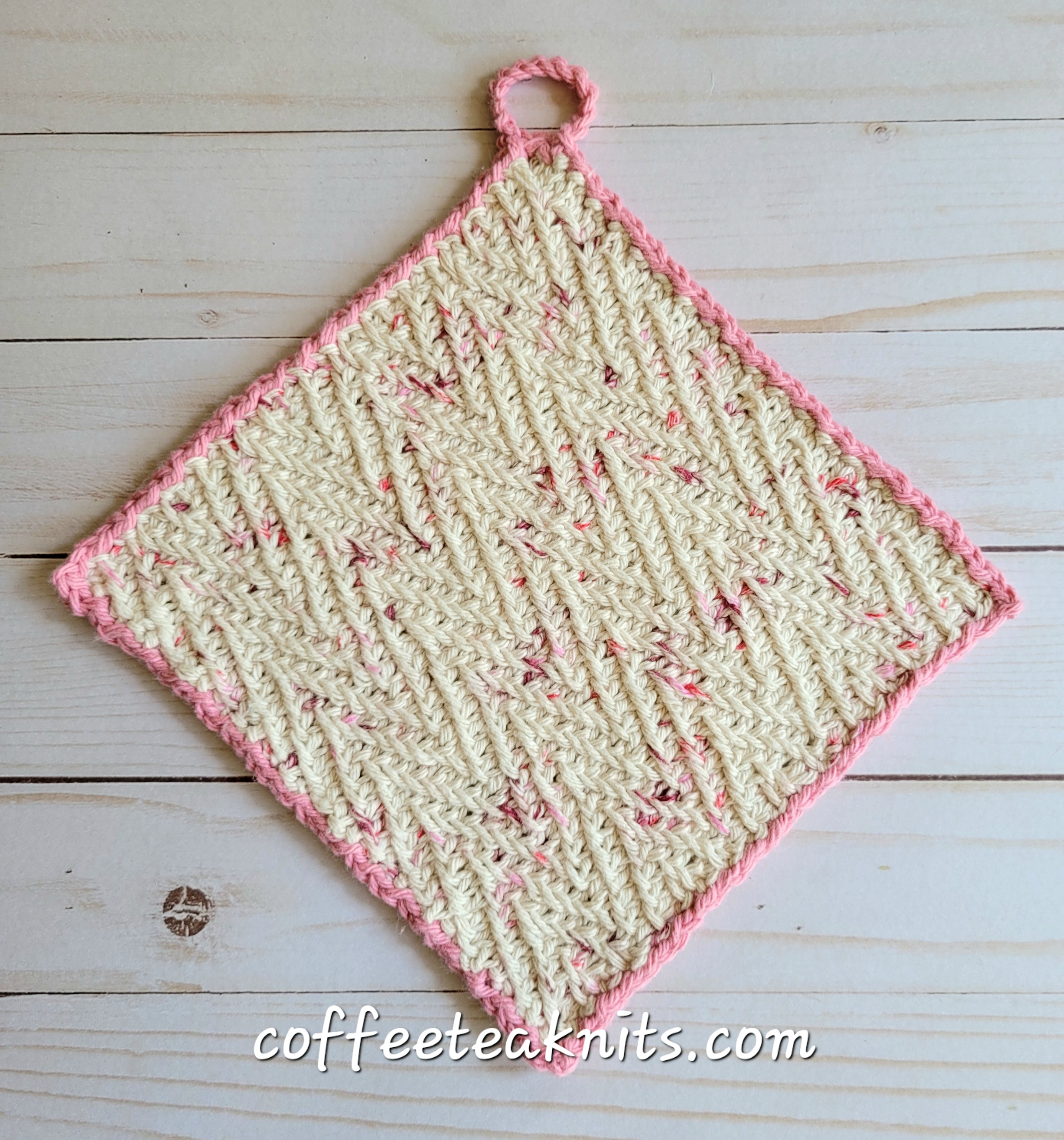
During a heatwave, knitting dishcloths with cotton yarn is practical both for personal use as well as for gifting. I knit dishcloths so I can explore and learn the different knit stitch patterns. Knitting dishcloths is also very therapeutic and calming amidst the chaos that sometimes happens in our personal lives. The Dotted Dishcloth is knit flat in the woven transverse herringbone stitch pattern with slip stitches for the herringbone shape. The dishcloth is finished with a slip stitch, chain one border edge.
An ad-free Dotted Dishcloth Pattern PDF is now available for download on Ravelry and Etsy
Advertisements
Materials Needed for the Dotted Dishcloth: Yarn: Premier Home Cotton® Cone yarn in Jelly Dots (Colorway 1) and Colorway 2 – any solid color worsted weight cotton yarn for the border (I used a pink color cotton yarn that I had) Tapestry needle to weave in ends Gauge: 4.5 stitches per inch in woven transverse herringbone stitch pattern Knitting Needles: US #7 (4.5 mm) for knitting the dishcloth and US #9 (5.0 mm) for cast on and bind off. Crochet hook: US size 7 (4.5 mm) for the border edge
Knitting Skill Level: Advanced beginner level – knit, purl and slip stitches Crochet Skill Level: Basic level with chain one and slip stitch
Advertisements
Abbreviations:
K: Knit
P: Purl
wyib S2: with yarn held back slip two stitches purlwise
wyif S2: with yarn in front slip two stitches purlwise
sm: slip marker
wyif S1: with yarn in front slip one stitch purlwise
wyib S1: with yarn held back slip one stitch purlwise
RS: right side
WS: wrong side
[…]: stitch pattern repeats
Advertisements
The Dotted Dishcloth Pattern (text and images for personal use only)
PLEASE SUBSCRIBE FOR THE FREE PATTERN. THANK YOU
Subscribe to continue reading
Subscribe to get access to the rest of this post and other subscriber-only content.
Once a foundation chain (How to Crochet Chain) is made, a new crochet project with any crochet stitch pattern can begin. A single crochet stitch pattern is the shortest in length/height and creates a denser fabric compared to double and triple crochet stitch patterns. The video and written instructions below show how to make a single crochet from a foundation chain and all the rows for right handed crocheting.
Advertisements
Video in slow motion: Single Crochet from a Foundation Chain
Advertisements
Written Instructions for How to Single Crochet from a Foundation Chain:
Skip the first chain stitch from the loop on the crochet hook.
Insert the crochet hook into the top strand of the second chain stitch
Wrap working yarn counterclockwise around hook (yarn over), catch and pull the loop through the top strand of the second chain stitch
There are two loops on the crochet hook
Wrap working yarn counterclockwise around hook (yarn over), catch and pull loop through the two loops on the crochet hook
Repeat Steps 2 to 5 for the rest of the foundation chain stitches till the slip knot end
Chain one and turn to single crochet the next row
Advertisements
How to Single Crochet:
Advertisements
Written Instructions for a Single Crochet:
Skip the first stitch from the loop on the crochet hook
Insert the crochet hook under both the strands of the next stitch
Wrap working yarn counterclockwise around hook (yarn over), catch and pull the loop through both the strands of the next stitch
There are two loops on the crochet hook
Wrap working yarn counterclockwise around hook (yarn over), catch and pull loop through the two loops on the crochet hook
Repeat Steps 2 to 5 till the last stitch in the row
For the last stitch of the row, repeat Steps 2 to 5, chain one and turn
Repeat Steps 1 to 7 with single crochet stitch pattern for all the subsequent rows
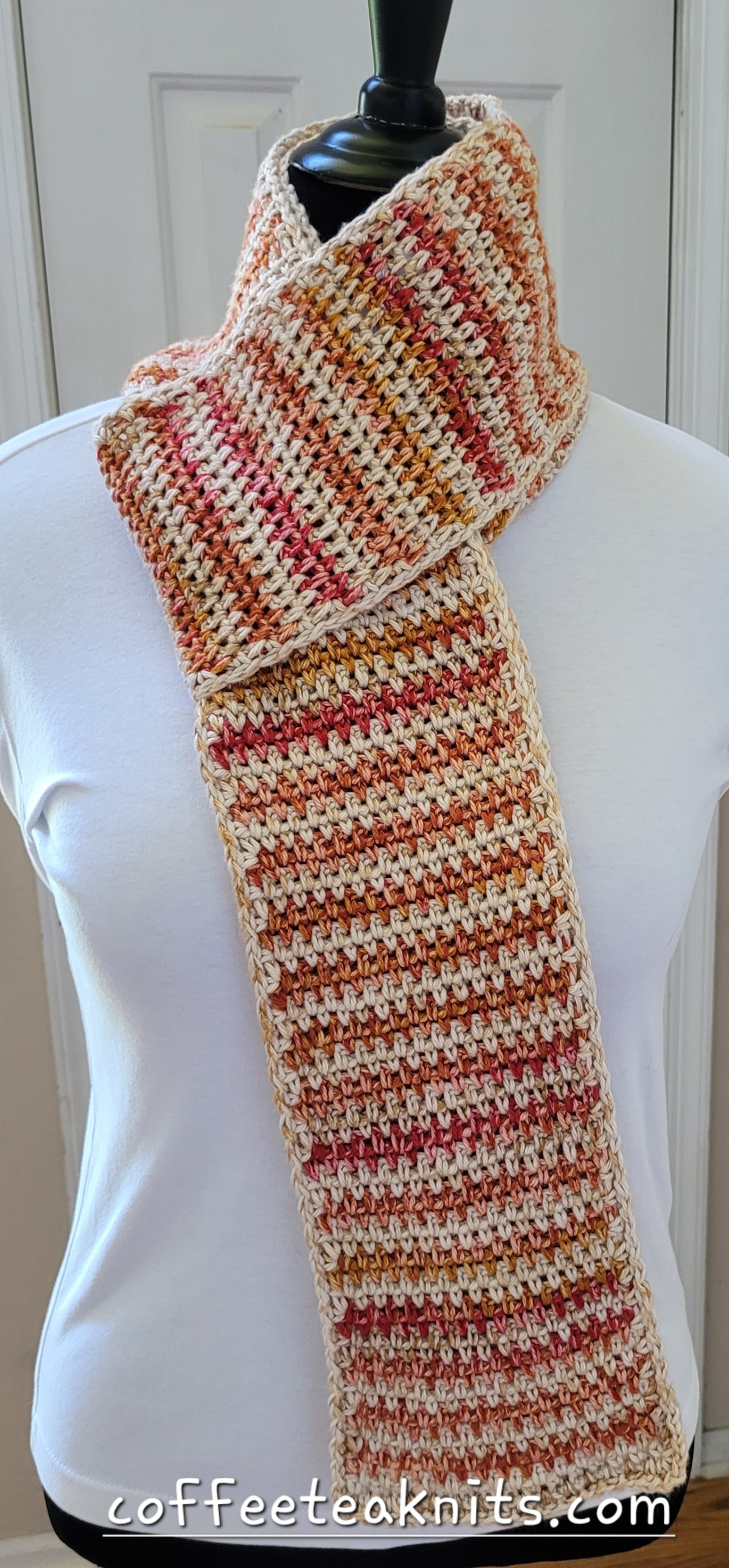
The Long Striped Crochet Scarf Pattern (images and text for personal use only)
Advertisements
Materials Needed: Yarn: K+C Essential Cotton Yarn Colorway Yarn 1 – White Sands and Colorway Yarn 2 – Zion. There are other yarn colorways available at JoAnn. Tapestry needle to weave in ends Gauge: 5.5 stitches/inch in crochet moss stitch pattern. The scarf can be modified for any preferred width or length so gauge not really that important. The Long Striped Crochet Scarf is about 6.5 inches wide and 87.5 inches long. Crochet hook: US size G-6 or 4.0 mm Skill Level: Beginner – know how to slip stitch crochet, single crochet, chain 1 and chain 2 Abbreviation: […]: pattern repeat
Advertisements
PLEASE SUBSCRIBE FOR THE FREE PATTERN. THANK YOU
Subscribe to continue reading
Subscribe to get access to the rest of this post and other subscriber-only content.
The slip knot (How to Slip Knot) in crochet is the fist loop of a foundation chain. After the slip knot loop, the first foundation chain stitch can be made. A foundation chain is the basis for the beginning a crochet project. The video and written instructions below show how to make a crochet foundation chain for right handed crocheting.
Advertisements
How to Crochet Chain: Slip knot and Chain 10
Advertisements
Written Instructions for How to Crochet Chain:
Make a slip knot (How to Slip Knot) and insert the crochet hook into the loop
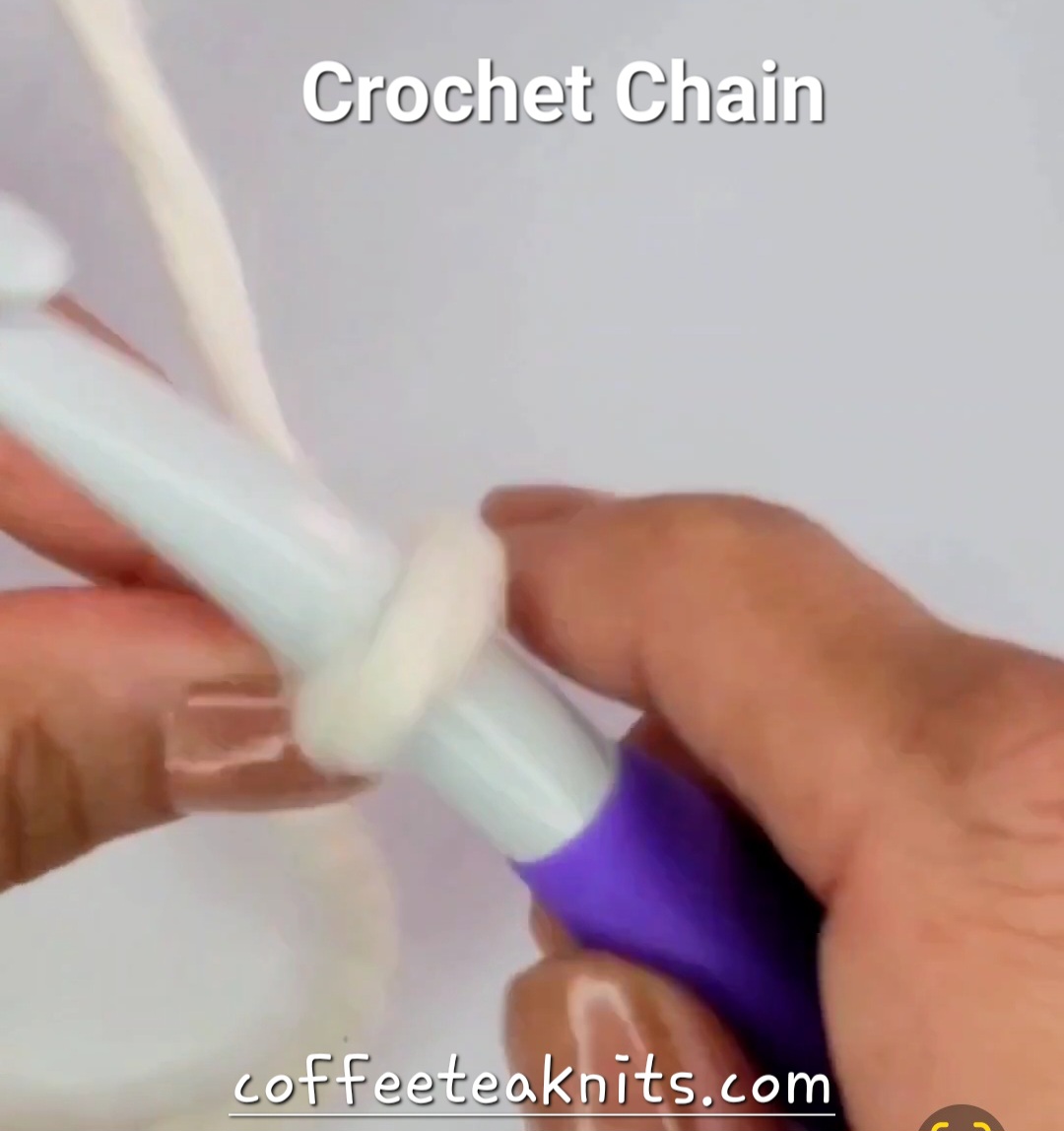
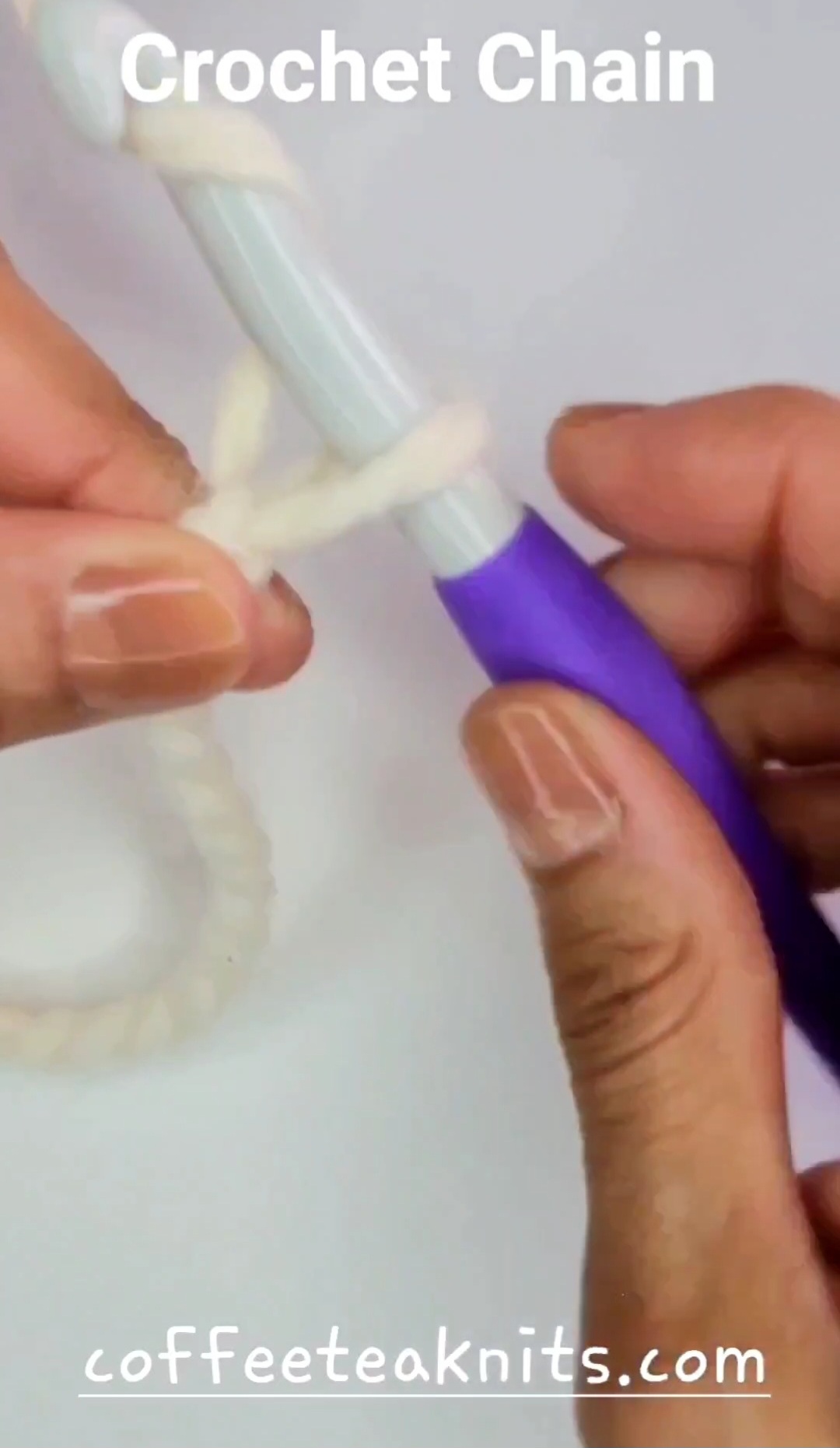
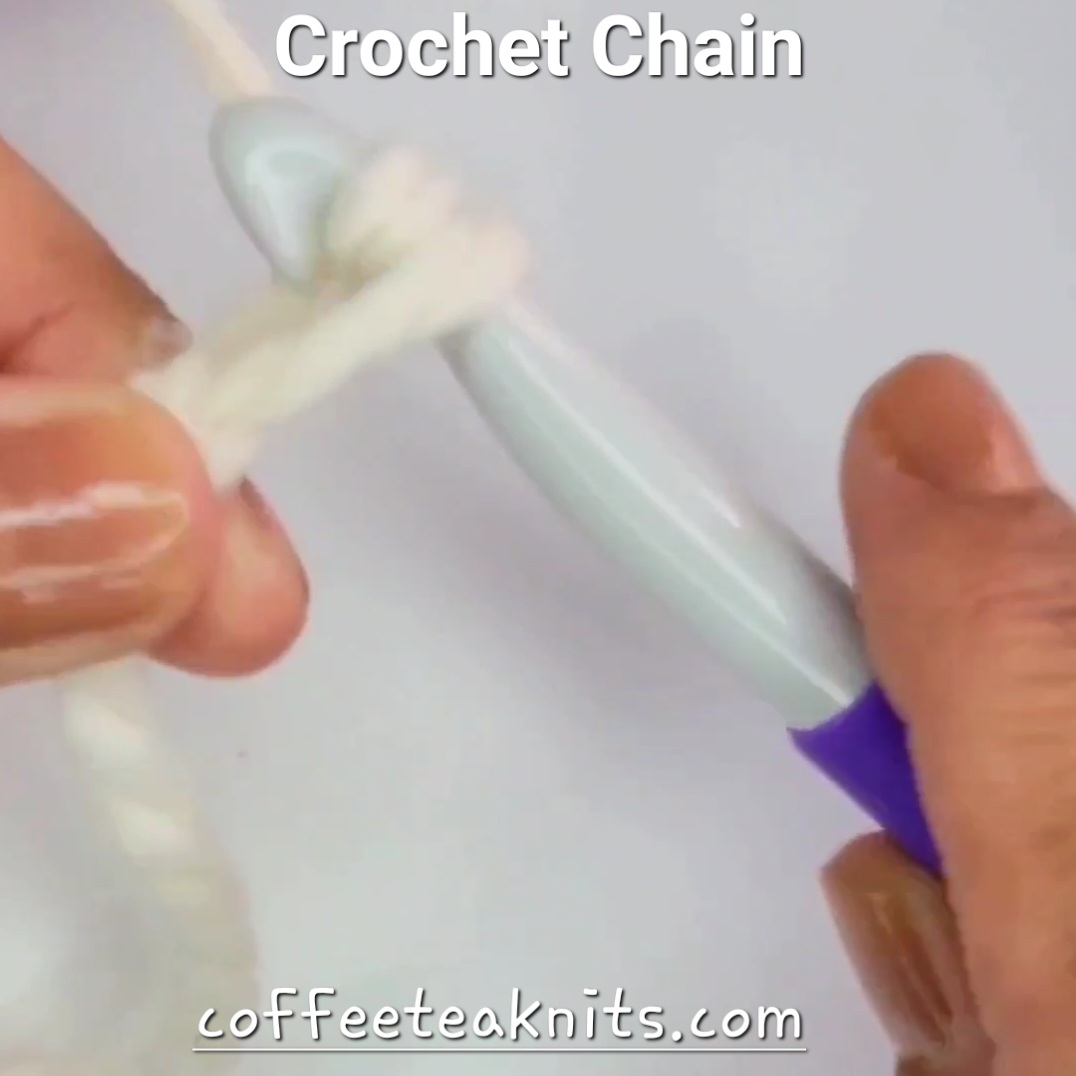
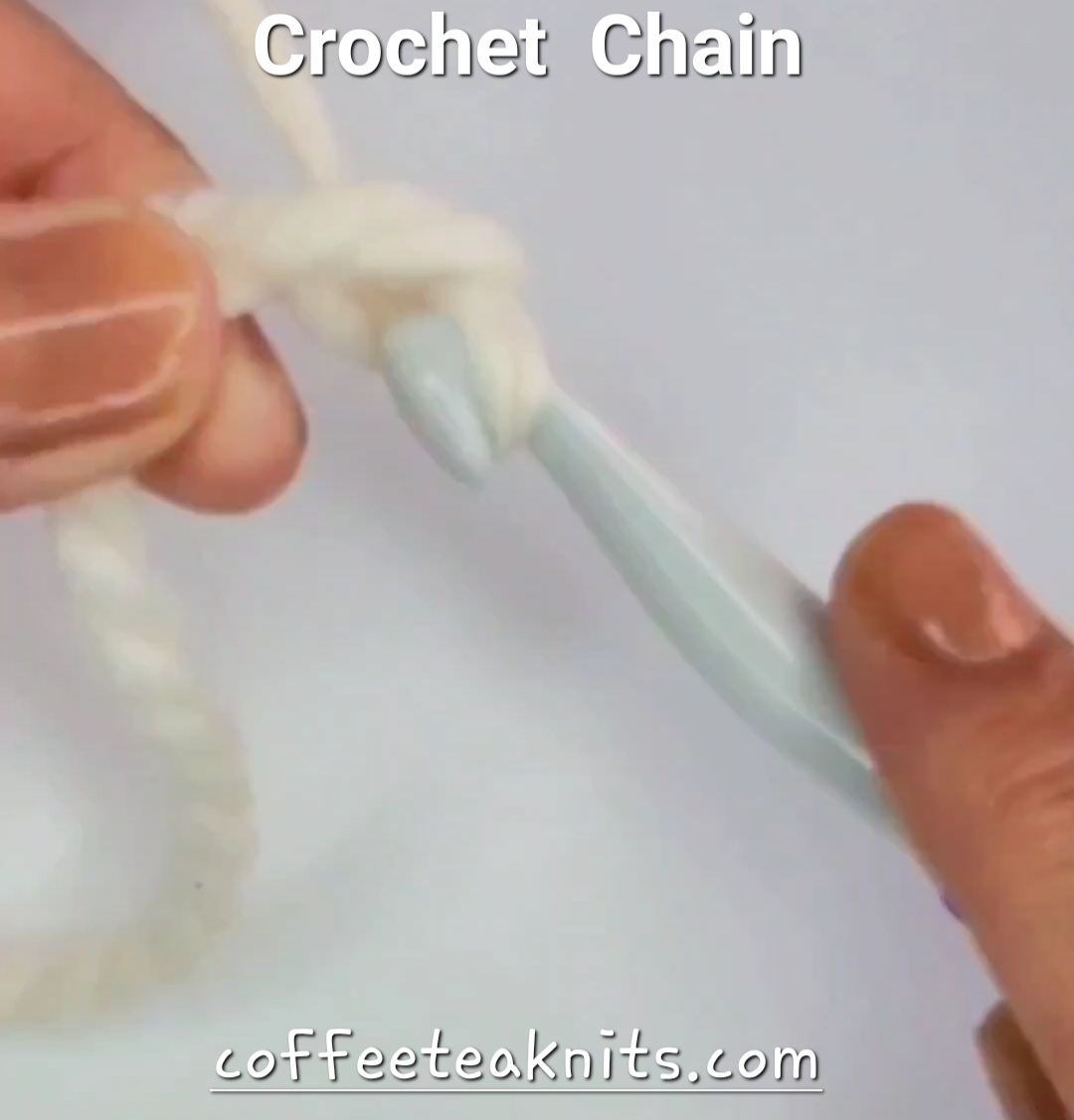
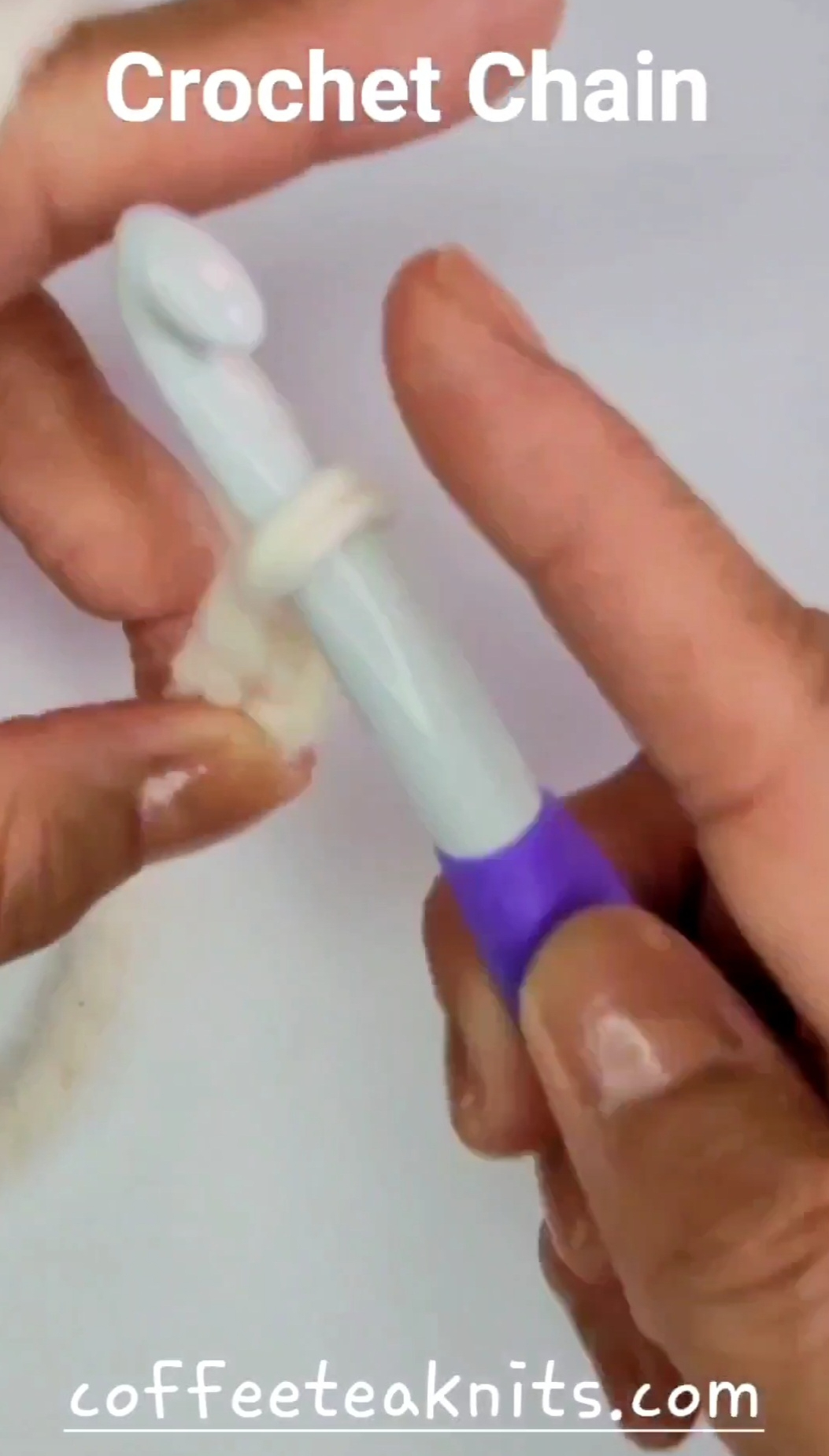
Take the crochet hook under and around the working yarn counter clockwise (see image below)
Wrap the working yarn around the hook
Catch and pull the wrapped working yarn through the loop on the crochet hook (chain 1)
Repeat Steps 2 to 4 of pulling the working yarn through the loop on the crochet hook maintaining even tension till the required number for the foundation chain of a crochet project has been reached
The Brick and Mortar Dishcloth is knit using the mosaic colorwork technique with slip stitches and two different colors of yarn. In mosaic knitting only one color of yarn is needed per row. The mosaic pattern in the Bricks and Mortar Dishcloth is formed with garter slip stitches and by switching the two different colors of yarn back and forth every two rows. The Brick and Mortar Dishcloth is knit flat and measures about 7.5 x 7.5 inches after washing. The dishcloth is finished with a round of crochet moss stitch and a round of slip stitch, chain one border edge with a hanging loop.
Advertisements
The Brick and Mortar Dishcloth Pattern (text and images for personal use only)
PLEASE SUBSCRIBE FOR THE FREE PATTERN. THANK YOU
Subscribe to continue reading
Subscribe to get access to the rest of this post and other subscriber-only content.
Cast on for knitting or a foundation chain for crochet all start with a slip knot. The first stitch in knitting is the slip knot. The slip knot in crochet is the loop for the first foundation chain. Therefore, how to make a slip knot is the first step in learning how to knit or crochet. There are many ways to make a slip knot. How to slip knot differs for knitters and crocheters. The video below shows how I make a slip knot to start a crochet foundation chain.
Advertisements
How to Slip Knot (slow motion):
Advertisements
Written Instructions for How to Slip Knot:
Wrap the yarn around index and middle finger of the left hand going from top to bottom (clockwise)
Bring the yarn across and between the two fingers
With the right hand, bring the strand of yarn in and through the ring formed by the wrapped yarn
Pull and tighten the ring holding the strand of yarn to form the slip knot
Insert a crochet hook into the slip knot and tighten it around the hook
Although early Spring flowers have appeared and so have the birds, winter has not yet left us. Below freezing temperatures and cold winter air still lingers. Nevertheless, I will make items with Spring weather in mind. The Patchwork Petal Scarf uses cotton yarn more suitable for pleasant weather. It’s made up of eight center out crochet moss stitch squares which are then joined using the zig zag slip stitch crochet join method. Two rounds of crochet moss stitch are used for the border edge of the joined squares. Fringes are added to the Patchwork Petal Scarf.
Advertisements
The Patchwork Petal Scarf Pattern (text and images for personal use only)
PLEASE SUBSCRIBE FOR THE FREE PATTERN. THANK YOU
Subscribe to continue reading
Subscribe to get access to the rest of this post and other subscriber-only content.
The Swirling Hot Pad/Trivet is knit holding four strands of yarn together. It is a flat circle that is knit in the round moving towards the center from the cast on edge by a series of decreases. It is similar to The Striped Spiral Hotpad/Trivet but differs in where the series of decreases is placed. The cast on edge of the Swirling Hot Pad/Trivet is finished with a slip stitch, chain one crochet border.
Advertisements
Materials Needed for The Swirling Hot Pad/Trivet: Yarn: Patons® Classic Wool Worsted™ in Natural Mix and Heath Heather colorway – 2 strands of each colorway yarn held together Knitting Needles: US #9 (5.5 mm)16-inch circular needles and US#11 (8 mm) needles for cast on Crochet Hook: H – 8 (5.0 mm) Tapestry needle to weave in ends Knitting skill level: Beginner to Advanced Beginner Gauge: 3.5 stitches per inch in the garter stitch pattern with US #9 knitting needles after blocking Size: about 9.5 inches in diameter
Advertisements
Abbreviations: K: Knit P: Purl BOR: beginning of round pm: place marker sm: slip marker rm: remove marker K2tog: Knit the two stitches on the left needle together […]: stitch pattern repeats
Advertisements
The Swirling Hot Pad/Trivet Pattern (text and images for personal use only)
PLEASE SUBSCRIBE FOR THE FREE PATTERN. THANK YOU
Subscribe to continue reading
Subscribe to get access to the rest of this post and other subscriber-only content.
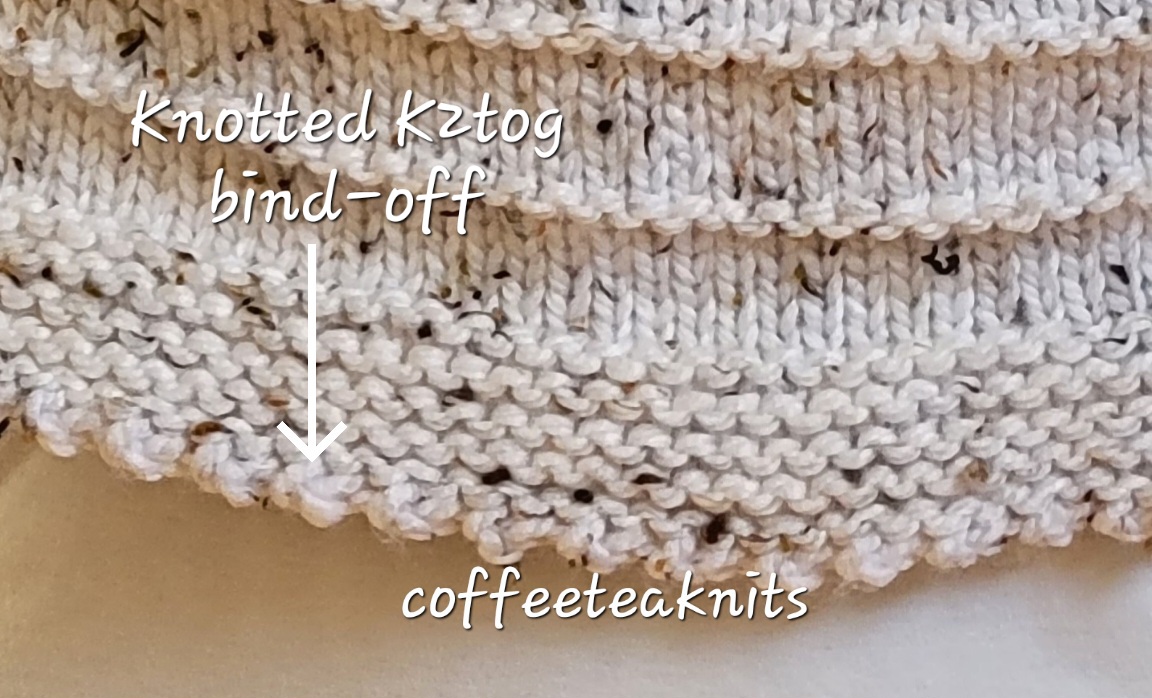
A decorative bind – off method that I used in The Cozy Season Shrug is the Knotted K2tog bind – off. It gives a nicer looking finished edge for shawls, shrugs etc. that can be added to a garter stitch pattern border.
Advertisements
The written instructions and video below on how to do the knotted K2tog bind – off is shown for right handed knitting.
Advertisements
Abbreviations:
K: Knit
K2tog: Knit the two stitches on the left knitting needle together
wyif: with the working yarn in front
The Knotted K2tog Bind Off:
Advertisements
Knotted K2tog Bind Off:(written intructions)
To begin the bind off row/round: K2, wyif slip the 2 knitted stitches on the right knitting needle back onto the left knitting needle
Wrap the working yarn in front of the 2 stitches on the left knitting needle
Insert the right knitting needle into the wrapped stitches on the left knitting needle and knit those 2 stitches together.
Knit the next stitch on the left knitting needle. There are two stitches on the right knitting needle
Pass the second stitch on the right knitting needle over the first stitch on that needle
K1, wyif slip the 2 knitted stitches on the right knitting needle back onto the left knitting needle
Repeat steps 2 to 5
Repeat steps 6 and 7 till one stitch left in the bind off row/round
Cut and pull working yarn through the last remaining stitch and weave in the end
The Drapes Well Scarf is a rectangular infinity scarf that is knit flat and then joined at the cast on and the bind off edges. The scarf is knit with 2 strands of yarn held together in a combination of the garter stitch and the brioche honeycomb stitch patterns. The brioche honeycomb stitch pattern is a combination of slipped stitches and yarnovers in one row and knit 2 togethers in the next row. The yarn (Lion Brand® Yarn TruBoo) is smooth and silky that drapes well making it ideal to knit this infinity scarf. The 2 strands of yarn held together in the Drapes Well Scarf adds extra warmth around the neck making it an accessory suitable for cold weather.
Advertisements
Materials Needed for The Drapes Well Scarf: Yarn: Lion Brand® Yarn TruBoo in Silver – 2 strands of yarn held together Knitting Needles: US #8 and US#10 for cast on Crochet Hook: G-6 (4.0 mm) Tapestry needle to weave in ends Knitting skill level: Beginner to advanced beginner – slipped stitches, yarnovers (see tutorial here) and three needle bind off Gauge: 5 stitches per inch in the brioche honeycomb stitch pattern with US #8 knitting needles after blocking and without stretching Size: Fits most adults. Length can be increased or reduced to preferred size
Advertisements
Abbreviations: K: Knit P: Purl sm: slip marker pm: place marker RS: right side WS: wrong side YO: yarnover K2tog: Knit the two stitches on the left needle together wyif S1: with working yarn in front slip 1 stitch purlwise S1 wyib: slip 1 stitch purlwise with working yarn in the back […]: stitch pattern repeats
The Drapes Well Scarf Pattern (text and images for personal use only):
With 2 strands of yarn held together, cast on 32 stitches with US # 10 knitting needles
With US #8 knitting needles and 2 strands of yarn held together knit the following:
Advertisements
BLOCK 1 (The Drapes Well Scarf is divided into 8 blocks or sections of pattern repeats):
Repeat Rows 4 to 7, nine more times Repeat Row 2, 4 more times ending in RS row
Advertisements
BLOCK 2:
Repeat Rows 4 to 7, ten times
Repeat Row 2, 4 more times ending in RS row
Advertisements
BLOCK 3 to BLOCK 7:
Repeat BLOCK 2, five more times (Block repeats can be reduced or increased if preferred)
Advertisements
BLOCK 8:
Repeat Rows 4 to 7, ten more times
Repeat Row 2, 2 times ending in RS row
Advertisements
Three Needle Bind off Joining the Cast on edge:
Bring the Cast on edge with the WS (wrong side) facing out. With another US #8 needle pick up one leg of the V right below the cast on edge stitches. Pick up 32 stitches.
Insert right needle into the first stitch on the first left knitting needle and then insert it into the first stitch on the second needle.
Knit the two stitches together on the needle
Insert right needle into the second stitch on the first left knitting needle and then insert it into the second stitch on the second needle.
Knit the two stitches together
Pass the first stitch on the right needle over the second stitch to bind off.
Repeat steps 4 to 6 for the three needle bind off.
Advertisements
Crochet Border:
Starting on the RS (right side) of the three needle bind off edge, make a slip knot with G-6 (4.0 mm) crochet hook and pull it under the V of the the edge stitch and chain 2.
Insert hook under the V of the next edge stitch and pull the loop through the edge stitch and slip stitch it to loop on the hook, chain 1
Repeat Step 2 around one side edge of the scarf
Slip stitch the last stitch on the hook into the beginning chain 1 stitch
Repeat Steps 1 and 2 for other side of the scarf
Weave in ends, wash and block the Drapes Well Scarf