Subscribe to continue reading
Subscribe to get access to the rest of this post and other subscriber-only content.
Another way to increase one stitch in knitting is to make one right (M1R) or make one left (M1L). M1L is a left-leaning increase while M1R is a right-leaning increase.
The horizontal strand between the stitch just worked on the right knitting needle and the stitch on the left knitting needle is lifted and placed on the left knitting needle. The loop made by the horizontal strand on the left knitting needle is then knit to create an extra stitch.
The make one (M1R or M1L) increase technique is used in the shaping of knitted items such as shawls, sweaters etc.
The video clip and the written instructions below show how to make one right (M1R) and then how to make one left (M1L) for right hand knitting.
Make One (M1R and M1L):
Written Instructions for M1R and M1L:
Make One Right (M1R):
Make One Left (M1L):
~coffeeteaknits.com
© Coffee Tea Knits. All text and images for personal use only. All Rights Reserved.
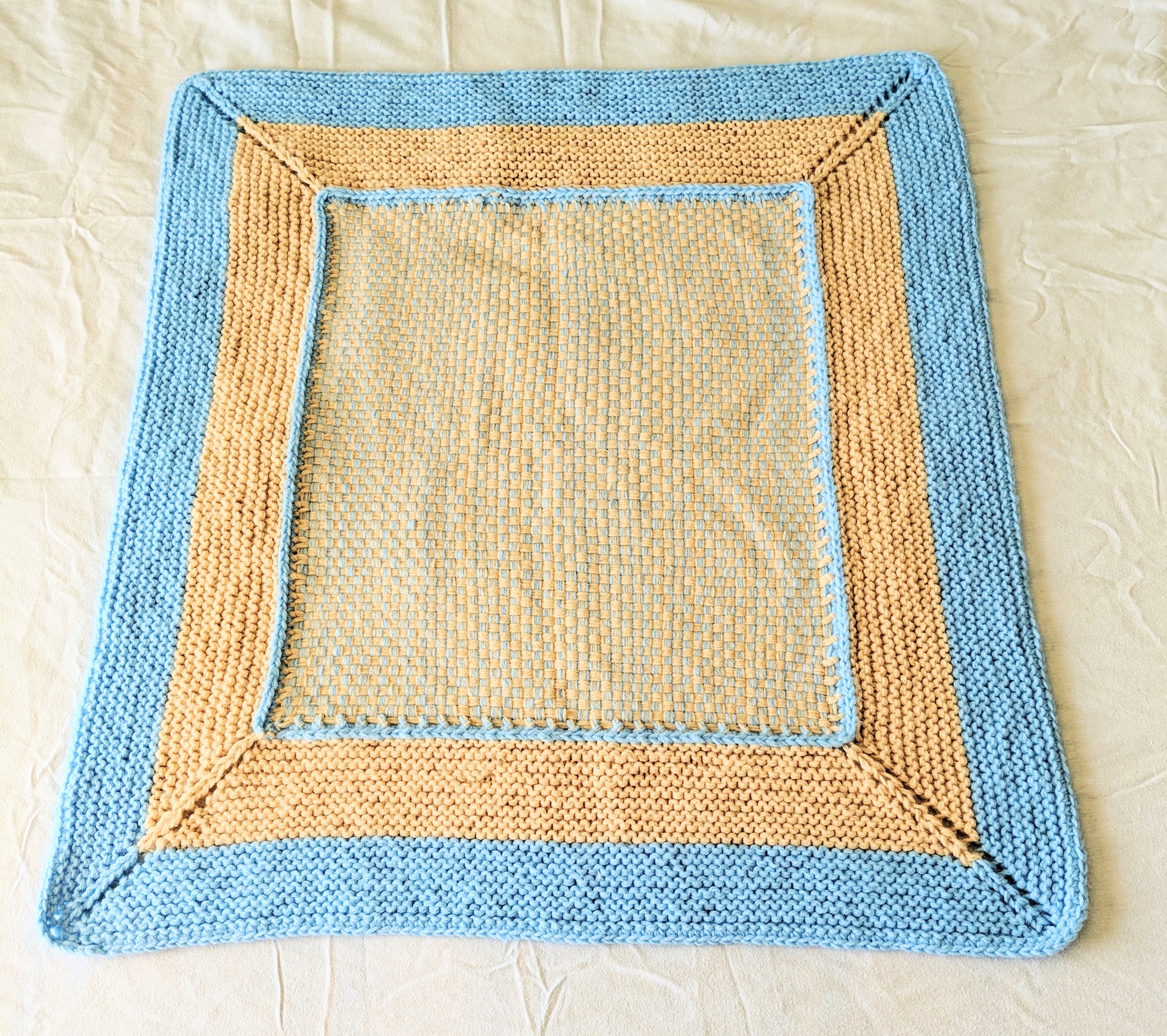
The ad-free Dotted Dishcloth Pattern PDF is now available for download on Ravelry and Etsy
The Dotted Dishcloth Pattern PDF includes the following:
Knitting Skills: knit, purl, slipping stitches purlwise, cast-on, and bind off
Crochet Skills: slip knot, crochet slip stitch, and chain one
Good for beginners who want to explore textured stitch patterns and techniques
Download and enjoy this ad-free pattern pdf. The Dotted Dishcloth pattern was originally posted in June 2024 on Coffee Tea Knits
Thank you to my subscribers and readers of this blog. As always your feedback is much appreciated.
~coffeeteaknits.com
© Coffee Tea Knits. All text and images for personal use only. All Rights Reserved.
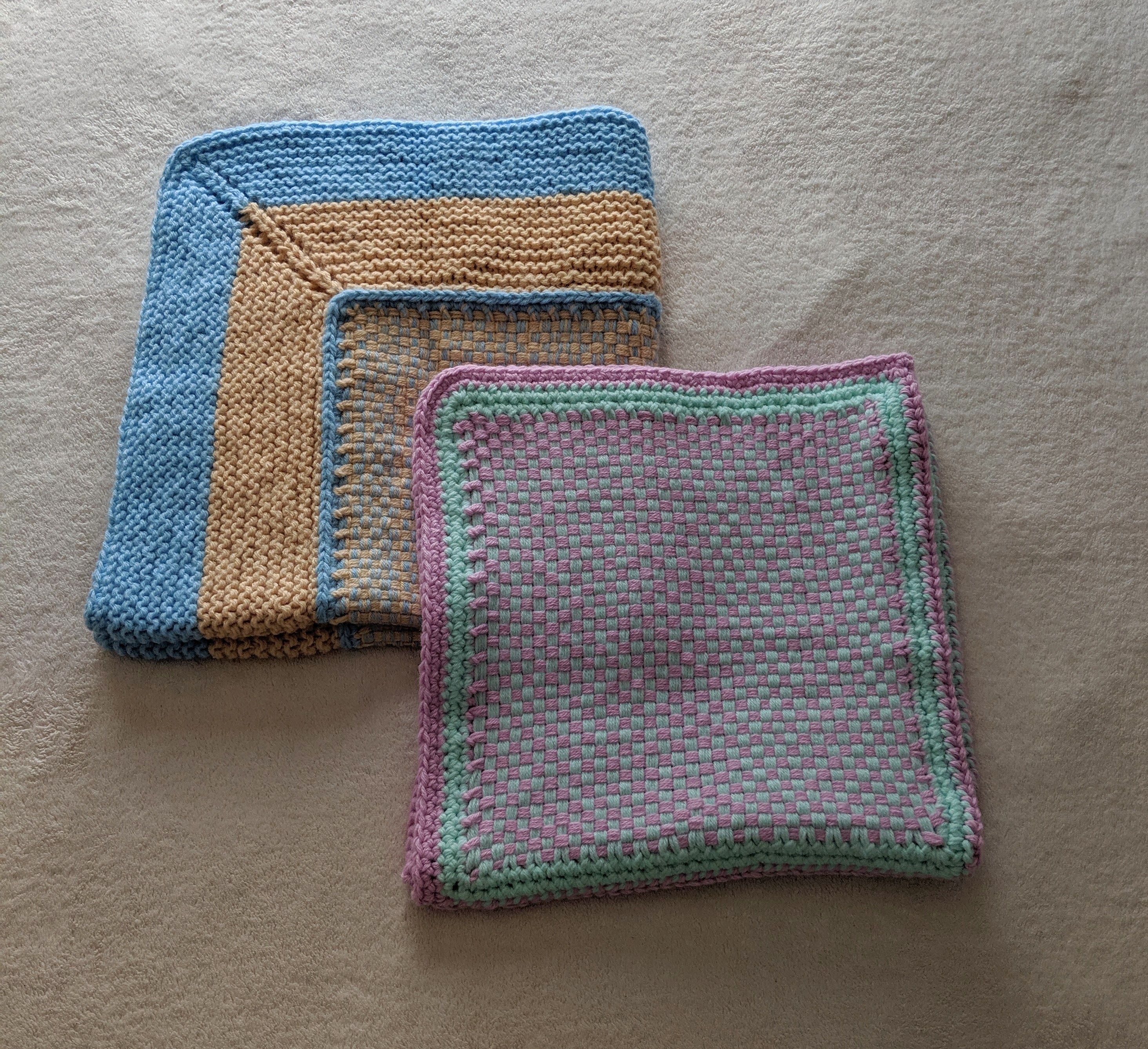
.
.
Hello folks, hope 2025 went well for you. For me, 2025 has been an eventful year. I published seven knit or crochet patterns, nine knitting or crochet technique video tutorials, and a few tidbits.
2025 also brought me some endings, loss, grief, celebrations, and not-so-fun health issues.
There’s also been a change in my journey with yarn.
After 55 published patterns, the call of yarn in my life has led me to a new beginning.
Starting January 2026, knit and crochet pattern pdfs will be available for download on a monthly basis on Ravelry and Etsy
Coffee Tea Knits will be returning in January 2026 with new video tutorials and tidbits.
Stay tuned for updates as we explore the world of yarn and needles together.
Thank you to the fiber related crafts community. I am grateful to the subscribers and readers of this blog. Your feedback and encouragement have been invaluable in my journey with yarn.
All the best to you in the New Year!
~coffeeteaknits.com
© Coffee Tea Knits. All text and images for personal use only. All Rights Reserved.
Hello folks, I’m in the process of organizing my yarn. I face a dilemma because I do not know what to do with the project leftover yarn. The project leftover yarn has accumulated quite a bit over the years I’ve been knitting or crocheting.
I sometimes have a whole skein or two left over and sometimes just a small amount of yarn left over. With a skein or two of leftover yarn, making a hat, a dishcloth, or other small knitted items is possible. I have made such items in the past. I have also donated leftover skeins of yarn to charity.
The small amount of project leftover yarn puzzles me. I have no idea what to do with these bits of yarn leftover from a knitting or crochet project. Below is a picture of a small sample of the leftover yarn that I have. I probably have about 2 bags full of these bits and pieces of yarn.
Leftover yarn a, b, c, d, and e in the image above are from these knitting and crochet projects:
Is there something I can make out of this that is aesthetically pleasing? It’s hard for me to find the time. I struggle to find the motivation to mix them up to knit or crochet something. I don’t find the prospect of just knitting or crocheting for the sake of making something very appealing.
Your Suggestions/Feedback:
Do you also have an accumulation of project leftover yarn? Comment below on how you deal with these bits and pieces of project leftover yarn?
~coffeeteaknits.com
© Coffee Tea Knits. All text and images for personal use only. All Rights Reserved.
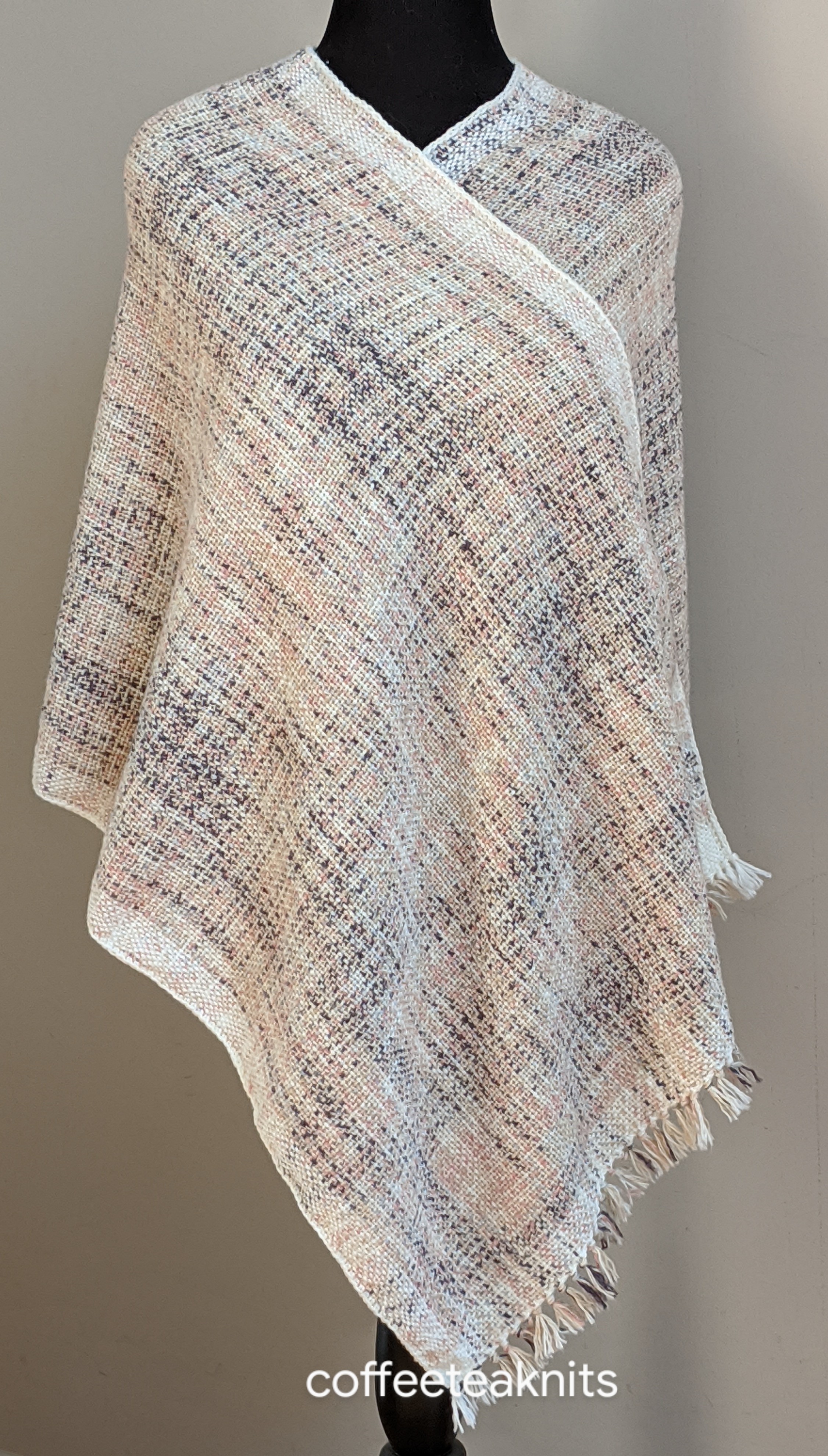
The Skp is a method used to decrease one stitch in knitting. Skp means to slip 1 stitch, either knitwise or purlwise. Then, knit 1 stitch. Finally, pass the slipped stitch over the knit stitch. Unlike K2tog (Tutorial Series: K2tog and P2tog) which is a right slanting decrease, Skp is a left slanting decrease. When you slip the stitch knitwise or purlwise, the knitting looks different. This topic is covered in the Tutorial Series: Slipping Stitches (knitwise and purlwise). A knitting pattern usually will specify how to slip a stitch. Below are samples of Skp knitwise and Skp purlwise.


The video and written instructions below show how to slip stitches knitwise and purlwise for right-hand knitting.
Slip, Knit, Pass (Skp): Video below shows how to Skp knitwise and then purlwise
Written Instructions for Skp (knitwise and then purlwise):
~coffeeteaknits.com
© Coffee Tea Knits. All text and images for personal use only. All Rights Reserved.
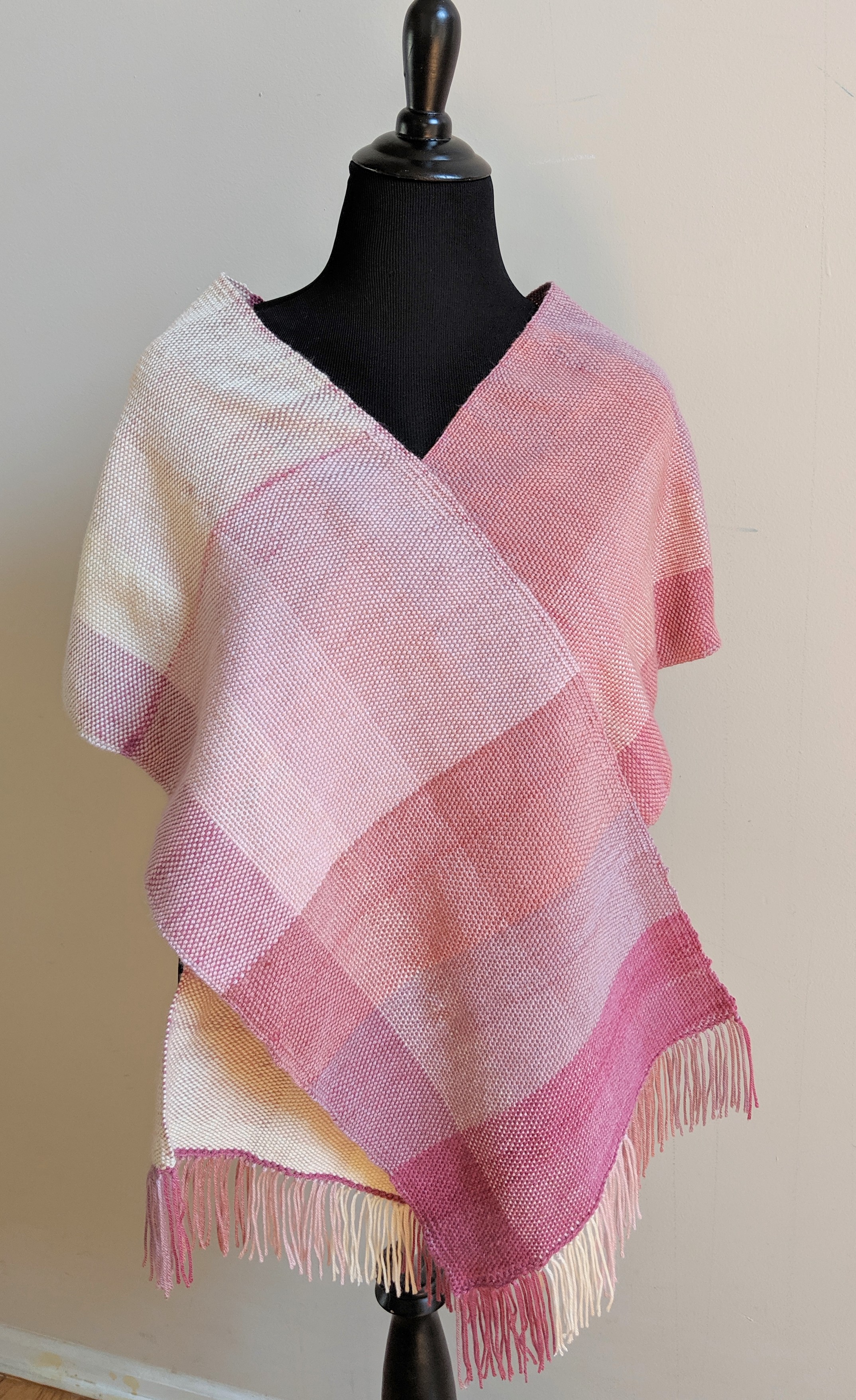
Slipped Stitches are stitches that have not been worked (knitted or purled) with the working yarn. These stitches are just transferred from the left knitting needle to the right knitting needle. The stitches can be slipped to the right knitting needle either knitwise or purlwise. A knit pattern will usually specify how the stitches are to be slipped. Otherwise the default is to slip stitches purlwise. Below is a garter stitch sample with stitches slipped either knitwise or purlwise on the right side. These slipped stitches are then purled on the wrong side of the work. There is some difference in how the stitches look when slipped knitwise versus when they are slipped purlwise.
Slipped stitches can be used at the end of the row to create a neat border edge. The Hydrangea Dishcloth is one example where I’ve used slipped stitches at the end of the rows. The Knotted Dishcloth also uses slipped stitches for a neat border edge. Slipped stitches are used to create textured patterns in knitting. The Dotted Dishcloth is an example where slipped stitches create a textured knit stitch pattern. The Light Unexpected Find Wrap as well as The Unexpected Find Wrap also uses the same technique. Slipped stitches are also used in colorwork knitting such as mosaic knitting. An example of slipped stitches in colorwork knitting is The Brick and Mortar Dishcloth.
The video and written instructions below show how to slip stitches knitwise and purlwise for right-hand knitting.
Slipping Stitches (Knitwise):
Slipping Stitches (Knitwise) written instructions:
Slipping Stitches (Purlwise):
Slipping Stitches (Purlwise) written instructions:
Leave a comment below on how you use slipped stitches in your knitting
~coffeeteaknits.com
© Coffee Tea Knits. All text and images for personal use only. All Rights Reserved.
Subscribe to get access to the rest of this post and other subscriber-only content.
In the double vertical decrease (S2kp), two stitches are decreased by slipping 2 stitches knitwise. Then, the next stitch is knit. Finally, the 2 slipped stitches are passed over the knitted stitch. This double vertical decrease is used for shaping in knitting. I used this technique in the Hydrangea Dishcloth and in the With a Twist Dishcloth. I like this method for the mitered square shaped dishcloths. The double decrease creates a straight vertical knit stitch when used in the center of the work. The video and written instructions below show how to do a double vertical decrease (s2kp) for right-hand knitting.
| 1. Insert the right knitting needle into the front of second and then the first stitch as if to knit 2 together | ![]() |
| 2. Slip the 2 stitches off the left knitting needle and onto the right knitting needle | ![]() |
3. The 2 slipped stitches are now on the right knitting needle | ![]() |
| 4. Knit the next stitch from the left knitting needle onto the right knitting needle | ![]() |
| 5. Insert the the left knitting needle into the front loop on the 2 slipped stitches | ![]() |
| 6. Catch and hold the 2 slipped stitches onto the left knitting needle | ![]() |
| 7. Pass the 2 held slipped stitches on the left knitting needle over the knitted stitch on the right knitting needle | ![]() |
| 8. The double vertical decrease (slip 2 stitches, knit 2, pass the slipped stitch over the knitted stitch) is now on the right knitting needle | ![]() |
| 9. Tug the working yarn to tighten the double vertical decrease stitch | ![]() |
Repeat Steps 1 through 9 for the double vertical decrease (s2kp)
~coffeeteaknits.com
© Coffee Tea Knits. All text and images for personal use only. All Rights Reserved.
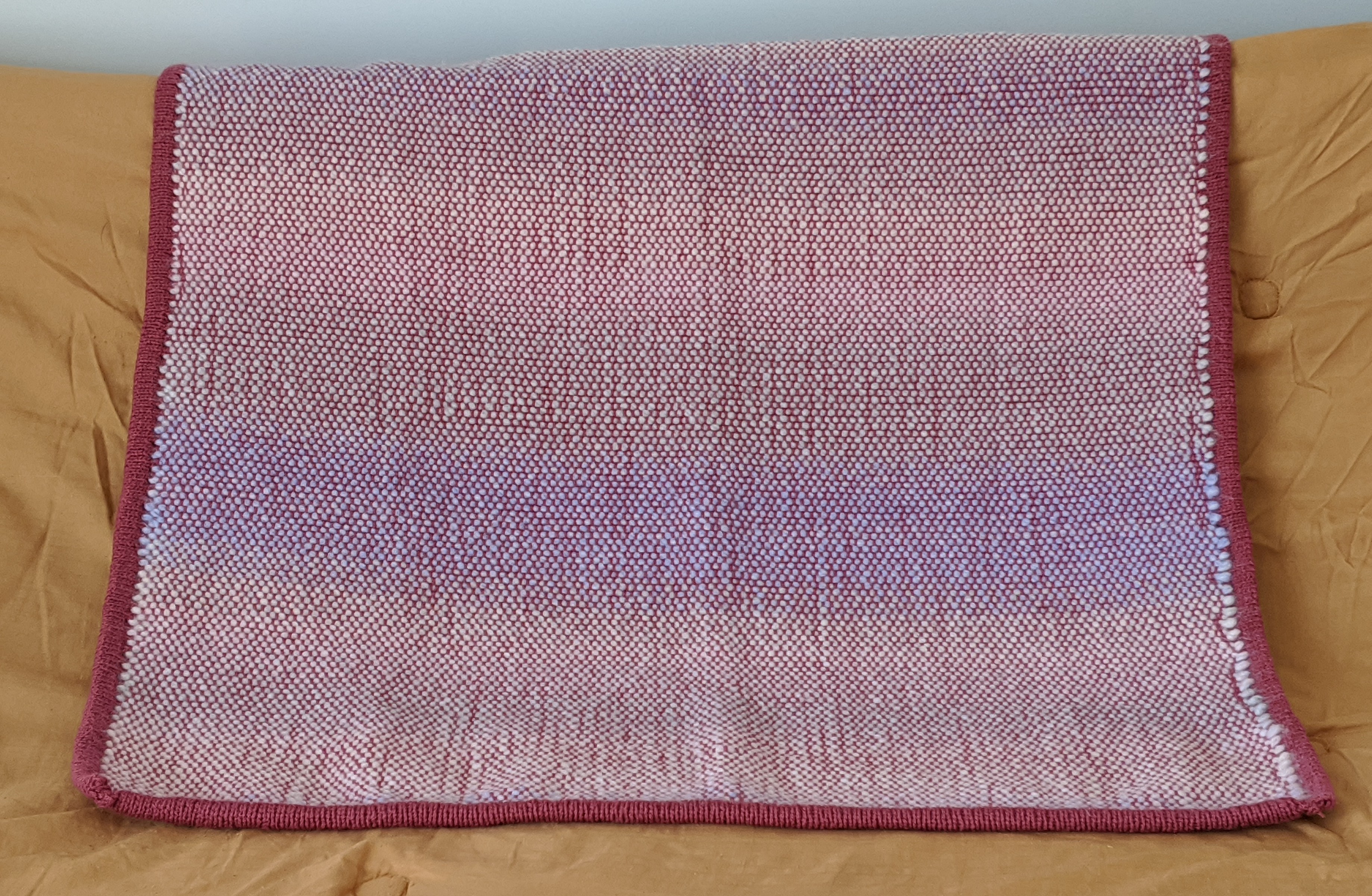
JoAnn Fabrics closed it stores May 2025. Of course I went on a yarn-buying spree there before it closed. I’m sure other knitters and crocheters did too. One of my purchases was KC Botanical by K+C Yarns, a yarn exclusive to JoAnn Fabrics. Unfortunately it’s not available now since the store has closed. While the yarn is discontinued, there may be some still be available on eBay, Amazon, etc. Yarn Sub offers a list of yarns the can be substituted for the KC Botanical yarn. This yarn is a bamboo viscose and cotton blend with a soft shiny sheen. It’s smooth and drapes well. I used this yarn in a different colorway to crochet The Favorite Things Cowl. The yarn is thick and made up of several (I counted 18) strands of thinner threads. Because of the several strands it has a tendency to split at times while crocheting. Overall I like this yarn and crocheted The Silky Long Scarf with it.
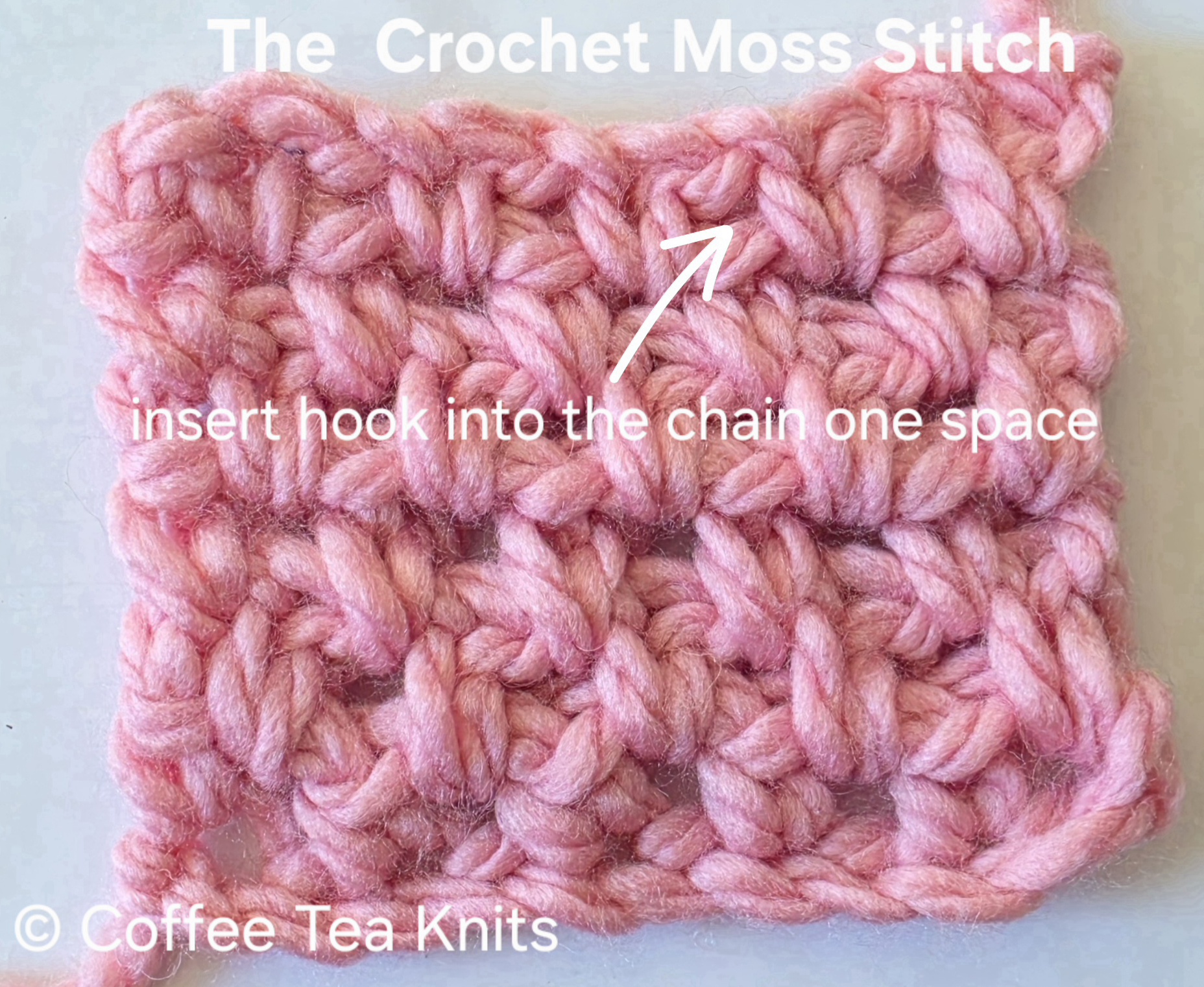
The Silky Long Scarf is a rectangular scarf. It is crocheted flat from corner to corner using a single crochet, chain one stitch pattern. The Silky Long Scarf like The Springtime Baby Blanket and Favorite Things Cowl starts with a chain of 2. There is an increase section, a length extension section, and a decrease section. In the increase section, four stitches are increased every other row. This continues until a specific number of stitches is reached. In the length extending section the number of stitches stays the same while the scarf increases in length. Finally in the decrease section, four stitches are decreased every other row down to one stitch. A crochet moss stitch in the round is used as a border to finish the scarf. The Silky Long Scarf pattern is beginner friendly and the length or the width can be customized easily.
Materials Needed:
Yarn: KC Botanical by K+C Yarn in the Camel colorway (2 skeins used for the scarf). An image of the yarn label with more information is shown below
Gauge: 4.5 stitches per inch in the variation crochet moss stitch pattern
Crochet hook: US size H-8 (5.00 mm)
Tapestry needle to weave in ends
Abbreviations:
sc: single crochet (Tutorial Series: How to Single Crochet)
[…]: pattern repeat
Skill Level: Beginner friendly pattern with single crochet and crochet chains
Crochet Foundation Chain:
Increase Section:
Repeat Rows 5 and 6 of the increase section till 28 stitches in the row. The width can be increased by continuing repeats of Rows 5 and 6 till preferred width reached. The Silky Long Scarf is about 5 inches wide.
Length Extension Section: There is an increase of two stitches in the beginning of the row and a decrease of two stitches at the end of the row.
Repeat Rows 1 and 2 of the length extension section till preferred length is reached. The Silky Long Scarf is about 94 inches in length
Decrease Section:
Repeat Rows 1 and 2 of the decrease section till 4 stitches left. Facing the right side of the work, insert hook into the second stitch, yarn over and pull the working yarn through that stitch (2 loops on the hook). Skip a stitch and insert crochet hook into the next stitch, yarn over and pull working yarn through that stitch (three loops on the hook). Yarn over and pull working yarn through all three loops. One loop remains on the crochet hook.
Crochet Moss Stitch Border (in the round):
Round 1:
Insert hook into the chain 2 space of the beginning of round stitch, yarn over and pull working yarn through the remaining loop on the crochet hook.
Weave in the ends. Wash and block the Silky Long Scarf.
~coffeeteaknits.com
© Coffee Tea Knits. All text and images for personal use only. All Rights Reserved.